
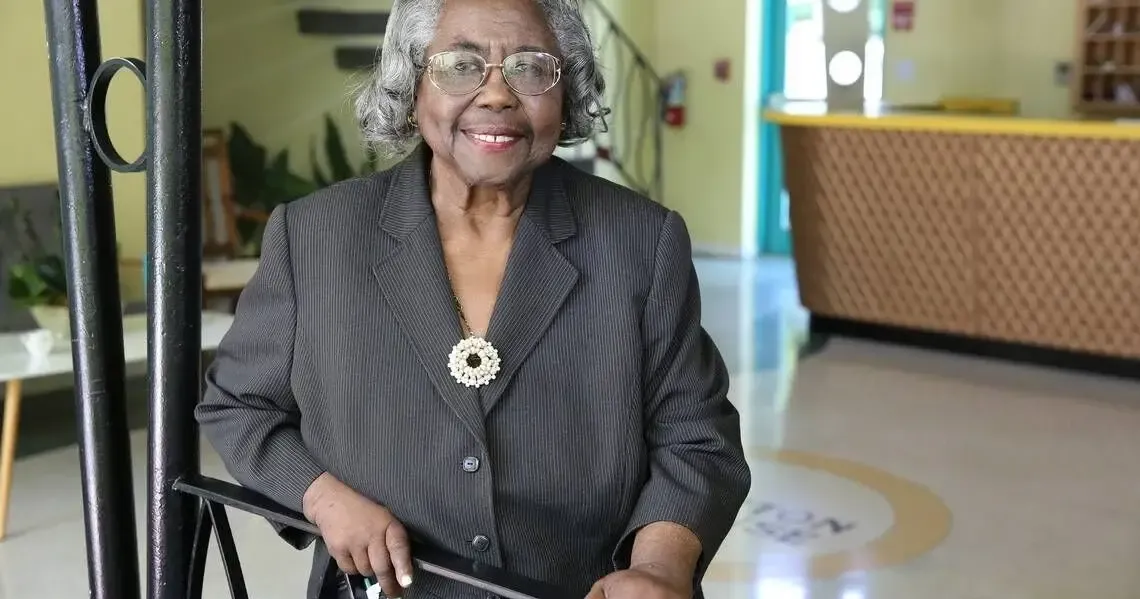
A “For Sale” sign outside the longtime Brownsville home of Dr. Enid C. Pinkney has sparked a debate over how Miami should preserve the legacy of one of its most influential Black historians and preservationists — and whether saving that legacy means saving the house itself.
Pinkney, who died in July 2024, spent decades preserving Black history, leading efforts to save landmarks that include the Historic Hampton House, Lemon City Cemetery and the Miami Circle.
The four-bedroom home where community leaders say many of those campaigns began has since been renovated, the lot subdivided and listed for $700,000. Realtor.com now lists the property as pending, though the Miami-Dade County Property Appraiser’s records do not yet reflect a completed sale.

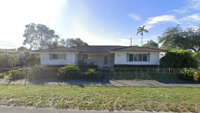
Dr. Enid C. Pinkney’s former home in Brownsville.
(Google Maps)
The potential sale has prompted conversations among advocates about whether the property should become a museum, educational center or historic landmark.
“What I want to have happen with that house is a community collective ownership,” said community advocate and NAACP Miami-Dade Branch President Daniella Pierre, whose recent Miami Times op-edfirst brought attention to the sale. “That looks like the philanthropists in our community, the county and other individuals coming together to own that piece of property.”
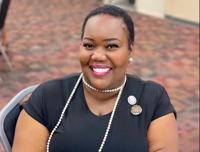
“What I want to have happen with that house is a community collective ownership. That looks like the philanthropists in our community, the county and other individuals coming together to own that piece of property.” -Daniella Pierre, NAACP
(Catalyst Miami)
Currently, no purchasing entity, funding commitment or formal county preservation plan has been announced.
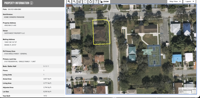
Current data from the Miami-Dade County Property Appraiser.
(Miami-Dade County Property Appraiser)
Property changes hands
Pinkney first purchased the Ranch-style home, formerly owned by Brownsville pioneer and principal Caretha Bawl, in 1998.
Property records show Pinkney remained the sole owner until April 2023, when she transferred ownership to herself and her nephew, Gary Anderson Allen, through a right-of-survivorship deed. Following Pinkney’s death and several subsequent ownership transfers, Northwest Property LLC purchased the property in March for $460,000.

Sales after Dr. Pinkney died in 2024.
(Miami-Dade County Property Appraiser)
Kenneth Kilpatrick, president of the Brownsville Civic Neighborhood Association (BCNA), learned of the initial sale through Allen, who was moving out of town. Kilpatrick said residents were disappointed the property was sold before the community could pursue it.
“When you sell it to investors in order to get that asset back, you’re going to pay their update; they’re not going to sell it to you for what they bought it for,” Kilpatrick said.
Former Historic Hampton House Executive Director Jacqui Colyer believes the sale reflects a broader threat to historically Black neighborhoods.
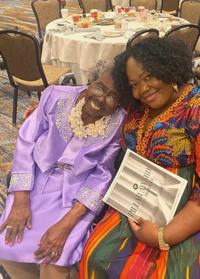
Dr. Enid Pinkney and Daniella Pierre at the 2024 Pillar Awards.
(Courtesy of Daniella Pierre)
“That’s how gentrification destroys neighborhoods,” Colyer said. “Developers come in, they buy a property for a low price, and then all of a sudden you look up and now you have comps in a neighborhood that are well above any other comps.”
Pierre toured the renovated home. She said the listing agent and owners were unaware of the home’s significance until she explained its connection to Pinkney.
The vision
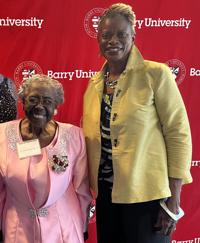
Dr. Enid Pinkney and Jacqui Colyer at Barry University.
(Courtesy of Jacqui Colyer)
Pierre believes the community’s first priority before pursuing a historic designation should be acquiring the property itself. She envisions transforming the residence into a museum, a landmark and a center for Black history.
“Because there are four bedrooms in that house, those rooms can be turned into meeting spaces, learning labs or a place where people can continue learning about our history,” she said.
She added that the effort is deeply personal.
“The last thing Dr. Pinkney said to me about two months before she passed was, ‘Daniella, you got to stay on the battlefield.’ The advocacy to save her home, I consider that staying on the battlefield,” Pierre said.
Colyer shares a similar vision, describing the house as an extension of Pinkney’s life’s work.
“You have this woman who is just an icon and a legacy in this community,” Colyer said. “How do you make sure that it isn’t just gone after she has made her transition?”
Beyond serving as a museum, Colyer suggests the property could also serve as a workspace and headquarters for the Curtis Foundation Corporation, which Pinkney founded.
Kilpatrick emphasized the home’s historical weight.
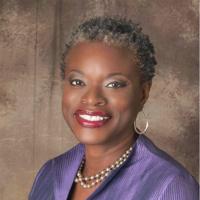
“You have this woman who is just an icon and a legacy in this community. How do you make sure that it isn’t just gone after she has made her transition?” -Jacqui Colyer
(Jacqui Colyer)
“That was where the very first Hampton House Trust meeting was held,” he said. “So the Hampton House was organized at that house. The Lemon City Cemetery Community Corporation was also organized at that house.”
Colyer has already begun preserving pieces of that legacy. She has preserved much of Pinkney’s furniture, including books, lamps, a living room set and her piano, which she plans to display at the Historic Lindsey House, which she owns.
“I just will use those things and have a way for people to know who she was, what she did and why it was important,” Colyer said.
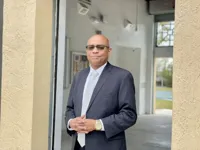
Kenneth Kilpatrick, president of the Brownsville Civic Neighborhood Association.
(Beverly R. Muzii for The Miami Times)
Preliminary conversations with public officials have begun. Pierre briefly discussed the property’s future with Miami-Dade County Mayor Daniella Levine Cava and members of the Miami-Dade Economic Advocacy Trust, while Colyer has engaged the Dade Heritage Trust and the Curtis Foundation regarding funding and preservation strategies.
If purchasing the property proves impossible, Colyer hopes to at least see a historic marker placed at the site.
“They can put a marker there that says, ‘This is the home of Dr. Enid Pinkney,’ and then list some of the things that she had done in terms of how she made Miami a better place,” she said.
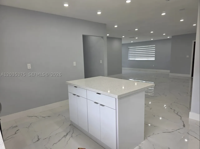
Renovations inside the house.
(Courtesy of Realtor.com)
How to historically designate
Sarah Cody, chief of Miami-Dade County’s Historic Preservation Division, said local designation generally requires a property to be at least 50 years old and meet certain criteria, such as having an association with “the lives of persons significant in our past.”
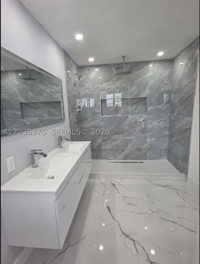
Renovations inside the house after the last sale.
(Courtesy of Realtor.com)
Unlike the National Register of Historic Places, a local designation requires only that a property meet one criterion, though meeting it does not guarantee approval.
“You have to really think about the community and all of these factors coming together,” Cody said, citing redevelopment plans, neighborhood revitalization goals and affordable housing impacts.
The designation process can be initiated by the property owner, Historic Preservation Board members or other staff. Cody said a pending sale does not prevent designation, though ownership changes can complicate notifications. She also noted that interior renovations do not affect eligibility since the county evaluates the exterior and overall historical significance.
However, a recent historic resource survey completed through a National Park Service grant and administered by Dade Heritage Trust concluded that, from a National Register perspective, Dr. Pinkney’s home was not individually eligible for listing — though it could contribute to a broader Brownsville historic district if one is established. Cody said county staff plans to work with the BCNA to gauge which preservation paths residents prefer.
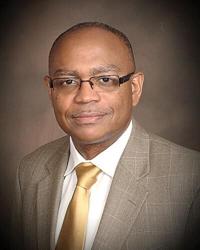
“I would only support this house being regarded as something historic if it’s in the right hands. I’m not looking to enrich investors.” -Kenneth Kilpatrick, BCNA
(Kenneth Kilpatrick)
“Do you want to see a National Register historic district pursued? Do you want to see us try to do a local historic district? Do you want to see us do individual designations?” she said.
If designated locally, future renovations or demolition proposals would require county review, making demolition significantly more difficult.
Kilpatrick maintains that any historic designation must ultimately serve the local neighborhood.
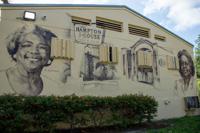
Legacy Walls at Jefferson Reaves, Sr. Park portraying Dr. Pinkney. The walls are just across from her former house.
(Amelia Orjuela Da Silva for The Miami Times)
“I would only support this house being regarded as something historic if it’s in the right hands,” he said. “I’m not looking to enrich investors. I’m looking to preserve our history in our community with people in and from our communities.”
But not everyone agrees that buying Pinkney’s former home should be a top priority. Anna Williams, who worked closely with Pinkney, said the late historian’s greatest passion was preserving the Hampton House and Lemon City Cemetery.
“Her heart was in that Hampton House,” Williams said, suggesting resources might be better spent supporting the institutional sites Pinkney fought to save.
However, Williams added she would still support the community’s effort.
For Pierre, the conversation marks a starting point for a much larger initiative.
“The next step is we need to survey the land throughout the urban core in the Black community to see what other homes are eligible to be considered historic,” Pierre said. “We should not let another home in the Black community be just sold to the highest bidder.”