
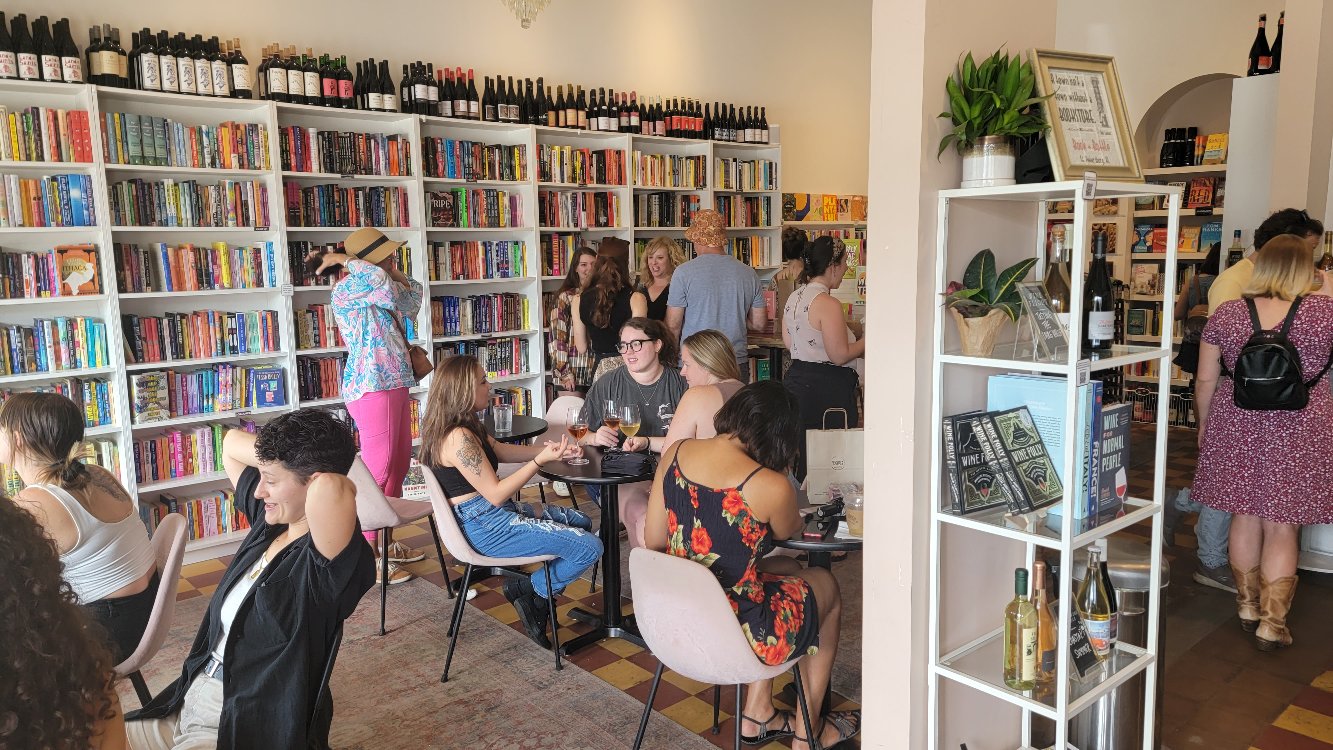
Book + Bottle bookstore party. By: Josh Holton (7/22/23)
Listen:
Over the past 6 years, the United States has seen a resurgence in independent bookstores.
More than 600 local bookshops opened just last year, according to the American Booksellers Association.
The reasons for this resurgence span far and wide. Here’s what we’ve heard from indie bookstores in Tampa Bay:
Post-COVID Connections
During the COVID-19 pandemic, online communities like BookTok grew due to peoples want and need for connection.
Through TikTok, many users turned to BookTok to see what others were reading and discover new authors and genres.
Laura Taylor is the Programming and Retail Director at Oxford Commons.
She said the influence of these social media communities fueled a demand for local bookstores after the pandemic.
“I think there’s a trend for people to really look away from the computer and to buy a physical copy of a book.”
Natalya Calleja is the owner of The Book Lounge.
She thinks the excessive use of technology during the pandemic has led customers to seek in-person connections.
“The younger generation is claiming back normalcy and just going back to doing more community and being more intentional.”
She added The Book Lounge hosts board game nights as a way for visitors to disconnect and build community.
Unique Business Models
Local bookstores are thriving despite rising rent, maintenance costs, staffing challenges, and tight profit margins.
Bookends: Literature & Libations is an upcoming brick and mortar in Ybor City that started out as a mobile bookstore.
Teresa Rodriguez co-owns Bookends: Literature & Libations along with her sister.
They’ll provide an interactive experience through book events inspired by their personal hobbies and partnering with local businesses.
“We kind of joke how we’re going to be sort of like a home ec class for the younger generation because when we grew up you learned how to cook, you learned how to sew.”
In St. Petersburg, Book + Bottle combines the bookselling and wine bar models into one establishment.
Terra Dunham is the founder of Book + Bottle.
She said between tight profit margins and competitors like Amazon, running a store based on books alone can be difficult.
“By combining these two models, one that’s kind of fragile during economic downturns and one that is more stable during economic downturns, um, is a, is a safer bet on a very risky entrepreneurship business.”
Dunham’s decision to open Book + Bottle comes from a personal interest in having a career in both wine and literature.
The pandemic also served as a catalyst for the boom in romance books.
Steamy Lit is the first all-romance bookstore to open up in Florida.
“I wanted to amplify the work of women of color, authors of marginal life identities within the romance genre, but I also wanted to talk about pleasure and the stigmas that surround women around pleasure,” said Melissa Saavedra, founder of Steamy Lit.
She added her business began as an online book subscription called the Steam Box.
After seeing the community it created, Saavedra opened up a brick and mortar to give those people a place to come together.
Readers branching away from big retailers
For many readers, buying a book has become all about convenience and big name companies like Amazon and Barnes & Noble have been benefitting from it.
“I think this, like Amazon culture, has really taught consumers that they want– that they need a product right away,” said Saavedra.
However, Allison Hill, CEO of the American Booksellers Association, said people have been seeking authenticity and finding it in independent bookstores.
“There’s a big difference between shopping at a faceless corporation or someplace online versus shopping with a neighbor who’s come back to their hometown to open a bookstore because they want to get back to their community.”
She added that readers are increasingly shopping in ways that reflect their values.
Melanie Cade is the co-owner of Mojo Books and Records.
She said local bookshops tend to have more of an organic connection with the community and are more responsive to their needs.
“They tend to be a little bit more of like a genuinely welcoming space to a variety of people and to diverse populations that might feel marginalized elsewhere.”
Laurie Rodriguez, co-owner of Bookends: Literature & Libations, said Amazon doesn’t have a sense of community or throw midnight release parties and especially doesn’t offer you food when you walk in through the door.
“So, it’s that little bit of extra, you know, that shows that somebody cares, you know? And you don’t get that from Amazon. You don’t really get that from Barnes & Noble. You know, we offer the chocolate cake. What can I say?”
What’s next?
As more and more people pour into independent bookstores in search for their next read or a nice glass of wine, owners hope the community they’ve built within their businesses continues to bring readers back.
“I feel like we’re actually an extension of what our community is talking about and thinking about, and if we don’t evolve in that direction, independent bookstores can’t survive,” said Taylor.
Dunham recalled seeing people’s enthusiasm to purchase books in last year’s Cover to Cover, an outdoor book fair, and being taken by surprise.
“Like thousands of people, shopping for books like this was the only time in their life they could buy a book. The, uh, the excitement and fun was so high in such a short period of time. Um, yeah what a great time to be a bookstore.”
“I really believe that the future is indie,” said Hill.