
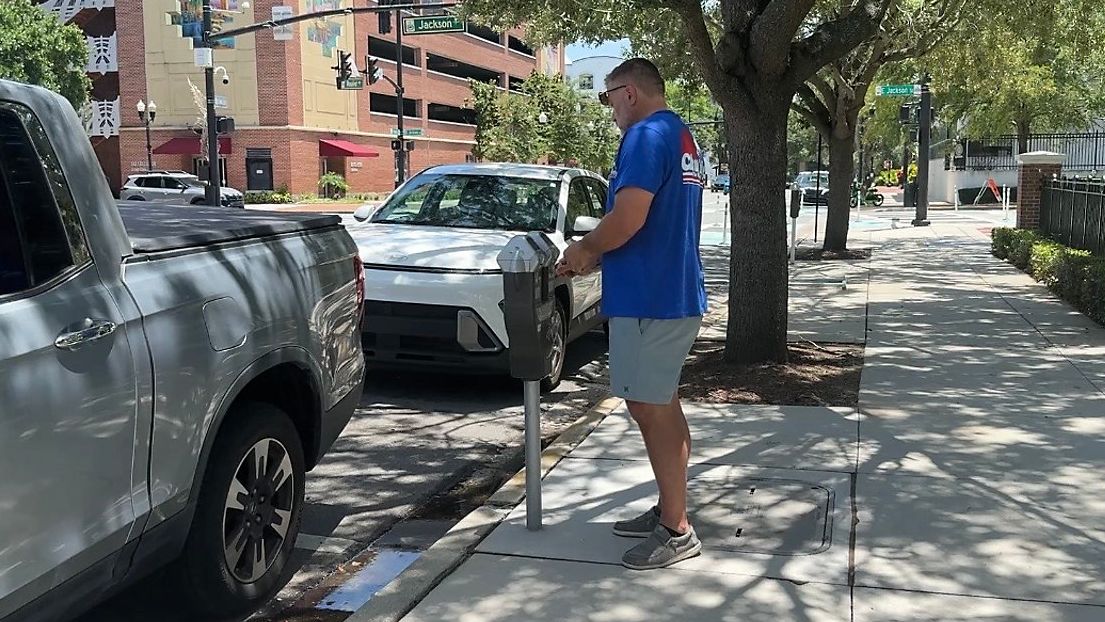
ORLANDO, Fla. — Orlando is beginning a phased removal of about 1,000 parking meters as the city moves to a fully digital parking payment system by Oct. 1.
Over the next few months, drivers will have to pay for metered parking through the ParkMobile app, by text or by phone. The city said the change is part of an effort to modernize parking and reduce costs. The first phase will begin in the SoDo district, followed by areas south of Lake Eola, near Colonial and Robinson, and then the core of downtown.
Maria Cortes, the parking planner for the city of Orlando, said the city is trying to make the transition clear for drivers as meters are removed.
“We want people to feel comfortable, and that is why we are also putting the stickers on all the meters saying, ‘This meter is retiring, please use ParkMobile,’” Cortes said.
Parking enforcement will remain the same during and after the transition. The city said that the allotted parking time in specific zones will not change.
Some drivers said they prefer using meters.
“I usually always pay on the meter,” Michael Bloodgood said. “It is just more convenient. I happen to have spare change, or I have my debit card that it reads, so it is just easier for me.”
Bloodgood said he will adjust once meters are removed.
“I will have to get used to it,” he said. “I will have to adapt. It is a changing world, and I am going to have to change with it.”
Other drivers said phone-based payment is already more convenient.
“It is just easier,” Daniel Bergon said. “Everyone always has their phone on them. Not everyone has cash anymore.”
The city said removing the meters is expected to save about $500,000 a year by reducing maintenance costs. Cortes said the city will monitor the first phase before moving forward with later phases. “
“We have our timeline, but we really want to see how phase one goes and learn from it and then course-correct as needed for future phases,” Cortes said.
City officials said removing parking meters is one part of a broader effort to update parking downtown. Future plans include boards that display where parking is available and work to determine how autonomous vehicles would pay to park.
“This is really important for the future,” Cortes said. “We see, of course, that downtown is changing very rapidly, and so is technology and mobility.”