
South Florida veterinarians are warning cat owners about a concerning change in a highly contagious virus that is now making adult cats seriously ill.Feline panleukopenia virus (FPV), sometimes referred to as feline parvovirus, has traditionally been most dangerous for kittens. However, this season, veterinarians say the virus appears to be affecting adult cats as well.Dr. Kathleen Woodie, chief of veterinary services for Palm Beach County, said some cases have proven deadly.”We are seeing adult cats that are not only getting sick from the virus, but we believe that some have actually died from the virus,” she told WPBF.Woodie said the county has identified multiple cases in the southern part of Palm Beach County involving cats with severe gastrointestinal illness. That means symptoms like vomiting, diarrhea, bloody stool, loss of appetite, weight loss, and lethargy.”Something has changed. It’s difficult to tell if something is a new strain, because that would mean that something has genetically been altered. Sometimes we just see variants that come through that are stronger; they have what we call more virulence, so that means it has more ability to make animals sick,” she said.Woodie said it’s normal to see a few kittens test positive for the virus, but it’s extremely worrisome to see adult cats becoming sick from the virus. “In the last couple of years, we have not seen this. We have not seen cases specifically where adults are becoming very clinically ill. And we do not have any known cases where we were losing adult animals to this disease,” she said. She told WPBF 25 News this is a huge concern. “When we talk about a shelter situation, this is one of what we call the big bads. These are the things that we’re the most worried about,” Woodie said. The virus spreads through infected feces and vomit and can contaminate surfaces that other cats come into contact with. Cats can become infected simply by grooming their paws after walking through an area where an infected cat has been.Woodie said the virus is especially difficult to eliminate because it can survive in the environment for months.”Any cat that can touch grass is at risk of potentially being exposed. The virus itself is very stable. Simple hand sanitizer won’t kill it at all,” she said. While adult cats are now becoming ill, kittens remain the most vulnerable.”Sometimes the first clinical sign that we see is unexpected death. The younger the kitten, the more susceptible they are to this,” Woodie said. The Humane Society of St. Lucie County said it is also seeing the same trend of cats, both young and old, getting sick from the virus. “The thing with the symptoms too is they’re fast,” said Shannon Glendinning with the Humane Society of St. Lucie County.Veterinarians say vaccination remains the best protection.”We don’t have a single known case of a vaccinated cat that is an adult showing signs or having fatality due to this disease. The vaccination of these animals can be lifesaving,” she said. She said a vaccine containing protection against panleukopenia can provide long-lasting immunity and is especially important for outdoor cats and community cat colonies.”It’s really important that for all of the kittens that are out there, that they have the opportunity to get their vaccinations. These are the types of things that can spread a disease throughout a colony of cats, so it’s really important that our colony feeders work with our trappers so that those animals can come in for TNDR, trap, neuter, vaccinate, and release,” she said.If a cat begins showing symptoms, veterinarians recommend isolating the animal from other pets and contacting a veterinarian immediately.”We want to give every cat the best possible chance of fighting this virus. While there may not be a true antiviral for this particular condition, we can support them through the infection and make sure they make it out the other side,” Woodie said. According to veterinarians, the virus is contagious only between cats and cannot spread to humans or dogs. They say people should be careful when bringing a stray cat into their home if they already own a cat. Both Palm Beach County Animal Care & Control and the Humane Society of St. Lucie County are taking extra steps to help contain the virus. In the meantime, experts say cat owners should ensure their pets are up to date on vaccinations. Stay up-to-date: The latest headlines and weather from WPBF 25Get the latest news updates with the WPBF 25 News app. You can download it here.Your neighborhood: Local coverage from WPBF 25 News
PALM BEACH COUNTY, Fla. —
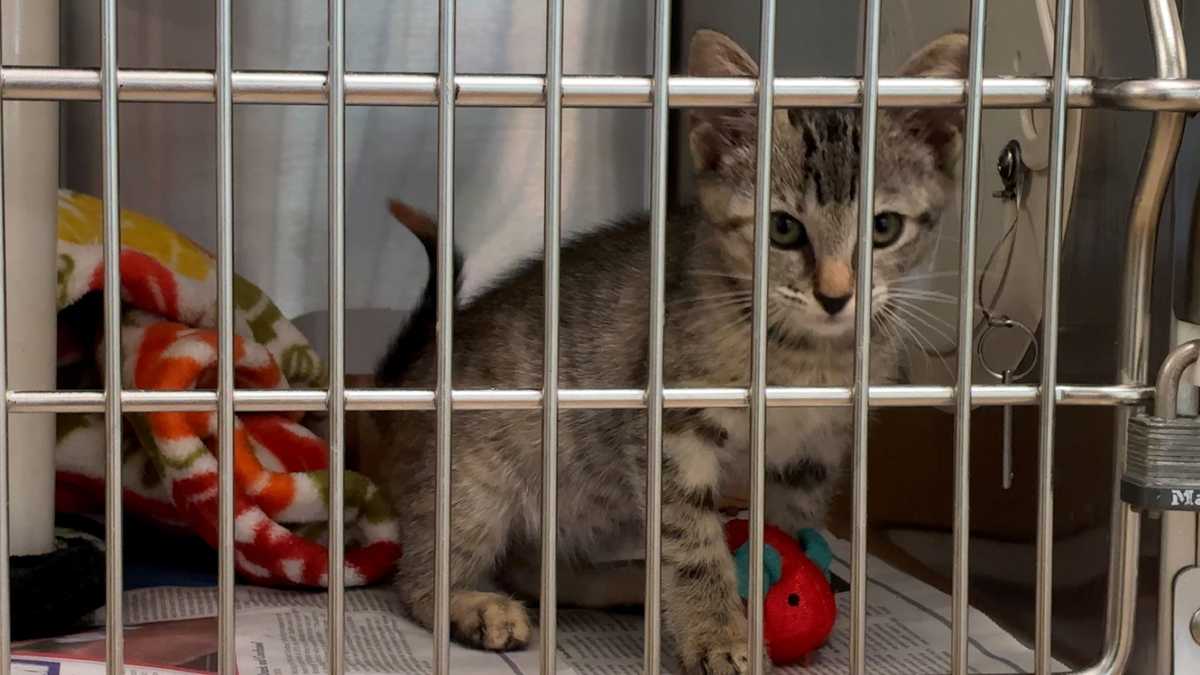
South Florida veterinarians are warning cat owners about a concerning change in a highly contagious virus that is now making adult cats seriously ill.
Feline panleukopenia virus (FPV), sometimes referred to as feline parvovirus, has traditionally been most dangerous for kittens. However, this season, veterinarians say the virus appears to be affecting adult cats as well.
Hearst OwnedPalm Beach County Animal Care and Control
Dr. Kathleen Woodie, chief of veterinary services for Palm Beach County, said some cases have proven deadly.
“We are seeing adult cats that are not only getting sick from the virus, but we believe that some have actually died from the virus,” she told WPBF.
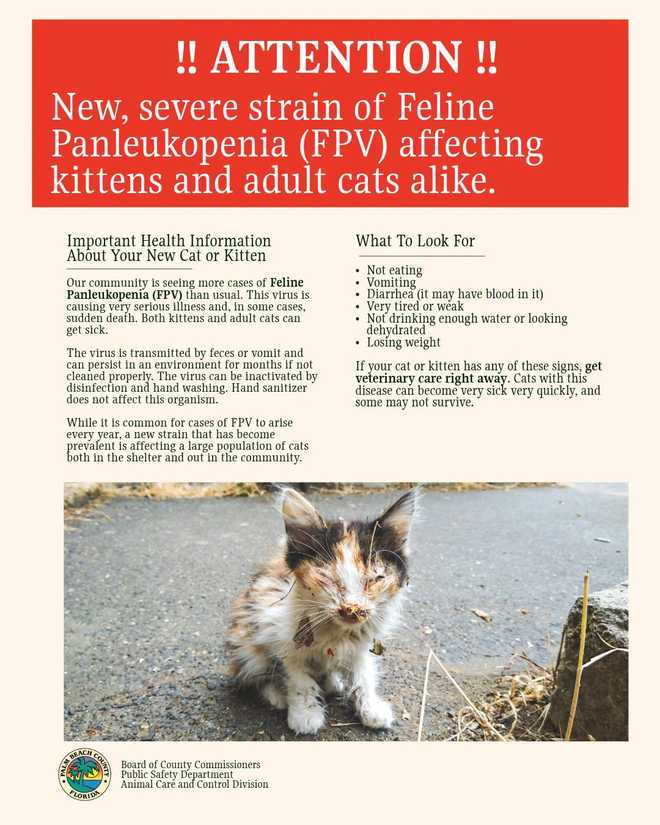
Woodie said the county has identified multiple cases in the southern part of Palm Beach County involving cats with severe gastrointestinal illness. That means symptoms like vomiting, diarrhea, bloody stool, loss of appetite, weight loss, and lethargy.
“Something has changed. It’s difficult to tell if something is a new strain, because that would mean that something has genetically been altered. Sometimes we just see variants that come through that are stronger; they have what we call more virulence, so that means it has more ability to make animals sick,” she said.
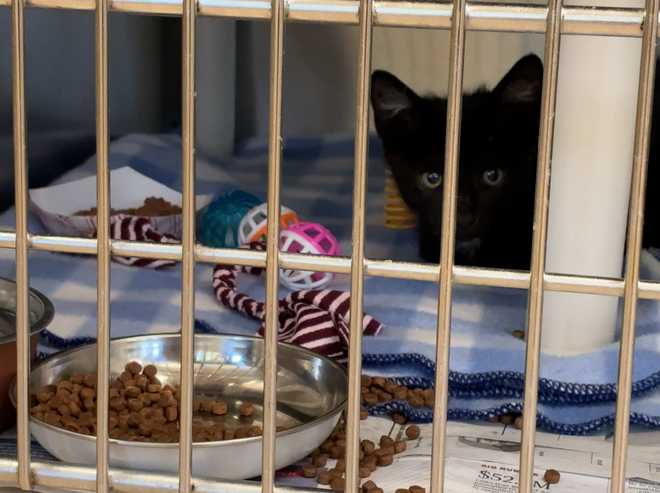
Woodie said it’s normal to see a few kittens test positive for the virus, but it’s extremely worrisome to see adult cats becoming sick from the virus.
“In the last couple of years, we have not seen this. We have not seen cases specifically where adults are becoming very clinically ill. And we do not have any known cases where we were losing adult animals to this disease,” she said.
She told WPBF 25 News this is a huge concern.
“When we talk about a shelter situation, this is one of what we call the big bads. These are the things that we’re the most worried about,” Woodie said.
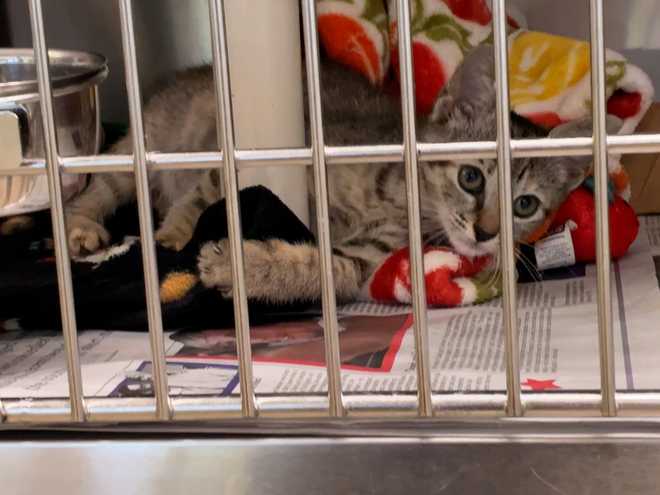
The virus spreads through infected feces and vomit and can contaminate surfaces that other cats come into contact with. Cats can become infected simply by grooming their paws after walking through an area where an infected cat has been.
Woodie said the virus is especially difficult to eliminate because it can survive in the environment for months.
“Any cat that can touch grass is at risk of potentially being exposed. The virus itself is very stable. Simple hand sanitizer won’t kill it at all,” she said.
While adult cats are now becoming ill, kittens remain the most vulnerable.
“Sometimes the first clinical sign that we see is unexpected death. The younger the kitten, the more susceptible they are to this,” Woodie said.
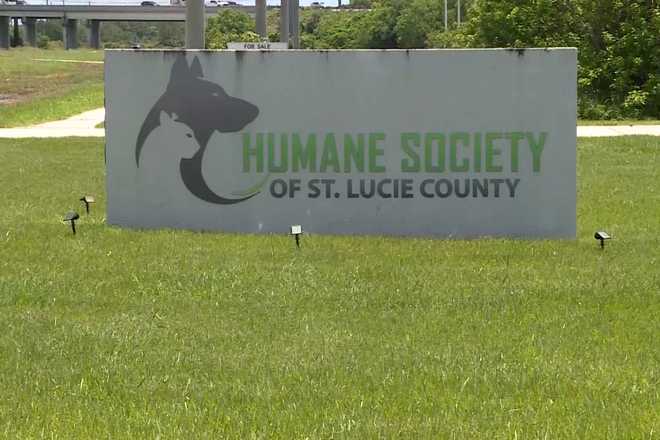
The Humane Society of St. Lucie County said it is also seeing the same trend of cats, both young and old, getting sick from the virus.
“The thing with the symptoms too is they’re fast,” said Shannon Glendinning with the Humane Society of St. Lucie County.
Veterinarians say vaccination remains the best protection.
“We don’t have a single known case of a vaccinated cat that is an adult showing signs or having fatality due to this disease. The vaccination of these animals can be lifesaving,” she said.
She said a vaccine containing protection against panleukopenia can provide long-lasting immunity and is especially important for outdoor cats and community cat colonies.
“It’s really important that for all of the kittens that are out there, that they have the opportunity to get their vaccinations. These are the types of things that can spread a disease throughout a colony of cats, so it’s really important that our colony feeders work with our trappers so that those animals can come in for TNDR, trap, neuter, vaccinate, and release,” she said.
If a cat begins showing symptoms, veterinarians recommend isolating the animal from other pets and contacting a veterinarian immediately.
“We want to give every cat the best possible chance of fighting this virus. While there may not be a true antiviral for this particular condition, we can support them through the infection and make sure they make it out the other side,” Woodie said.
According to veterinarians, the virus is contagious only between cats and cannot spread to humans or dogs. They say people should be careful when bringing a stray cat into their home if they already own a cat.
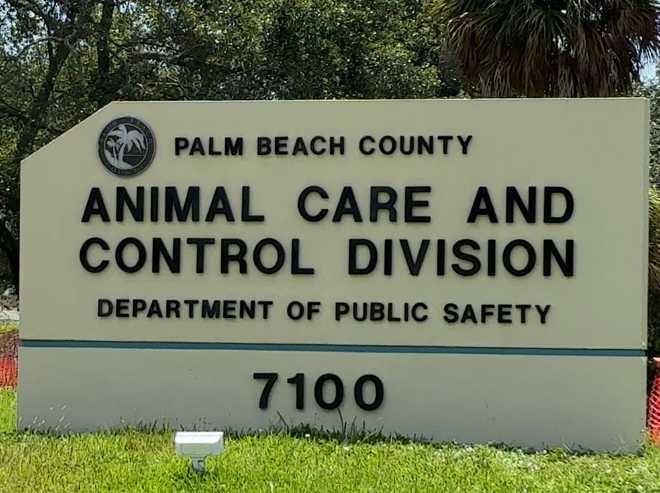
Both Palm Beach County Animal Care & Control and the Humane Society of St. Lucie County are taking extra steps to help contain the virus. In the meantime, experts say cat owners should ensure their pets are up to date on vaccinations.
Stay up-to-date: The latest headlines and weather from WPBF 25
Get the latest news updates with the WPBF 25 News app. You can download it here.
Your neighborhood: Local coverage from WPBF 25 News