
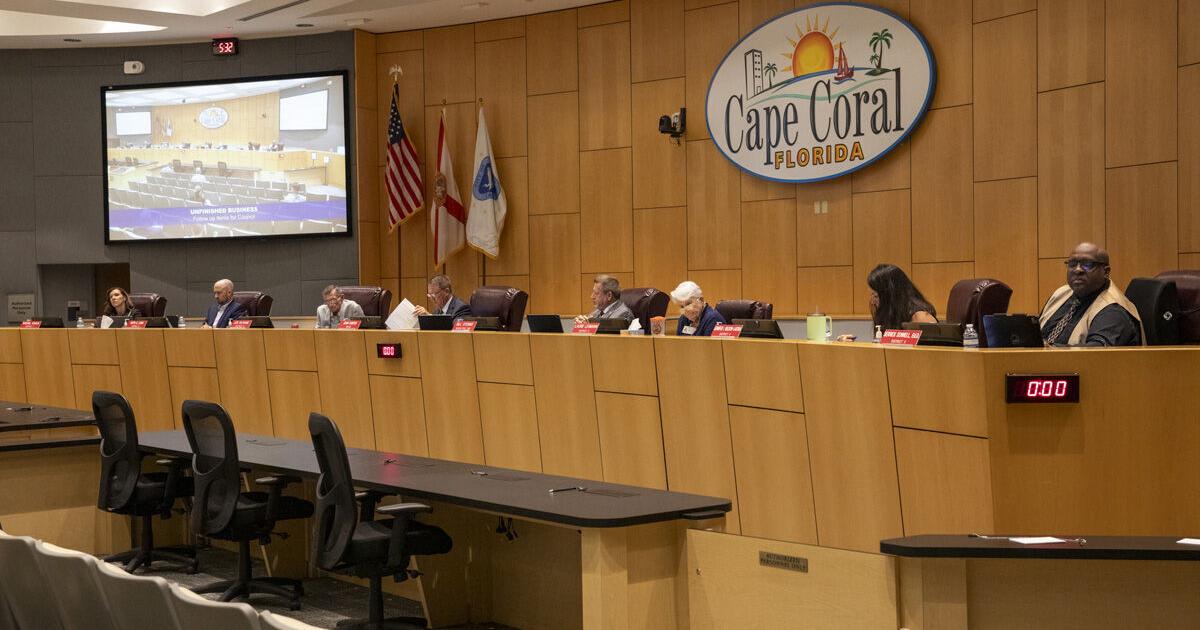


Cape Coral City Council will hold public hearings July 22 on proposed Community Development Districts for the Seven Islands and Star Farms developments. The districts would finance infrastructure and community amenities for future residents.
Evan Williams
Two of Cape Coral’s largest developers plan to create independent governments — known as Community Development Districts — to finance infrastructure and amenities for future residents, who typically pay fees to cover the costs.
It is a key step forward for developer Gulf Gateway Resort & Marina LLC, which is set to build the 47-acre Seven Islands community, and Forestar USA Real Estate Group Inc., which is planning the 1,280-acre Star Farms community.
But first, both proposals require Cape Coral City Council approval at a public hearing. The hearings are scheduled consecutively during the Council’s regular July 22 meeting at City Hall.
If approved, each CDD will have its own independent but limited government led by a board of supervisors. The boards oversee infrastructure and development-related services within their communities, so those costs are not passed on to the rest of the city. Cape Coral City Council would retain authority over zoning, permitting and future land-use planning.
Gulf Gateway’s proposed Seven Islands CDD is east of the Matlacha Pass Aquatic Preserve, bordered by the North Spreader Waterway, Tropicana Parkway West, Burnt Store Road and Southwest Pine Island Road.
Planning documents show the district’s initial five-member board of supervisors would include Matthew Sinclair, Jason Pawloski, Justin Morrow, Sam Timms and Julia Anderson.
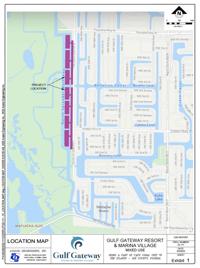
This map outlines the proposed Seven Islands Community Development District in northwest Cape Coral. The district would support infrastructure for a mixed-use development with housing, a hotel, marina and retail space.
Cape Coral government
The Seven Islands CDD plan estimates developers will invest $71.5 million in initial infrastructure improvements between 2026 and 2034 to serve a projected population of 2,480 residents. That includes water, sewer, stormwater, irrigation, roadways, electric, landscaping and other infrastructure.
Those costs, along with future services and amenities, may be funded through bond debt and repaid by residents through special assessment fees, similar to those charged by a city or homeowners association. Seven Islands is expected to include 992 residential units, a 240-room hotel, event space, retail, a community center and a marina.
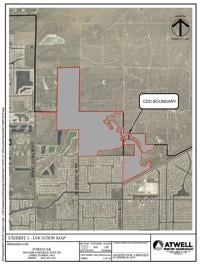
This map shows the proposed boundaries of the Star Farms at Cape Coral Community Development District. The 1,280-acre development is expected to include 2,500 homes and infrastructure to serve about 8,750 residents.
Cape Coral government
Forestar’s proposed Star Farms at Cape Coral CDD is bordered by Burnt Store Road, Yucca Pens Preserve, Wilmington Parkway and Andalusia Boulevard. Its initial five-member board of supervisors would include Lindsay Hernandez, Christian Cotter, Charles Marsala, Charles McDonald and Khara Yatron.
The Star Farms at Cape Coral CDD plan estimates the developer would invest $221 million in initial infrastructure improvements between 2026 and 2031, including environmental restoration, roads, sewer, water, drainage, perimeter landscaping and walls. At buildout, about 8,750 residents are expected to live in the community’s 2,500 residential units.
To approve the CDDs, City Council must determine they do not conflict with city or state comprehensive plans or existing services, can function independently as communities and are the best alternative for delivering development services to those areas.
If council members reject the CDDs, other financing options that would avoid shifting costs to the general public include establishing a municipal taxing unit administered by the city or creating a property owners’ association. However, agenda documents note the city could incur significant administrative costs overseeing large master-planned developments. Compared with a property owners’ association, a CDD also is better positioned to obtain low-cost financing through the municipal bond market and provides greater transparency as a unit of local government.