
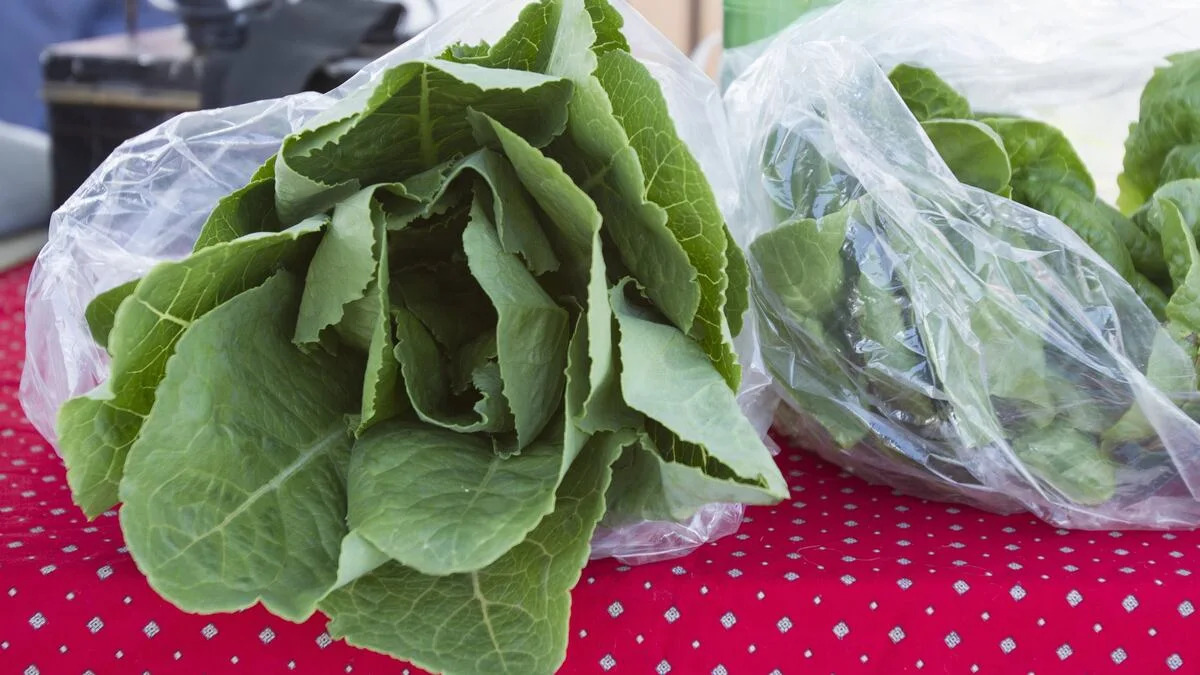
A wave of stomach-churning headlines about the nationwide cyclospora outbreak has left some consumers hesitant about reaching for fresh produce.
An ongoing investigation links the surge of cyclosporiasis — a parasitic infection spread through contaminated food and water that can cause severe diarrhea — to shredded iceberg lettuce served at Taco Bell restaurants in Indiana, Kentucky, Michigan, Ohio and West Virginia, according to the Centers for Disease Control and Prevention. Taylor Farms has been connected as the supplier of the shredded iceberg lettuce, according to the Washington Post.
However, the investigation remains ongoing, and the U.S. Food and Drug Administration says additional sources may be identified.
The uncertainty has placed fresh produce under scrutiny. Previous outbreaks have been linked to bagged salad mixes and kits, fresh cilantro, fresh basil, raspberries, snow peas and green onions, according to John Hopkins Medicine.
How is it playing out in Tampa Bay? The answer isn’t so straightforward.
In Florida, just 106 cases of cyclosporiasis have been reported this year, according to data from the Florida Department of Health Reportable Diseases Frequency Report. But of those, 46 were reported in the week between July 4 and 11.
As with all foodborne illness outbreaks, knowing where your food comes from is paramount. Employees at some Tampa Bay farms say Florida consumers concerned about their risk should start there.

“Now, more than ever, is a good time to shop local and know where your food comes from and to trust the farmers that are growing and selling your food,” said Christy Lee Hammond, farm store manager at Tampa’s Meacham Urban Farm. “We take the health of all products we sell very seriously and we would never put anything on our shelves that we wouldn’t eat ourselves.”
The Tampa farm works with a network of local and regional organic farmers. One of its largest suppliers, Frog Song Organics, is located near Gainesville. During Florida’s summer months, which are the state’s off-season for vegetable gardening, Frog Song Organics looks to farms in the Carolinas and other regional areas for its supply.
Local food networks can offer consumers more direct communication with farmers and sellers about growing practices and product quality — unlikelarge-scale produce systems, which can often involve multiple farms and handlers. That can make tracing the sources of foodborne illness outbreaks, like the cyclospora parasite, a challenge.
“The fresh produce often passes through multiple farms, different packing houses, processors, distributors and retailers, before it reaches a consumer,” said Seçkin Özkul, assistant professor and director of the University of South Florida’s Supply Chain Innovation Lab. “Since it’s such a complex supply chain, it’s very difficult to really trace where exactly the bad batch got introduced to the system.”
Local farms say they are seeing a shift in consumer behavior amid the outbreak, as more shoppers seek transparency about produce provenance.
“We’ve definitely noticed an increase in customers over the past week,” said Natasha Ahuja, farm and retail operations manager at Gamble Creek Farms in Parrish. “People are coming in with more questions about where their food comes from and how it’s grown.”
Hammond said Meacham Urban Farm has also seen increased interest.
“We’re generally very used to at least a 25% dip in business during this time,” she said. “But this year, and especially with this outbreak going on with the parasite, we have more people coming in, especially a lot of new people who are doing research on local farms and organic practices.”

Local restaurants and grocery stores are also navigating how to respond as customers look for reassurance.
Greenlane, a Tampa drive-through chain featuring salads and wraps, addressed customer concerns in a July 17 Instagram post.
“Greenlane has never had iceberg lettuce on our menu. We do not purchase from that supplier. Our greens come from a different supply chain entirely,” the statement said. “On top of that, our team performs internal food safety checks multiple times every day at every restaurant, and we stay in ongoing contact with all of our suppliers about food safety practices.”
Winn-Dixie, based in Jacksonville, said in a statement to the Tampa Bay Times July 16 that it is not aware of “any issues related to the cyclospora outbreak in the products sold within our stores, nor have we had any customer-reported concerns.”
“Winn-Dixie is committed to providing safe, fresh and high-quality products to the communities we serve,” the statement said. “We maintain rigorous food safety and quality standards throughout our operations, including established procedures for receiving, handling, storing and displaying fresh products.”
At The Green Table Restaurant, a plant-based Tampa Bay franchise, co-founder and owner Niki Becker said the uncertainty surrounding the outbreak has led her to take a cautious approach.
“Even though we have had no recalls, no anything, doesn’t mean that I’m just going to ignore that. If it means that I have to pull some salad or some lettuce for just a little while, that’s okay,” Becker said. “For me, it’s all about putting the people over the profit.”
The restaurant announced in a Facebook post July 14 that it would be temporarily removing fresh salads, spring mixes and raw leafy greens from its menu.
“We have many immunocompromised people that come into the restaurant. We have people who are battling cancer. We have people who maybe have MS or lupus, such as myself,” Becker said. “If I can do something so little to protect them from this, that’s better for me. I sleep better at night.”
Health officials do not recommend avoiding fresh produce outright. The CDC recommends washing hands and produce thoroughly, and notes that cooking produce to a temperature of 158 degrees Fahrenheit will kill the parasite.
For experts like Özkul at USF’s Supply Chain Innovation Lab, outbreaks like this provide a learning opportunity.
“The food supply chain will never be risk-free, but every outbreak can provide an opportunity to strengthen it.”
• • •
The Tampa Bay Times Food Hub launched in 2026, a four-person team covering Tampa Bay’s dynamic and expanding food scene. You can contribute to the hub through our journalism fund by clicking here.
Want food news weekly in your inbox? Sign up for our newsletter.
Top 50 Restaurants: Check out our food critic’s list of the area’s best spots.
Follow our updates on the local restaurant landscape on Instagram at @tampabaytimesfood.