
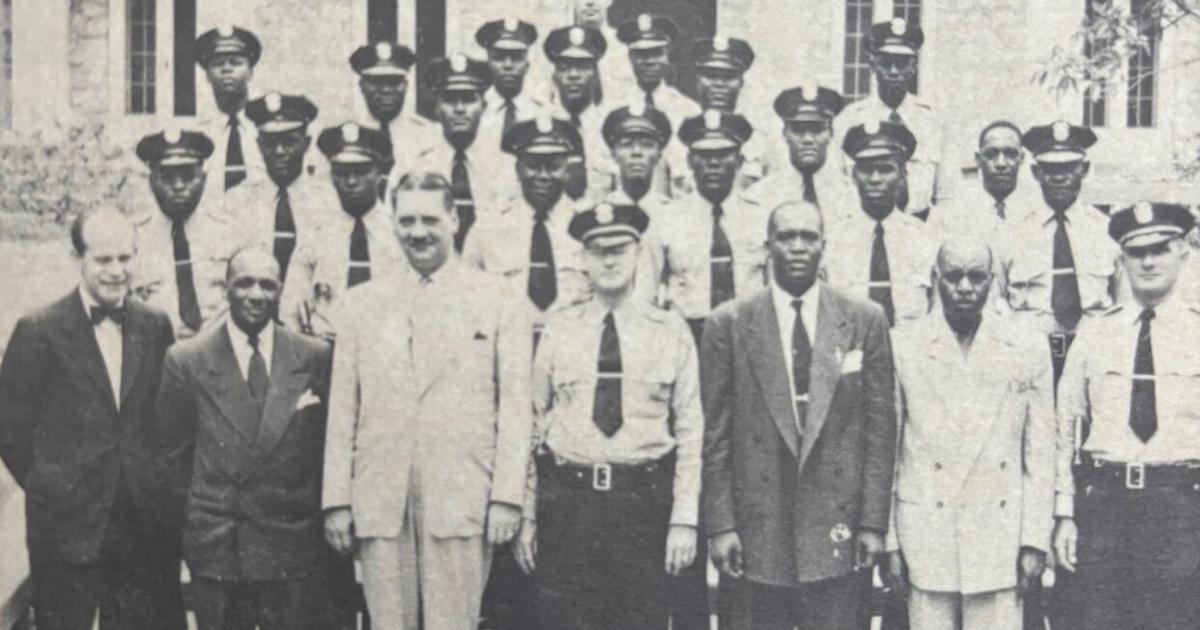
Black Police Precinct Courthouse and Museum Executive Director Terrance Cribbs-Lorrant has an idea.
Think of mascots — like the Miami Heat’s Burnie, the Marlins’ Billy the Marlin, or the Dolphins’ T.D. — but instead of for a sports team, for a museum.
Enter Officer Friendly. Though he’s still in the planning stages, Cribbs-Lorrant envisions Officer Friendly as someone who can connect with local youth.


The Black Police Precinct and Courthouse Museum building was designed by Miami architect Walter G. DeGarmo.
(The Black Police Precinct and Courthouse Museum)
“ICE is giving a new face to law enforcement,” Cribbs-Lorrant said. “I’ve heard kids say over and over again, ‘The police are the last people that I would call.’ And unfortunately, that’s an unfortunate move, because they’re probably the first call you should make.”
The ultimate goal is to make people comfortable with approaching police officers.
“The hope is that we can bring this mascot that carries a different façade, that brings a sense of safety, not just in property, but safety in our hearts about what law enforcement as a profession is,” Cribbs-Lorrant said.
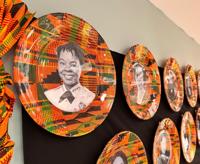
The Black Police Precinct and Courthouse Museum recently presented “This Woman’s Work,” an exhibition honoring Black women in the judiciary.
(The Black Police Precinct and Courthouse Museum)
That mission is on brand for the museum, which began during the Jim Crow era as a police precinct for Black policemen and a courtroom for Black judges. Located in the heart of Overtown, it now aims to preserve and share that history.
A short drive away in Brownsville, the Historic Hampton House is protecting its own slice of Black history.
“The Historic Hampton House is a pillar in the community, because we shed a light on a lot of the history that has not been told in other places within Miami,” said brand manager Gabriela Sevrin. “And how we were a safe space for people to come to to celebrate music, history and even the Heavyweight Championship pride after Muhammad Ali won here in Miami.”

The Historic Hampton House’s brand manager, Gabriela Sevrin.
(Elisabeth Campbell for The Miami Times)
But whether it’s hiring a new mascot or safeguarding the Magic City’s Black roots, this type of work costs money. That’s why both nonprofits are participating in this year’s Give Miami Day.
Now in its 14th year, Give Miami Day is an annual online fundraising event for more than 1,000 nonprofits in Greater Miami. All of the donations go to the nonprofit of the donor’s choice.

The Historic Hampton House’s tours educate visitors about its history.
(Historic Hampton House)
Early giving takes place from Saturday, Nov. 15 through Wednesday, Nov. 19 before the main event on Thursday, Nov. 20.
Black Police Precinct Courthouse and Museum
The Black Police Precinct Courthouse and Museum offers guided tours with former law enforcement officers who share their stories — some “not so fun to hear,” says Cribbs-Lorrant.

The Black Police Precinct and Courthouse Museum’s executive director, Terrance Cribbs-Lorrant.
(Terence C. Price II)
He says the museum also sponsors exhibits that elevate the art of those who have been incarcerated. The organization is currently preparing for its Art Basel exhibit.
Its outreach includes educating the public on the law, hosting Boy Scout and Girl Scout troops, and bridging the gap between the police and the community.

The Black Police Precinct and Courthouse Museum sponsors Girl Scout Troop 1877.
(The Black Police Precinct and Courthouse Museum)
One project puts individuals face-to-face with law enforcement officers, either those that are currently on the force or those that are retired, “and that provides the community opportunity to ask questions that they otherwise might not consider asking an officer,” Cribbs-Lorrant said. “So we want to make sure that we’re able to give access to officers that are on the street, officers that know the law and the legal community space as well.”
But Cribbs-Lorrant admits to funding obstacles threatening the lifespan of these programs, including recent federal and state cutbacks. He said the bulk of the museum’s funding is through grants, and the rest comes from donations.
He said hundreds of nonprofits are going after the same pool of money.
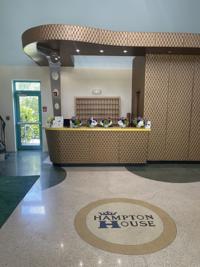
The lobby of the Historic Hampton House.
(Historic Hampton House)
“And our private donors that have always offered the bigger amounts — $5,000 to $10,000 donations — they are now stretched a lot thinner.”
On top of that, he says, promoting the police is not “necessarily the most sexiest conversation now.”
“But I’m happy to say that we’ve been on this campaign of what we call friendship-building, where we are inviting people to learn about us first and then, if you like and learn something new, then you are willing to be a donor.”

The Historic Hampton House offers 45-minute tours.
(Historic Hampton House)
In an effort to raise funds, Cribbs-Lorrant said the museum joined Give Miami Day in 2018 and have been a registered recipient since then.
“We’ve had a couple success years. We started off small with our donation amount being $5,000-$10,000, just to feel what it’s like to meet your goals,” Cribbs-Lorrant said. “Oddly enough, I don’t think we met our goal the first year, but the second and I think the third year, I think we went up to $15,000. We met our goal.”
This year, the museum has set its biggest fundraising goal yet: $25,000. Raising that type of money would allow the organization to implement its desired programs with less restrictions.
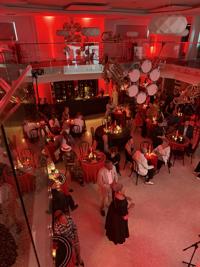
Events at the Hampton House include bebop and jazz nights./
(Historic Hampton House)
“So currently, many of our grants require the activities to happen within the museum, and we realize that much of what we should be doing should also include going out into the schools and being activated into the community afterschool programs and providing those sessions,” Cribbs-Lorrant said.
That includes Officer Friendly. Cribbs-Lorrant is urging prospective donors to see the value in making a connection between the police and local residents.
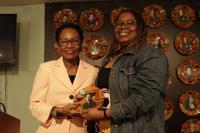
“This Woman’s Work” exhibit and induction at the Black Precinct. Marilyn Holifield. Esq (left), of Holland & Knight, and LaCriscia Fowlkes (right), museum education manager.
(The Black Police Precinct and Courthouse Museum)
“Your funds would be going to elevating a better relationship between law enforcement and civilians,” he said. “I’m excited about bringing back the conversation of Officer Friendly and a law enforcement officer being a respected person in the community and someone that you don’t fear, that you revere.”
Historic Hampton House

(L-R) Gary Tyler, Overtown Commander Cooper, Overtown Sgt. Hendrex, and Overtown Officer Williams at the Black Police Precinct and Courthouse Museum.
(The Black Police Precinct and Courthouse Museum)
Built in the early 1950s, the Historic Hampton House was where Black performers, barred from staying at segregated hotels, returned to celebrate after their performances. These musicians included Sam Cooke, Nat King Cole, Josephine Baker, Ella Fitzgerald and Sammy Davis, Jr.
Today, it is recognized as a National Historic Landmark Museum, with galleries and programs in music and art reflecting on its history.

“Bars Exhibited,” works by Purvis Young, at the Black Police Precinct and Courthouse Museum.
(Black Police Precinct and Courthouse Museum)
Sevrin says their funding comes from community events, art exhibits, donations and tours. They, too, are currently preparing for Art Basel.
She said the museum’s donors recognize its importance.
“We’ve received a lot of funds within the past year from donors throughout the community and worldwide as well, who see the importance of the Hampton House and the light that we shed within the community, and who want to continue to support us because they recognize that we’re not as funded as other institutions within the community,” Sevrin said.
But it also has been affected by budget cutbacks. To help combat those, the Historic Hampton House is once again teaming up with Give Miami Day to raise funds. This year, Sevrin said, the museum’s Give Miami Day goal is $50,000.
“Our pitch is that we’ve been here within the community since 1954 and we plan to stick around and to shed light on the new things that are happening within the culture, and we are always standing with everyone within the community,” she said. “And so we just want to be a place that’s continued to be seen because we’ve been a part of the movement and the change.”
“It’s a place that once you walk in through the doors, it takes you back in time, kind of like a time capsule,” Sevrin added. “It’s a place that we want to continue to preserve and to keep teaching our future generations to come and learn about the history and why history is important.
To donate or learn more about Give Miami Day, visit www.givemiamiday.org