
TAMPA, Fla. — Federal health officials are expanding travel precautions after a U.S. citizen working for a humanitarian organization in the Democratic Republic of Congo (DRC) tested positive for Ebola amid the country’s largest recorded outbreak of the Bundibugyo strain.
The Centers for Disease Control and Prevention (CDC), working with the U.S. Department of Homeland Security, has implemented a Do Not Board process for certain travelers leaving the DRC who may have been exposed to the virus.
Under the policy, some American citizens departing the DRC may be prohibited from boarding commercial flights to the United States and can return after leaving the country and completing a 21-day monitoring period if they do not develop symptoms.
The CDC then continues contact tracing. Health officials say the risk to the general public in the United States remains low.
As international travel remains busy during the summer and cities prepare to host major sporting events, hospitals are reinforcing plans for rare but high-consequence infectious diseases.
At HCA Florida Brandon Hospital, emergency department manager Shawn McCready said large international events require medical teams to prepare for a wide range of health emergencies.
“We have to prepare for everything,” McCready said, recalling his experience serving on the medical team for the 2022 FIFA World Cup in Qatar.
According to the CDC, Ebola spreads through direct contact with the blood or other bodily fluids of a person who is sick or has died from the disease. It is not spread through the air.
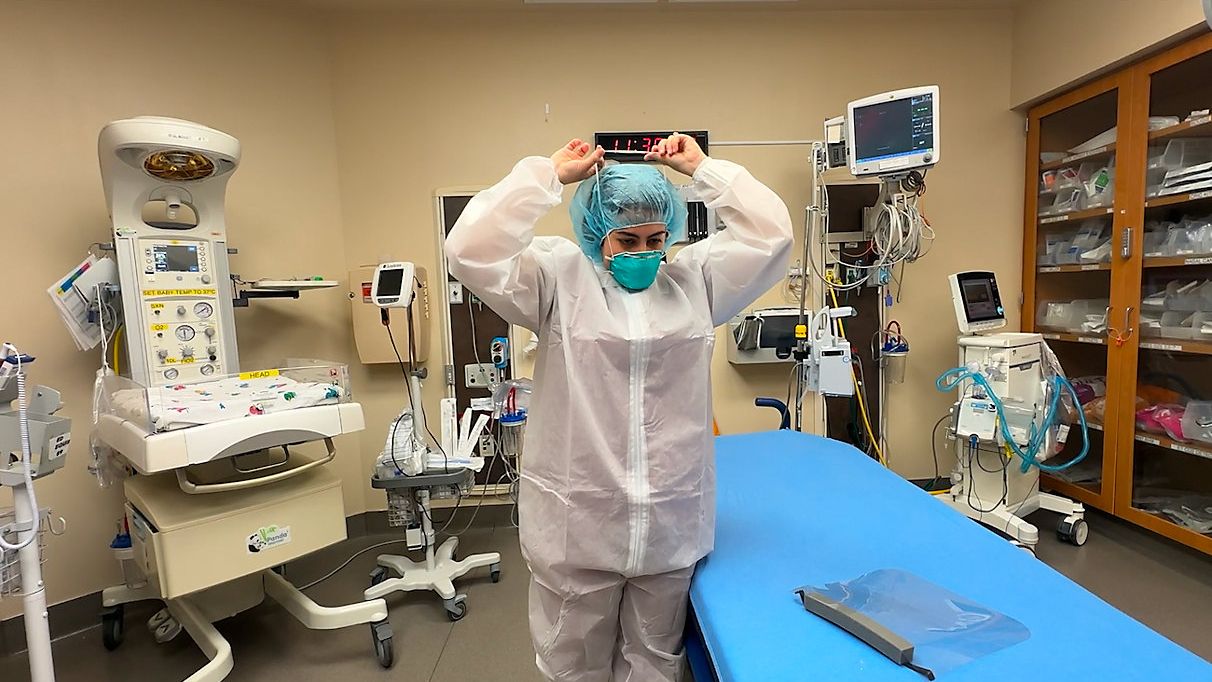
Isis Lamphier, director of infection prevention at HCA Florida Brandon Hospital, said the facility has been closely monitoring the outbreak, following CDC guidance and working with the local health department. The hospital has provided Ebola training for staff, stocked specialized personal protective equipment (PPE) and reviewed protocols for safely caring for suspected patients.
Lamphier said proper preparation becomes even more important as international visitors arrive from around the world.
“So it’s really important if your city has one of the tournaments happening in your city, that you’re well prepared, because you’re going to be seeing an abundance of travelers coming in,” she said. “And you want to be prepared for Ebola or for any diseases that might not be native to your region, but could be native to a region where someone might be coming from.”
She added that correctly removing protective equipment is one of the most critical steps in preventing exposure after treating a patient with Ebola.
Federal health officials continue to emphasize that early identification, isolation of suspected patients, and proper infection-control measures remain key to preventing the spread of Ebola in the United States.