
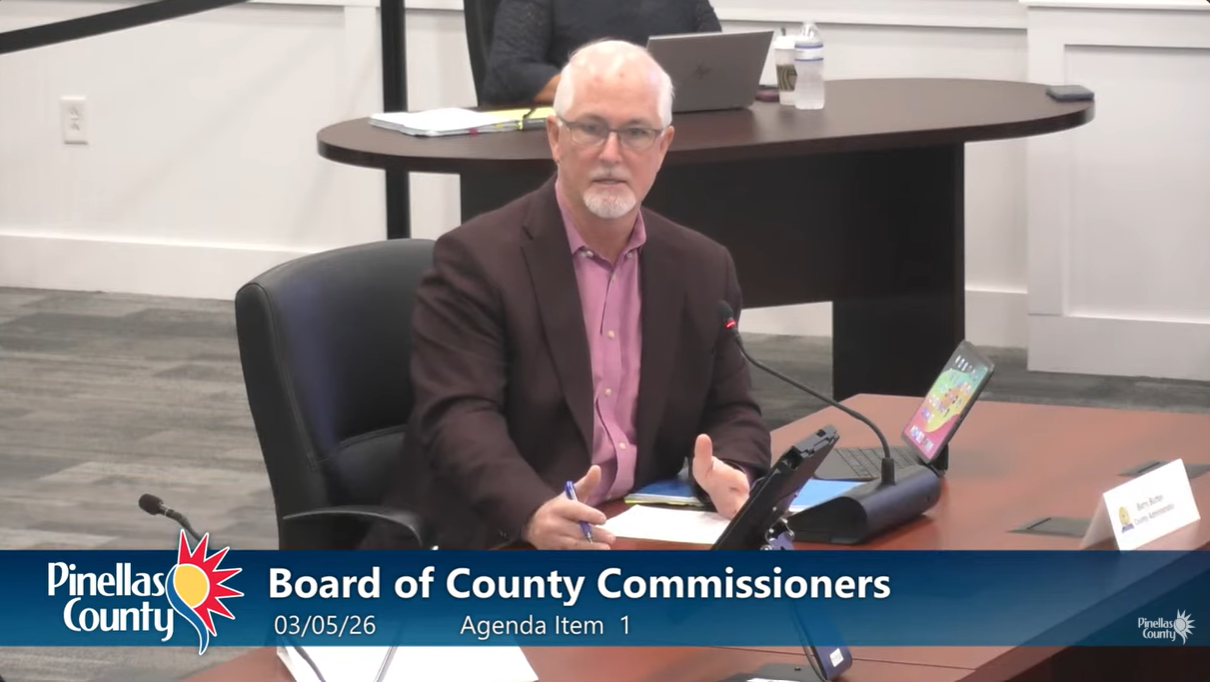
Pinellas County commissioners took the first formal step in developing the fiscal year 2027 budget Tuesday by reaching consensus on the maximum property tax rates the county can levy, setting the framework for spending decisions over the next two months.
The action does not adopt the county’s budget or lock in final property tax rates. Instead, it begins Florida’s annual Truth in Millage (TRIM) process by establishing the highest millage rates the county can levy for the upcoming fiscal year. Those rates will now be certified to the Property Appraiser and used to prepare TRIM notices that will be mailed to property owners next month. While commissioners can lower the rates during upcoming budget hearings, they cannot increase them above the maximums approved Tuesday.
The proposed FY2027 budget will be presented to commissioners Aug. 11, with TRIM notices scheduled to be mailed Aug. 17. Public hearings on the budget and millage rates are set for Sept. 10 and Sept. 24 before the new fiscal year begins Oct. 1.
According to the budget workshop presentation, the county proposes keeping the Countywide General Fund millage rate unchanged, along with 20 other county millage rates. The Seminole Fire District is the lone exception, with a proposed increase from 1.8000 mills to 1.9581 mills.
While Tuesday’s action was a procedural step, commissioners spent much of the discussion focused on a looming concern: a proposed constitutional amendment on the November ballot would expand Florida’s homestead property tax exemption.
While the exemption would reduce property taxes for qualifying homeowners, it would also decrease property tax revenue collected by counties, municipalities and other local governments that rely on those dollars to fund public services.
Commissioner Renee Flowers said that uncertainty complicates the county’s budget planning because commissioners must adopt a spending plan before voters decide the referendum.
“Until we know what happens in November, whatever we decide with our budget, that’s what we will have to stick with,” Flowers said during Tuesday’s Board of County Commissioners meeting.
Commission Chair Dave Eggers said residents would likely expect local governments to adjust their operations if the amendment passes. “Residents may expect a reduction in government,” predicted Eggers.
County Administrator Barry Burton said any reduction in property tax revenue would force county leaders to make difficult decisions about which services receive priority. “If [the tax exemption referendum] passes, everyone is going to have to come together as a county, and this is where the board is going to have to set some priorities,” Burton said.
Burton said those decisions become particularly challenging because county operations cannot always be scaled back evenly. Some services require a certain level of staffing to function, even when funding is constrained.
He offered a hypothetical example in which a county service may realistically require 100 employees to operate effectively, but budget limitations allow for only 10 positions.
“That’s where it gets complicated,” Burton stated.
The county’s Aug. 11 budget presentation will provide the first detailed look at how administrators plan to fund county services within the approved maximum millage rates. Commissioners will then spend the following weeks refining the spending plan before voting on a final budget in September, all while awaiting the outcome of a statewide referendum that could influence future local government finances.