



Charlotte County Commissioner Bill Truex speaks during a July 21 meeting where commissioners reached a consensus to begin dissolving two Community Redevelopment Areas and redirect remaining funds to the county’s General Fund.
Charlotte County government
Charlotte County commissioners reached a consensus July 21 to begin dissolving two Community Redevelopment Areas ahead of their scheduled expiration dates after determining most of their redevelopment goals have been met and citing concerns about the county’s future finances.
The Charlotte Harbor, Parkside and Murdock Village CRAs were created to fund redevelopment projects after each area met at least two of the state’s 15 criteria for blight, Government Management Fellow Whit Buchanan told commissioners during a presentation on the districts’ history.
Since then, the areas have changed significantly. Many redevelopment projects have been completed, while others remain underway.
Commissioners supported transferring the remaining CRA balances to the county’s General Fund, where the money could be used to finish outstanding CRA projects, as well as address other county needs.
“We’re going to be facing some significant financial challenges,” Commissioner Bill Truex said.
He said moving the money to the General Fund would provide “more flexibility with our spending.”
County officials cited several looming financial concerns, including the potential loss of ad valorem revenue if a proposed state property tax relief measure is approved in November, uncertainty over renewal of the county’s 1% local option sales tax and the loss of tax revenue when AdventHealth’s Parkside hospital converts to nonprofit status later this year.
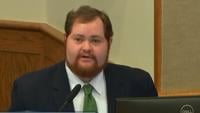
Government Management Fellow Whit Buchanan presents an overview of Charlotte County’s Community Redevelopment Areas during the July 21 commission meeting, detailing completed projects and remaining work.
Charlotte County government
All commissioners except Stephen R. Deutsch supported sunsetting the Charlotte Harbor and Parkside CRAs this year. Deutsch said he wanted the Charlotte Harbor CRA, established in 1992, to remain in place until its scheduled fiscal year 2029 sunset before its remaining funds were transferred to the General Fund.
Commissioners also favored dissolving the Murdock Village CRA, which has no scheduled sunset date, although County Attorney Tom David said doing so will require amending the district’s governing covenant.
Charlotte Harbor
Since its creation in 1992, the Charlotte Harbor CRA has received $18.6 million in funding.
The district experienced substantial growth following the opening of Sunseeker Resort. In fiscal year 2025, assessed property value reached $531.3 million, an increase of $408.9 million, or 334%, from the CRA’s base value. TIF revenue totaled $2.59 million.
Projects still underway include Riverwalk/Harborwalk, Bayshore Park improvements and the Melbourne Street multiuse path.
Deutsch argued the CRA should remain in place through 2029 to help fund additional street improvements around Sunseeker Resort.
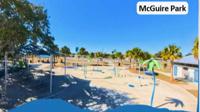
McGuire Park is among the remaining projects in the Parkside Community Redevelopment Area. Commissioners said most planned redevelopment projects have been completed as they consider dissolving the district.
Charlotte County government
Parkside
The Parkside CRA, established in 2010, was scheduled to sunset this year after all of its debt is paid. It has received about $19.1 million in funding.
By fiscal year 2025, assessed property value had reached $585 million, an increase of $360.5 million, or 161%, from the CRA’s base value.
The area, where many homes built by General Development in the 1960s were heavily damaged by Hurricane Ian in 2022, has a median household income below the county average.
Remaining projects include restrooms at Lake Betty Park, sidewalk improvements and upgrades to McGuire Park. Most other planned improvements have already been completed.
Murdock Village
Created in 2003, the Murdock Village CRA has generated about $259.1 million in funding. Development remained limited until construction of West Port accelerated growth beginning in 2021, Buchanan said.
By fiscal year 2025, assessed property value had climbed to $373.7 million, an increase of nearly $356 million, or 2,002%, from the CRA’s base value. TIF revenue reached $1.5 million.
Unlike the older Charlotte Harbor and Parkside districts, Murdock Village has a younger, more affluent population and is primarily residential.
With much of West Port now complete, the remaining projects are West Port East and West Port Village, the latter of which is under construction.
Commission Chair Joe Tiseo said an ordinance to dissolve the Charlotte Harbor and Parkside CRAs is expected to come before the board within the next two months.