
By: Cassidy Delamarter, USF College of Education
Through the 2026 Educational Research in the Classroom & Beyond: Undergraduate Summer
Research Academy, seven undergraduate students in the University of South Florida
College of Education explored some of today’s most pressing educational and health
challenges.
Supported by the Florida High Tech Corridor and USF Research, the academy provided each student with a $1,400 stipend while participating in a
10-week hybrid research experience that combined faculty mentorship, hands-on research
training and, for the first time, integrated artificial intelligence instruction.
The program, which ran from May through July, included weekly training sessions designed
to prepare undergraduate students for graduate study and research careers.
“This year’s academy builds on the success of previous years while preparing students
to use AI responsibly as part of the research process,” said Janet Outlaw, academy coordinator and assistant professor of instruction. “My favorite part has
been working with each of the student scholars and seeing them embrace the possibilities
of research and think more broadly about systems and the way their insights can impact
their field.”
The students’ projects reflected both personal experiences and a desire to improve
outcomes for others.
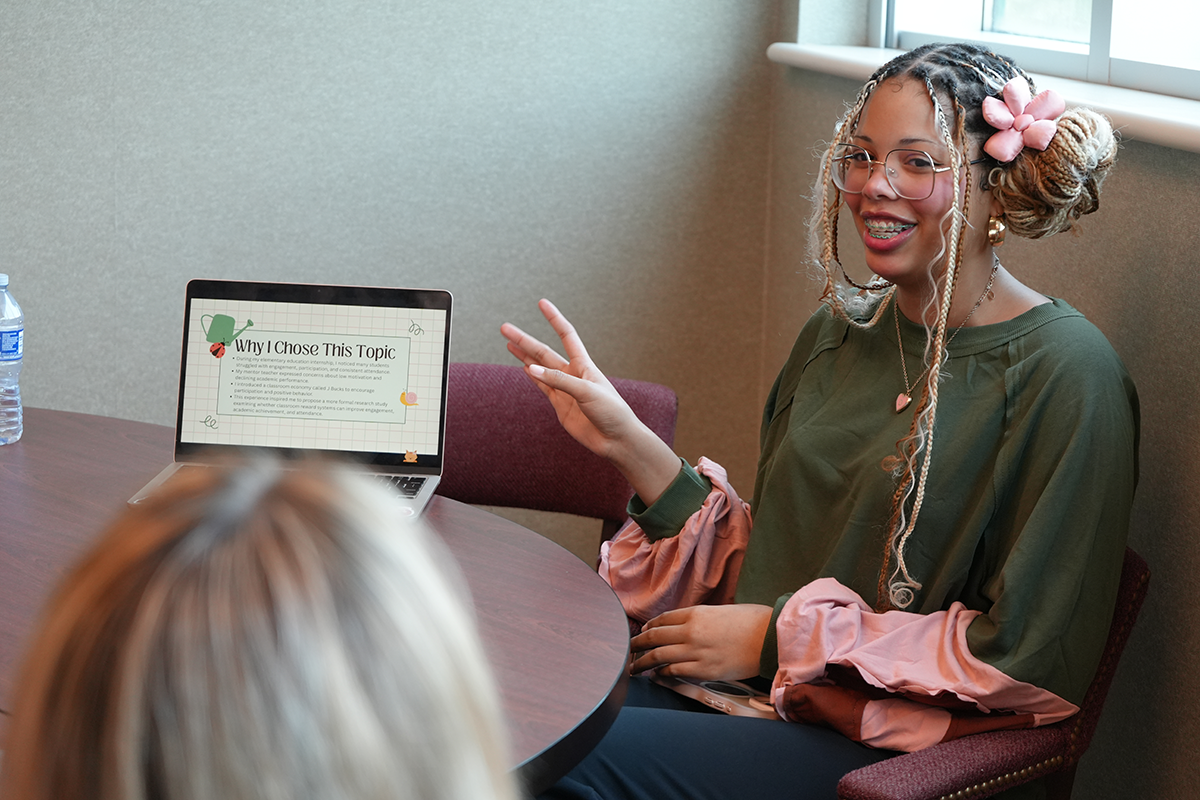
Khalia Jones
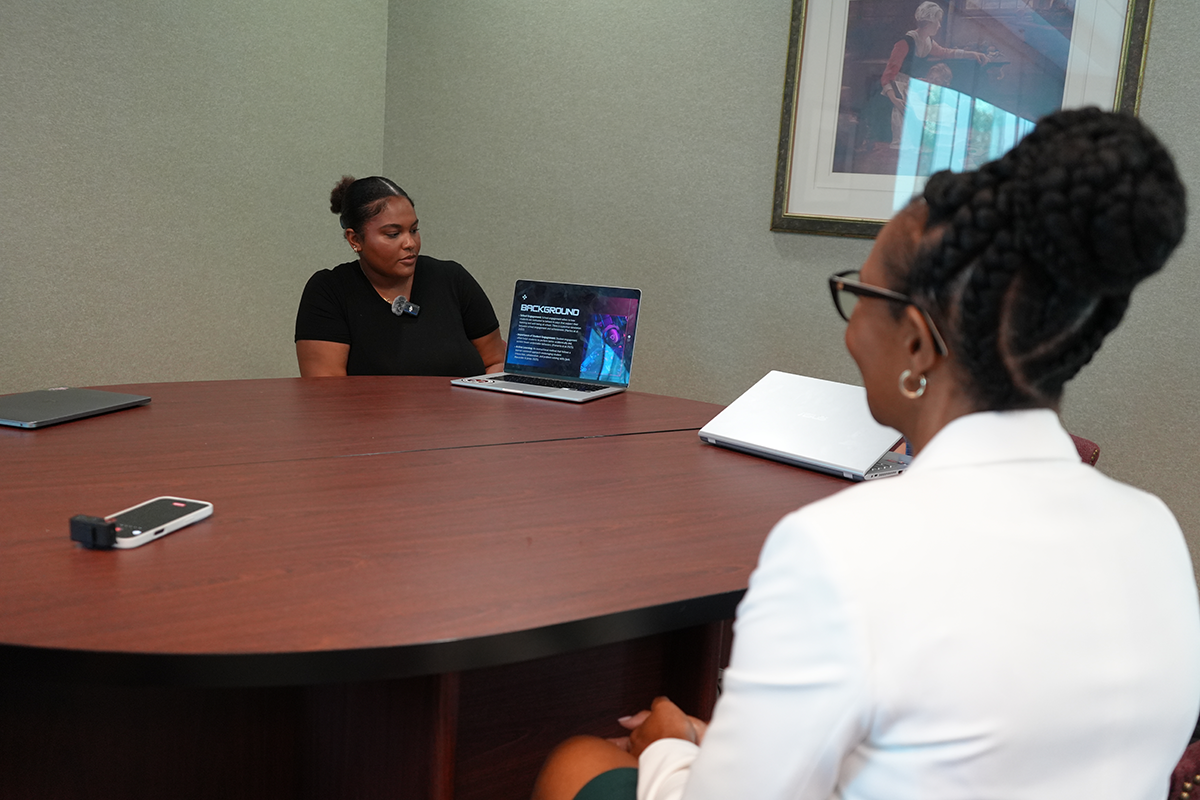
Kayla Fitzpatrick-Holt
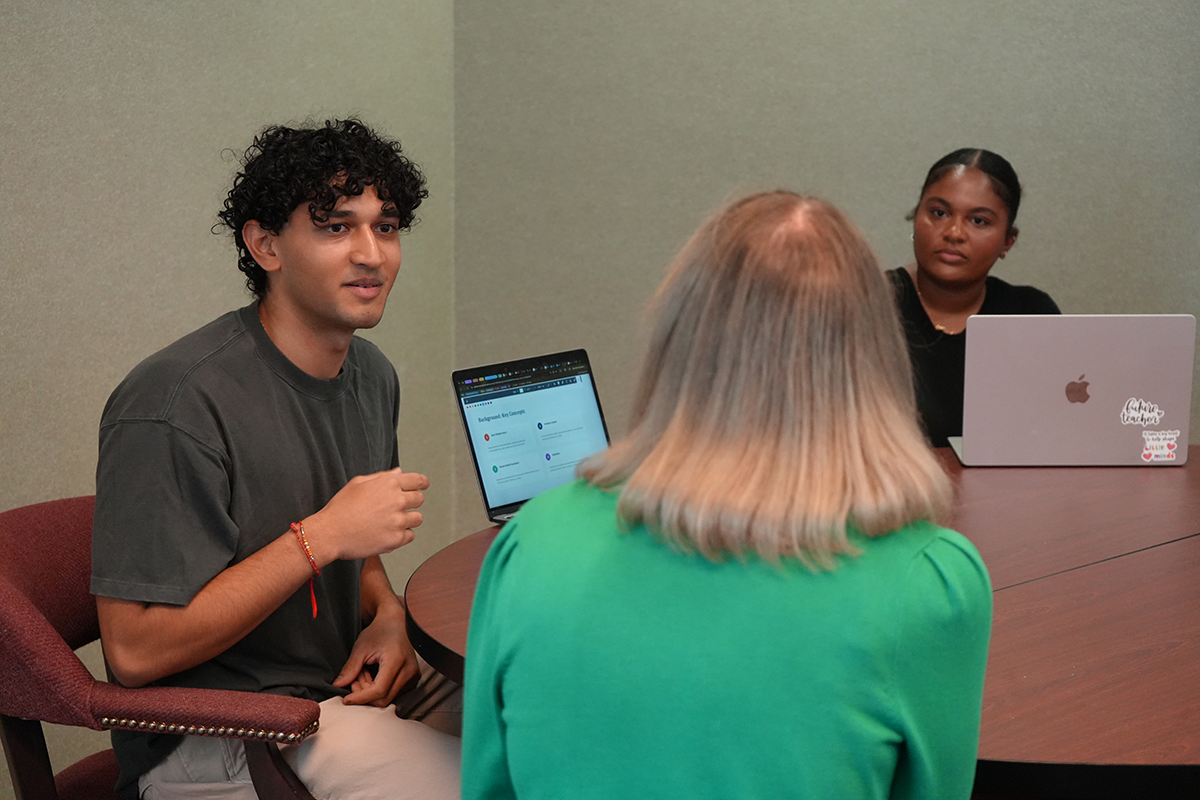
Parth Patel
Rising sophomore Parth Patel, an exercise science and kinesiology student, examined
whether mental health serves as a link between sports injuries and academic performance
among student-athletes. Inspired by his own recovery, Patel hopes his research will
help coaches, athletic trainers and healthcare professionals better support injured
athletes.
“I actually suffered an ACL tear in high school, so I know what it feels like,” Patel
said. “Rehabilitation affects your mental health a lot, and trying to focus on your
studies makes it even harder. I wanted to investigate these issues because I want
to better understand how we can support student-athletes at both the high school and
college levels.”
For rising junior Kayla Fitzpatrick-Holt, classroom observations during her teaching
internships sparked an interest in student engagement. Her research explored how gamification
can improve learning and participation in elementary classrooms.
“Educational games can be really effective for learning and progression in the classroom,
while also helping teachers increase student engagement,” Fitzpatrick-Holt said.
Helene Horace focused her research on the experiences of nontraditional student mothers
facing housing instability and unemployment. Using personal journals alongside focus
groups with other student mothers, her research examines the systemic barriers that
can delay degree completion, including childcare, financial hardship and balancing
work with family responsibilities. Her long-term goal is to advocate for institutional
changes in education, including family housing and additional support services for
student parents.
“I graduated high school in 2009. It took almost 17 years for me to get here today,
trying to balance school and raising my kids,” Horace said. “While doing this research,
it made me heal and realize I was not alone.”
Horace is on track to graduate December 2026 and hopes to become an elementary teacher.
“Undergraduate research is one of the nation’s recognized high-impact practices because
it allows students to pursue questions they are passionate about while developing
the scholarly skills they’ll carry into their careers,” said Sandra Johnson Austin,
director of USF Student Engagement for Research & Innovation. “The perspectives and
innovation these young scholars bring will ultimately benefit our communities and
society.”
Project titles:
Anna Kardiolaka, The Impact of Creative Arts Integration on Student Engagement in Elementary Special
Education Classrooms
Alyssa Godsill, Causality of the School-to-Prison Pipeline in Elementary Schools
Helene Horace, Autoethnography of a Non-Traditional Student: Navigating College as a Mom Over 35
Facing Housing & Unemployment Instability
Jamy Bonczek, Generative AI and Academic Integrity in Higher Education
Kayla Firzpatrick-Holt, Gamification in the Classroom
Khalia Jones, The Effects of Classroom Reward Systems on Student Motivation, Academic Achievement
and Attendance in Elementary Classrooms
Parth Patel, The Impact of Sports Injuries on the Academic Performance and Mental Health of Student-Athletes