
Some say the moratoriums will give city officials more time to study data centers. Others say they are unnecessary pauses.
PINELLAS PARK, Fla. — Two more Florida cities are taking steps to slow the development of hyperscale data centers as concerns over their impacts continue spreading across the Tampa Bay region.
On Tuesday, the North Port City Commission voted to move forward with a proposed 18-month moratorium on new hyperscale data centers that would give city leaders more time to study the issue and consider future regulations. The proposal will still require additional votes before it takes effect.

This story continues below.
Meanwhile, the Pinellas Park City Council considered the first reading of its own 12-month moratorium on new and expanded data centers after city staff recently rejected a proposal for a 17,000-square-foot data center on 76th Court North. According to city leaders, the application was denied because of issues with the proposal submitted by the developer.
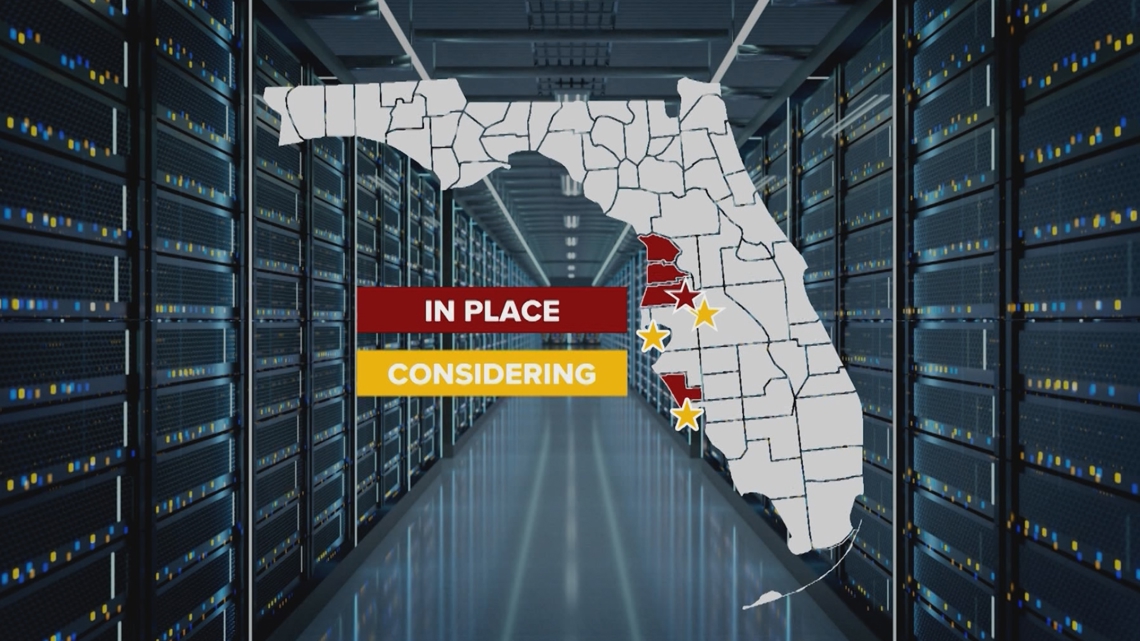
The two cities join a growing list of local governments across the region weighing restrictions on large-scale data centers. Citrus, Hernando, Pasco and Sarasota counties have already approved temporary moratoriums while they evaluate how to regulate the facilities.
RELATED: Rep. Castor introduces AI data center bill as local fight continues in Zephyrhills, Pinellas Park
City leaders say the pause is intended to give staff time to better understand the potential impacts of hyperscale data centers, including concerns about water consumption, electricity demand, noise and effects on surrounding neighborhoods.
“A moratorium gives staff time to sit back and really research the issue, determine how they want to handle them,” Pinellas Park Vice Mayor Ricky Butler said.
North Port Mayor Pete Emrich echoed that sentiment during Monday’s meeting.
“There’s a lot of what ifs. There’s a lot of answers that we need to get to go forward,” Emrich said.
Not everyone agrees that moratoriums are necessary.
Kyrsten Sinema, former U.S. senator from Arizona and now co-chair of the AI Infrastructure Coalition — an advocacy group for AI infrastructure like data centers — said communities should learn more about data centers but argued the facilities are often misunderstood.
“The reality is that data centers help all of us live our lives easier and better every day,” Sinema said.
She added that while construction activity can create temporary impacts, she does not believe the operation of modern data centers is responsible for issues like discolored water that some residents have raised.
Supporters of data centers say the facilities create tax revenue, support artificial intelligence infrastructure and power many everyday technologies. Opponents argue communities should first fully understand their long-term impacts before allowing large-scale development.
That’s the direction both North Port and Pinellas Park are moving in, even though both moratoriums still need further approval to be enacted.