
ORLANDO, Fla. — Orange County leaders are trying to get clarification from Florida officials after the state cited concerns over several policies in the county’s Vision 2050 comprehensive plan.
One of the 14 policies in the county’s Vision 2050 comprehensive plan that the Florida Department of Commerce took issue with was keeping bike paths and multi-use trails separated from vehicles, according to the Orange County Planning, Environmental and Development Services Department.
What You Need To Know
Florida Department of Commerce is objecting to 14 policies in Orange County’s Vision 2050 comprehensive plan
One of the policies the state objected to regarded keeping bike paths and multi-use trails separated from vehicular roadways, whenever possible
The state says the policy is “potentially more restrictive or burdensome”
Orange County leaders are asking for clarification from the state
The plan is a roadmap for where Orange County wants to go in the future. It states, “Bike paths and multi-use trails will be separated and protected from vehicular roadways, whenever possible.”
Keeping cyclists and pedestrians safe is key to Orange County leaders, like District 1 Commissioner Nicole Wilson.
“One of the things that we know helps us save lives is to separate pedestrians and cyclists from cars and trucks, and so (the county) put that in our comprehensive plan as a goal and to ask any future development to help us achieve that goal of saving lives,” Wilson said.
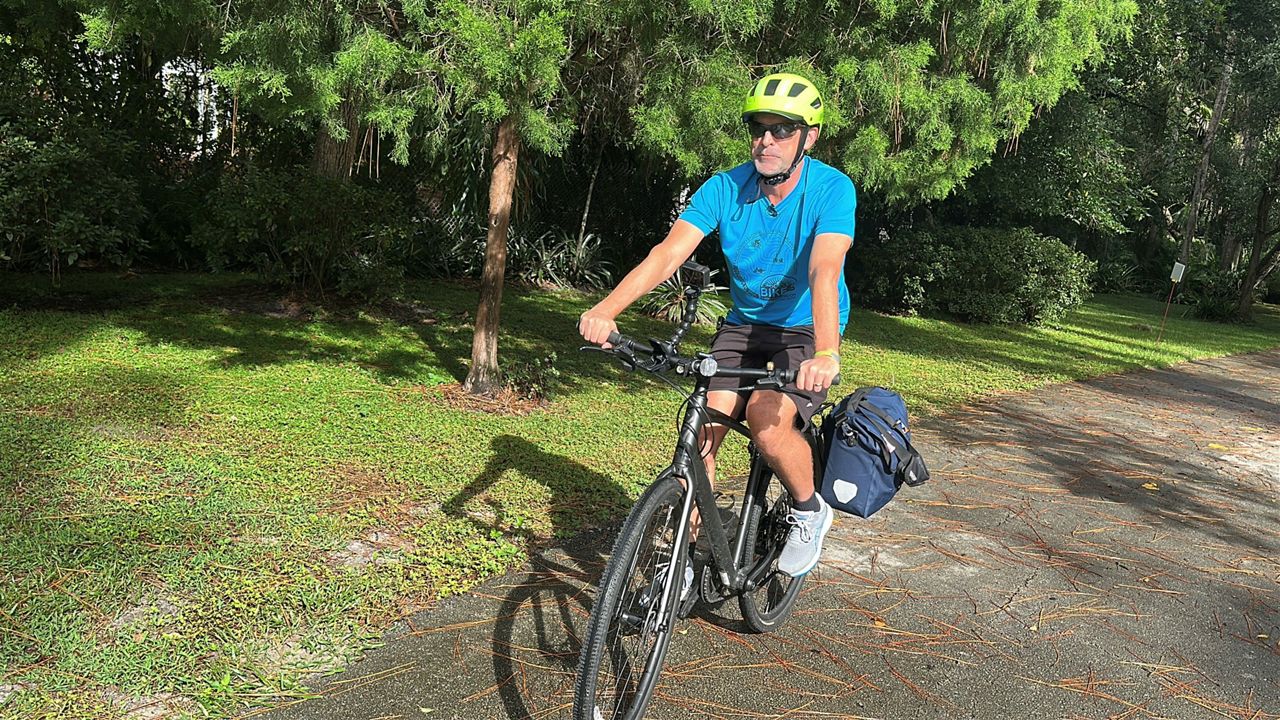
Jamie Krzeminski, one of the founding members of Bike/Walk Central Florida, said he tries to steer clear of cars, taking bike lanes or multi-use paths when available.
“I have been hit two times. Luckily, I was not seriously hurt in either one of them, but you know, it’s definitely a wake-up call,” said Krzeminski, who has biked to work in downtown Orlando from his Winter Park home for the past 24 years.
Asked why the state objected to the “and protected from vehicular roadways” part of the policy language, the governor’s office responded to go to the Florida Department of Commerce for answers. The press secretary for Florida Commerce said the decision is explained in the letter to Orange County.
That letter only states the policy is “potentially more restrictive or burdensome.”
That is a claim with which Wilson disagrees.
“It’s not too burdensome. I quite frankly think that it’s a bare minimum that a government should do,” she said.
Krzeminski said there’s been a recent focus at the federal and state level to crack down on road diets. The traffic engineering strategy reconfigures a roadway and typically converts a four-lane, undivided road into a three-lane road with one lane of traffic in each direction and a center turn lane or creates dedicated bike lanes.
“The state guidance is really focused on areas where any sort of additional bike infrastructure would take away from vehicle capacity,” he said.
Last year, Florida Gov. Ron DeSantis signed legislation making it more challenging for agencies to reduce lanes for vehicles to accommodate pedestrians and cyclists.
The reason, as stated in an Florida Department of Transportation news release, is the concern to “force people’s behavior out of car usage or ownership.”
“If it means giving up a traffic lane somewhere that we’ve got a bloated road, you know, if we’re in a residential area, how many lanes do we need?” Wilson said.
Orange County and other jurisdictions filed a lawsuit to challenge the state law behind this, Senate Bill 180.
Orange County’s entire comprehensive plan has been deemed null and void by the state because of the policies cited by the state.
“We need to get clarification. And in the meantime, we’re going to follow our governing documents,” Wilson said.