
I spent my first year of college in deep blue California, but I was raised in what was once a swing state, now turned red — Florida. In fact, while growing up, I continuously moved back and forth between the two states, experiencing the polarizing differences of both areas. While each state had a multitude of differing opinions on topics that ranged from best politician to best burger joint, a love in my heart grew for the people of each place.
The world is filled with the worries of tomorrow — of the future of the country and of generations to come. And through each differing opinion comes an opposing side. Disagreement is fundamental to democracy and to bettering hardships; however, the largest burden of creating a change is when we stop listening to one another.
Jubilee is a popular YouTube channel known for its videos of unscripted debates and social experiments. Their debate videos feature people with opposing opinions who have a meaningful conversation and find an area of agreement. However, the outcome rarely matches this intention. For example, in a Jubilee debate titled “1 Progressive vs 20 Far-Right Conservatives,” one debater refused to condemn Nazi-era persecution and openly agreed and laughed at the claim that he was a fascist.
Since these video debates thrive on viral clips, creators often bring in radical opinions to produce tension between groups. With the growth of short-form content, the youth are being shown 30 seconds or less of information, with little processing of each video before scrolling. In these quick watches, creators must provide the most entertaining segments of a debate, usually portraying clips of jarring language and rhetoric. The debaters themselves hold the incentive to say extreme statements to become a viral clip as well.
Due to this, these videos are spreading radical ideas and deepening isolation between groups all over the United States, all while no genuine conversation is taking place. Democracy runs on listening, debating, and discussing, but this cannot be accomplished if the main goal of political discourse is to get the most clicks on social media.
With my own political beliefs, I understood at a young age that my neighbors may or may not agree with me — regardless of whether I lived in a blue or red state. As a child, I looked at life in black and white, confused at any differing perspectives. However, I found that I could see the world in Technicolor after simply talking to my community members. But with these extreme videos, we are giving a platform to the spread of hate speech and creating a ripple effect of distance between political and racial groups. These content swipes are rubbing off on the way we function when we interact with opposing groups, stripping away empathy and level-headedness. We are no longer listening to one another, just simply yelling at each other about who is more correct. With the so-called “communication” described in these videos and represented all over the media, the nation is walking up a downward escalator.
Even through opposing opinions and conflicts, the way that we talk to one another is crucial for the nation to come together in making a difference. But change is not possible without actually listening to one another with empathy, understanding and solidarity, even during disagreement. I urge you to have a conversation with your neighbors and listen to their perspectives with empathy — even if the subject ranges from best politician to best burger joint. Empathy drives us through hard and turbulent conversations; empathy drives humanity to progress to a better reality.
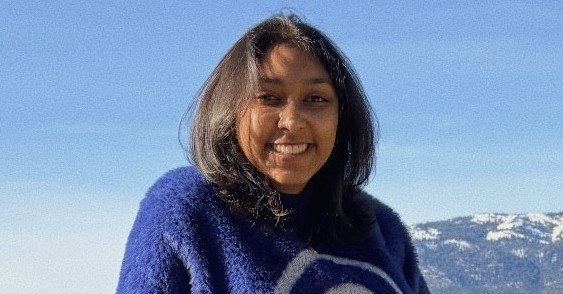
Vriti Shah is a student at New York University and a graduate of Lake Mary High School.