
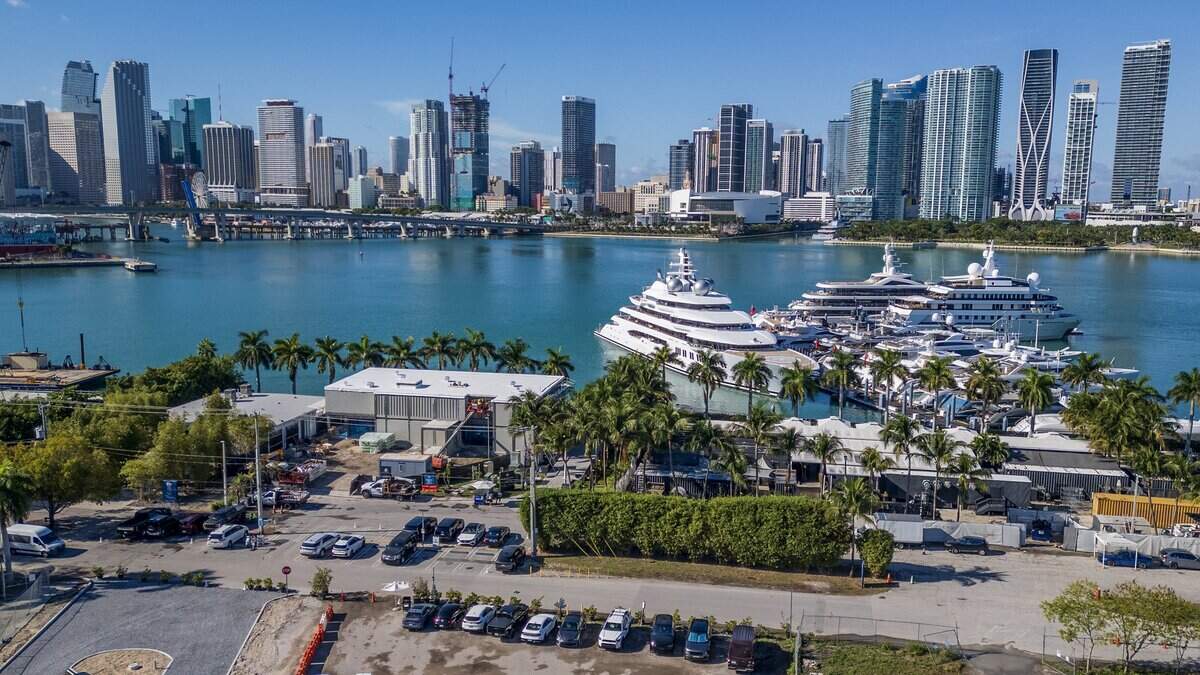
Yachts dock on Biscayne Bay at Yacht Haven Grande, a marina for large yachts on Watson Island.
Pedro Portal
pportal@miamiherald.com
South Florida’s waterfront development boom is no longer just about luxury condominiums, sprawling waterfront estates and billionaire compounds.
Developers, investors and local governments are spending hundreds of millions of dollars expanding marinas and building new ones to keep up with demand as billionaire migration to South Florida fuels a growing shortage of dockage for some of the world’s largest private vessels.
As billionaire hedge fund managers and tech entrepreneurs continue moving to Miami and Palm Beach, many are bringing yachts stretching well beyond 100 feet — or buying them after settling here.
Public marinas in Miami and Miami Beach are being renovated to handle vessels between 80 and 200-plus feet. Dockage has become so scarce that slip prices are rising and waiting lists are growing. To deal with the shortage, at least one Miami billionaire is building a private marina for his superyacht and others.
The migration is transforming South Florida from a seasonal playground for the global yachting elite into a year-round home port for some of the world’s largest private vessels, creating a scramble for dock space and a marina building boom unlike anything the region has seen in decades.
“The wealthy used to come here for the season. Now they’re living here year-round and enjoying everything boating in Florida has to offer,” said Phil Purcell, president and CEO of the Marine Industries Association of South Florida. “The demand has changed dramatically.”
Not everyone is celebrating the boom. Environmental advocates warn that more marinas could further strain fragile coastal ecosystems, while marine industry veterans say the rapid expansion is accelerating the loss of the family-owned boatyards and neighborhood marinas that once catered to everyday boat owners and defined the region’s working waterfront.
Billionaire boat boom
South Florida is now home to 54 billionaires, according to Forbes rankings, with the majority of them in Miami-Dade and Palm Beach counties – some of the highest concentrations anywhere in the United States. As wealthy residents relocate from New York, California and overseas, many are bringing yachts with them — or purchasing them after buying waterfront homes as part of the lifestyle.
That demand is reshaping the region’s waterfront.
Florida remains the nation’s boating capital, with 861,000 registered recreational vessels, according to the Florida Department of Highway and Motor Vehicles. Of those, 55,200 are docked in Miami-Dade, where they are joined by hundreds of yachts purchased oversees and registered under foreign flags.
Finding a slip for an ordinary boat can be difficult. Finding a slip for yachts measuring 80 to 300 feet is even harder.
Slip prices vary widely by marina, location and vessel size. At Miami-Dade public marinas, the cost ranges from $23 to $40 per foot per month. At high end marinas that cater to superyachts, costs can range from $60 to $100 per foot monthly.
Marinas become amenities
It’s not just marinas rushing to accommodate big yachts. Luxury condominium towers in Miami now market private slips alongside penthouses. High-end residential developers increasingly are making marinas a centerpiece of new projects rather than treating them as an amenity.
For example, Downtown Miami’s Aston Martin Residences includes a private marina capable of accommodating yachts up to 300 feet long.
At La Maré in Bay Harbor Islands, some prospective buyers have been just as interested in securing marina slips as purchasing condominiums, said Michael Troyanovsky, the project’s head of sales. Some have asked about the smallest unit they could buy to qualify to lease a slip, he said. Across the project’s three waterfront buildings, there are 17 boat slips for residents.
Nearby, One Kane, an office building under construction in Bay Harbor Islands, is incorporating marina slips so executives can commute by boat from nearby enclaves, including “Billionaire Bunker” Indian Creek Village and Bal Harbour. They call it dock-to-desk yacht access.
Some of South Florida’s wealthiest residents are building their own dockage.
Citadel founder Ken Griffin, whose 308-foot yacht Defy ranks among the world’s largest private vessels, has won approval from Miami Beach to build a private nine-slip marina on Terminal Island near his Miami homes and offices. Plans for the property also include a helipad.
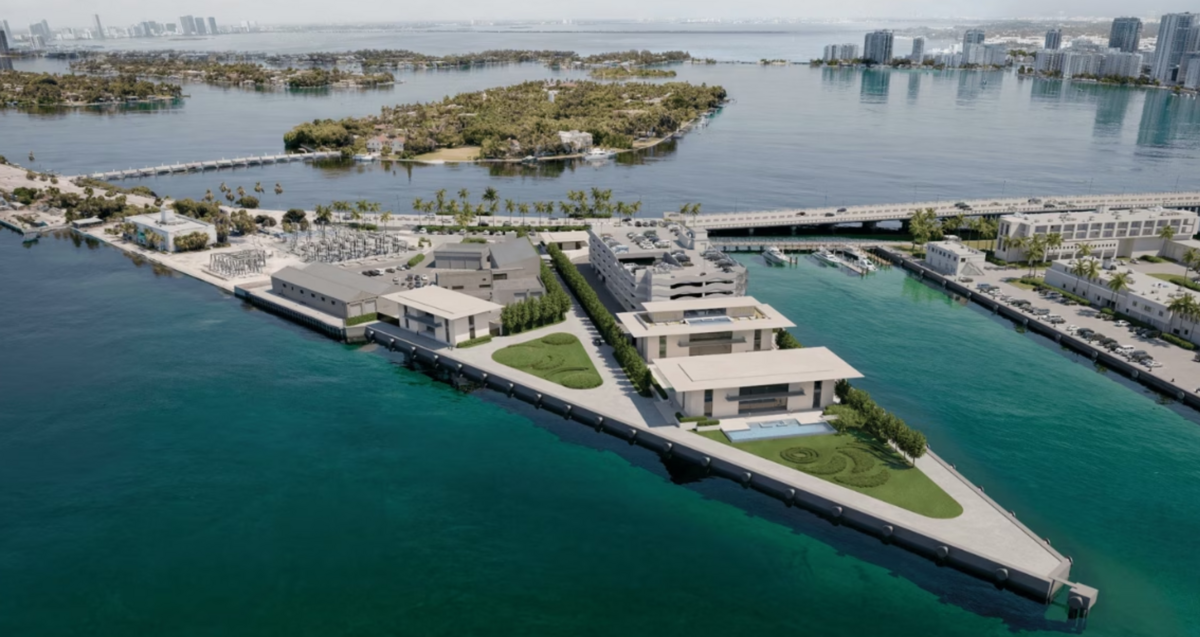 Miami billionaire Ken Griffin’s new private marina is set to be build next to the U.S. Coast Guard Station on Miami Beach, off the MacArthur Causeway. Architectural renderings by BMA Architects BMA Architects
One project that illustrates the broader trend is the proposed redevelopment of the old Miami Seaquarium site on Virginia Key.
Terra, the Coconut Grove developer selected by Miami-Dade to redevelop the county-owned property, plans to invest more than $100 million transforming the site into a public waterfront destination anchored by a large marina.
David Martin, Terra’s chief executive officer, said through a spokeswoman that the project is designed to do more than just address Miami-Dade’s boat slip shortages.
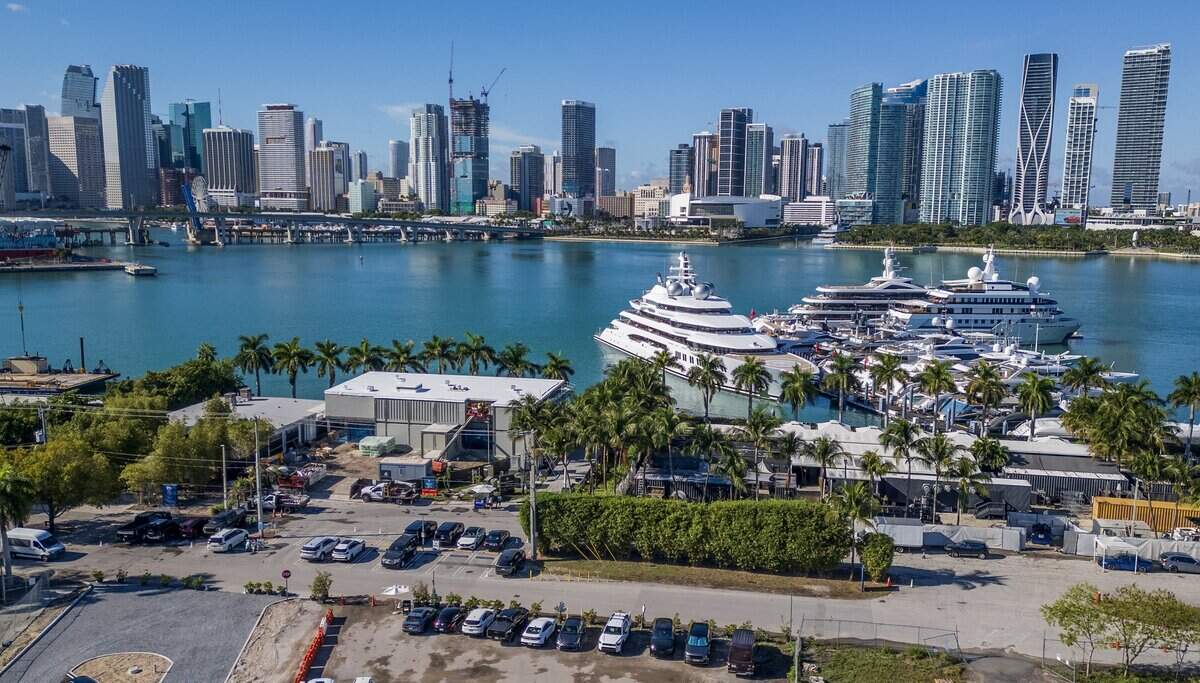 Yachts dock in Biscayne Bay at Yacht Haven Grande, a marina on Watson Island. Pedro Portal pportal@miamiherald.com
The proposal includes a public baywalk, waterfront restaurants, an aquarium focused on native marine life, environmental education facilities and one of the project’s signature features — a large public marina with wet and dry boat slips.
Martin said through a spokesperson that the project is not intended to become just another superyacht marina. About 80% of the 325 slips would accommodate small, medium and large boats. About 90 slips will accommodate yachts between 80 and 200 feet long.
.png "npr-brightspot.s3.amazonaws (6).png") A schematic shows the layout for the planned marina at the Miami Seaquarium site on Virginia Key. Miami-Dade County
A schematic shows the layout for the planned marina at the Miami Seaquarium site on Virginia Key. Miami-Dade County
”This is an opportunity to show what a true public-private partnership can look like,” Martin added. “Our team will breathe new life into this iconic site by adding a public baywalk, a vibrant fisherman’s village, a state-of-the-art aquarium and education center and a world-class marina with innovative features promoting environmental resiliency.”
Terra’s proposal remains under review by state and local regulators after environmental agencies raised concerns about potential impacts to Biscayne Bay and whether some of the marina slips extend too far into public waters.
Bigger marinas are coming
The owners of Miami Beach Marina are pursuing a major redevelopment designed to accommodate today’s larger yachts. Miami-Dade recently completed a $13.8 million renovation of Haulover Park Marina and continues improvements at Pelican Harbor Marina. Suntex Marinas is redeveloping Virginia Key Marina and Miami Marine Stadium Marina. Miami voters will decide in November whether to overhaul Dinner Key Marina and Miami Marine Stadium.
The public sector is helping fuel the boom as well. Miami-Dade’s Maritime Prosperity Zones initiative intends to attract private investment into the county’s marine economy by encouraging waterfront facility upgrades.
In Fort Lauderdale, known as the “Yachting Capital of the World,” projects are emerging to make marina slips larger. The recently redeveloped Pier Sixty-Six hotel marina now features 164 slips that can handle vessels up to 400 feet long. The Las Olas Marina is being rebuilt to attract larger yachts, while Bahia Mar Yachting Center and Safe Harbor Lauderdale Marine Center continue expanding facilities serving the superyacht market.
Palm Beach County is seeing similar investment. The just-completed PORT 32 in Palm Beach Gardens is redeveloped its marina into a 471 dry storage slips and 20 wet slips for vessels ranging from small boats to 100-foot superyachts, while operators continue investing in Palm Harbor Marina and Safe Harbor Rybovich, one of the country’s premier superyacht service centers.
Earlier this year, Blackstone Infrastructure agreed to purchase Safe Harbor Marinas, the nation’s largest marina owner and operator, for $5.65 billion, giving the investment firm control of 138 marinas, including flagship South Florida properties.
The acquisition underscored how marinas have evolved from places to store boats into prized commercial real estate.
What’s being lost
Not everyone views the boating and marina construction boom in South Florida as progress.
Jose Godoy, president of the Biscayne Bay Foundation, said accommodating larger yachts could come at the expense of Biscayne Bay’s fragile ecosystem. Large vessels can damage seagrass beds and put additional pressure on already stressed marine habitats, he said.
Others worry the region is losing something else: its historic working waterfront.
Along the Miami River, where commercial shipyards once serviced everything from fishing boats to cargo vessels, waterfront property is increasingly being repurposed for superyachts and luxury marinas.
Rick Hambley, project manager at RMK Merrill-Stevens Yachts, Florida’s oldest continuously operating shipyard, has watched the transformation firsthand. At his yard on the Miami River, major repairs and refits on a megayacht can easily approach $1 million.
But Hambley said the boom comes with a downside: the steady disappearance of the small, mom-and-pop marinas that have long served everyday South Florida boaters with fuel, bait and ice.
“All those little marinas from Miami to Fort Lauderdale are being bought up to build bigger marinas for larger boats,” Hambley said. “That’s a shame.”
This story was originally published July 25, 2026 at 9:08 AM.


Miami Herald
Catherine Odom covers real estate for the Miami Herald. She previously interned on the Herald’s government team and has worked as a journalist in Germany and Armenia. She is a graduate of Northwestern University.