
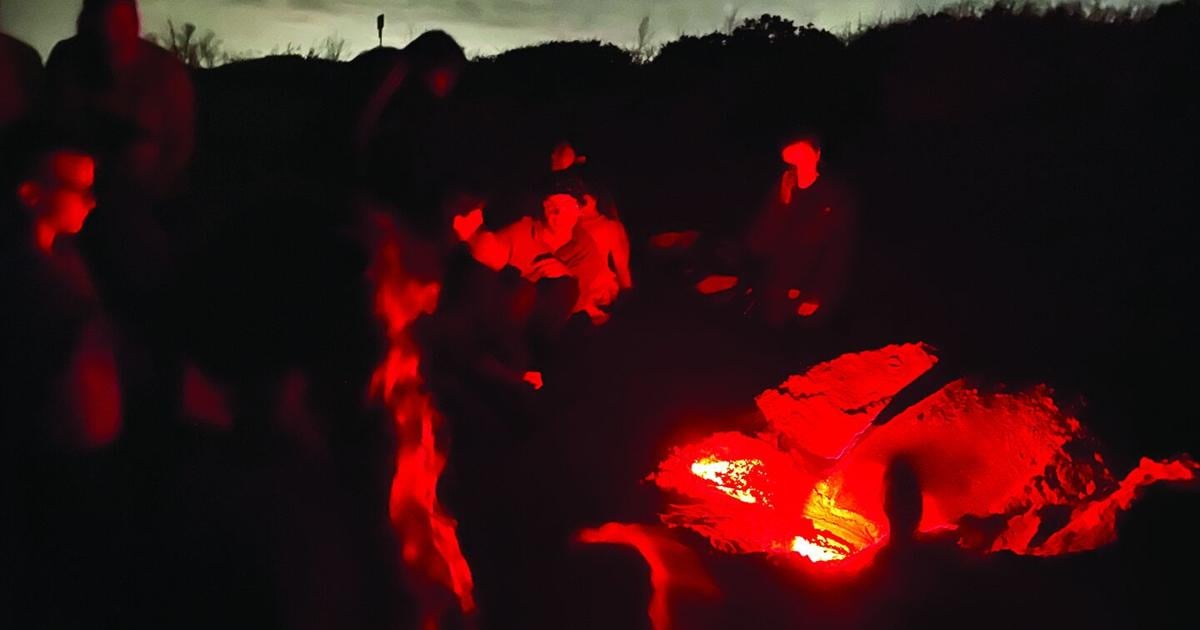
TREASURE COAST ── Beneath a dark sky broken by flashes of heat lightning, our group watched a female loggerhead begin one of nature’s oldest rituals. Reaching that moment took patience, a late radio call and a lesson in why even the smallest sea turtle must make its own way to the water.
It is peak nesting and hatching season for sea turtles, one of the most marvelous creatures on earth.
I recently joined one of the final guided turtle walks of the season with Inwater Research Group, a nonprofit marine and coastal conservation organization founded in 2001.
The walk is scheduled for 9 to 11 p.m. While a biologist scouts the beaches, searching for easily accessible nests in the making, participants wait in air-conditioned comfort while marine biologists explain what makes sea turtles so amazing.
They described why the protected keystone species is vital to ocean health and answered dozens of questions as our group passed around green, leatherback and loggerhead skulls to examine.
I learned some fascinating and fun facts.
Sea turtles have lived on the planet for more than 120 million years. I’m number-phobic, so that’s tough to grasp. In other words, they coexisted with ── and outlived dinosaurs.
Florida is home to the world’s largest loggerhead rookery.
During nesting season, the Treasure Coast averages 200 to 300 crawls, or attempts to nest, each day.
Female loggerheads come onshore an average of four times a season and lay 100 to 150 eggs each time. A single nest can have multiple fathers. A recently discovered nest had six different paternities.
The temperature of the nest determines the sex of the hatchlings. Rising global temperatures have resulted in fewer male hatchlings. Sea turtles have an average life span of 70 to 100 years.
Even with brains smaller than the size of a ping-pong ball, they navigate using the moon and stars. That is why keeping lights off near the beach is imperative. Artificial lights can disorient them.
When the hatchlings emerge, beachgoers are told not to touch them or help them into the water.
“Even if they’re struggling?” a fellow participant asked.
Yes, even if it looks like they’re not going to make it, and it feels harmless.
The reason is astounding.
The tiny hatchlings must not be disturbed because they are imprinting, a term used to describe the development of their ancient, built-in GPS.
As they cross the sand, the hatchlings sense the Earth’s magnetic field. Decades later, that ability allows them to navigate thousands of miles across the ocean and return to the same beach where they were born to lay their eggs.
Twenty or 30 years later, those hatchlings — now mature female sea turtles — will return to that same St. Lucie County beach to nest. And, they will continue to do so throughout their lives.
Turtles have been tracked coming from as far as the coast of Spain to nest on the Treasure Coast.
At 10:57 p.m., just before the walk’s scheduled end, the scout radioed that she found a female loggerhead beginning the nesting process.
Beneath dark skies, lit occasionally by flashes of heat lightning and the red glow of our guides’ flashlights, we had the privilege of witnessing one of nature’s oldest and greatest marvels.
Guided sea turtle walks are offered annually in St. Lucie, Martin and Indian River counties in June and July.
For more information, go to www.inwater.org.
Nighttime sea turtle walks conclude July 31 in St. Lucie County as state permits restrict late-summer evening activities during the final weeks of nesting season. In August, the focus shifts from watching nesting turtles at night to morning nest excavations and hatchling releases as sea turtle eggs begin to hatch.