
ORANGE COUNTY, Fla. — Many Haitian and Syrian Temporary Protected Status recipients in the United States faced the expiration of their authorization to work and live in the U.S. on Monday, one month since the Supreme Court ruled that the TPS status for people from those countries could be ended.
TPS provides temporary legal immigration status for people from designated countries because of specific conditions — including conflict, epidemic, disasters or other conditions.
Florida has the largest population of TPS recipients of any state, with 403,965 people, according to the National Immigration Forum, an organization that seeks changes to the national origins quota system.
Florida is also home to more than a half-million Haitians, according to World Population Review.
Nattacha Wyllie, who is originally from Haiti, has built a life in Central Florida and founded the Haitian American Art Network to support Florida’s Haitian community. She said the effect of the expiration of TPS status for Haitians will be felt deeply throughout the community.
“They have contributed tremendously in the community,” Wyllie said. “Some folks still say they continue to go to work as long as their working permit is still available.”
She added, “We as a community are asking for the policy to change, to restore, re-designate TPS for the Haitian community and the Syrian community and the Venezuelan community.”
Wyllie said she is concerned about how the end of TPS for Haitians and Syrians could affect people’s ability to continue their lives in the U.S.
“As an organization, we’re just getting ready as a mutual aid hub to receive donations so we can serve the ones who are in need, the ones who are not working, the ones who are not able to come out because there’s this fear,” she said.
Many of them have had legal status through TPS for years, she said.
“People are not coming out. They’re not coming out to attend, events that we are doing,” Wyllie said. “Even a zoom session. People are afraid because they think that their information has been out there, that somehow ICE (Immigration and Customs Enforcement) agents will follow them and then come pick them up.”
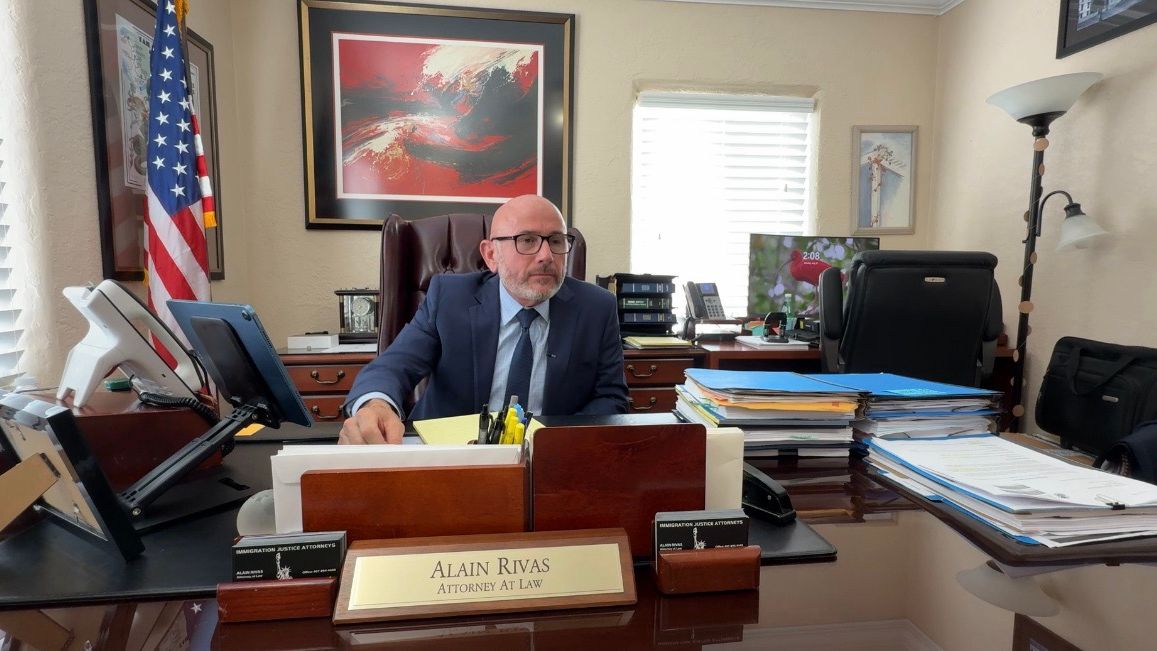
Immigration attorney Alain Rivas said he serves hundreds of clients from Haiti specifically who are losing TPS status.
“For a lot of the recipients, the TPS recipients, especially the Haitian community, they’re now without their major relief in the country. TPS essentially allowed them to have a work permit and to stay in the country without having to seek other forms of relief,” Rivas said.
Leaving the U.S. would be difficult for people who have lived in the country for years, he said.
“So, it’s very difficult for them to be at this point to leave because it will be essentially uprooting them and going to a foreign country,” Rivas said. “They came from Haiti maybe 15 years ago.”
Rivas said some TPS recipients may try to pursue asylum or other immigration petitions, but those options are limited for many people.
“They now have to seek other ways of staying in the country. So it goes back to basic asylum or petition, family-based petitions, or essentially cancellation of removal, which are much more difficult reliefs than the TPS,” Rivas said. “These are individuals who have essentially over five, 10 or 15 years have essentially established roots in this community. They assimilated themselves. Many of them have had kids. They no longer have contact with even family back in their country.
“So, it’s very difficult for them to be at this point to leave because it will be essentially uprooting them and going to a foreign country.”