
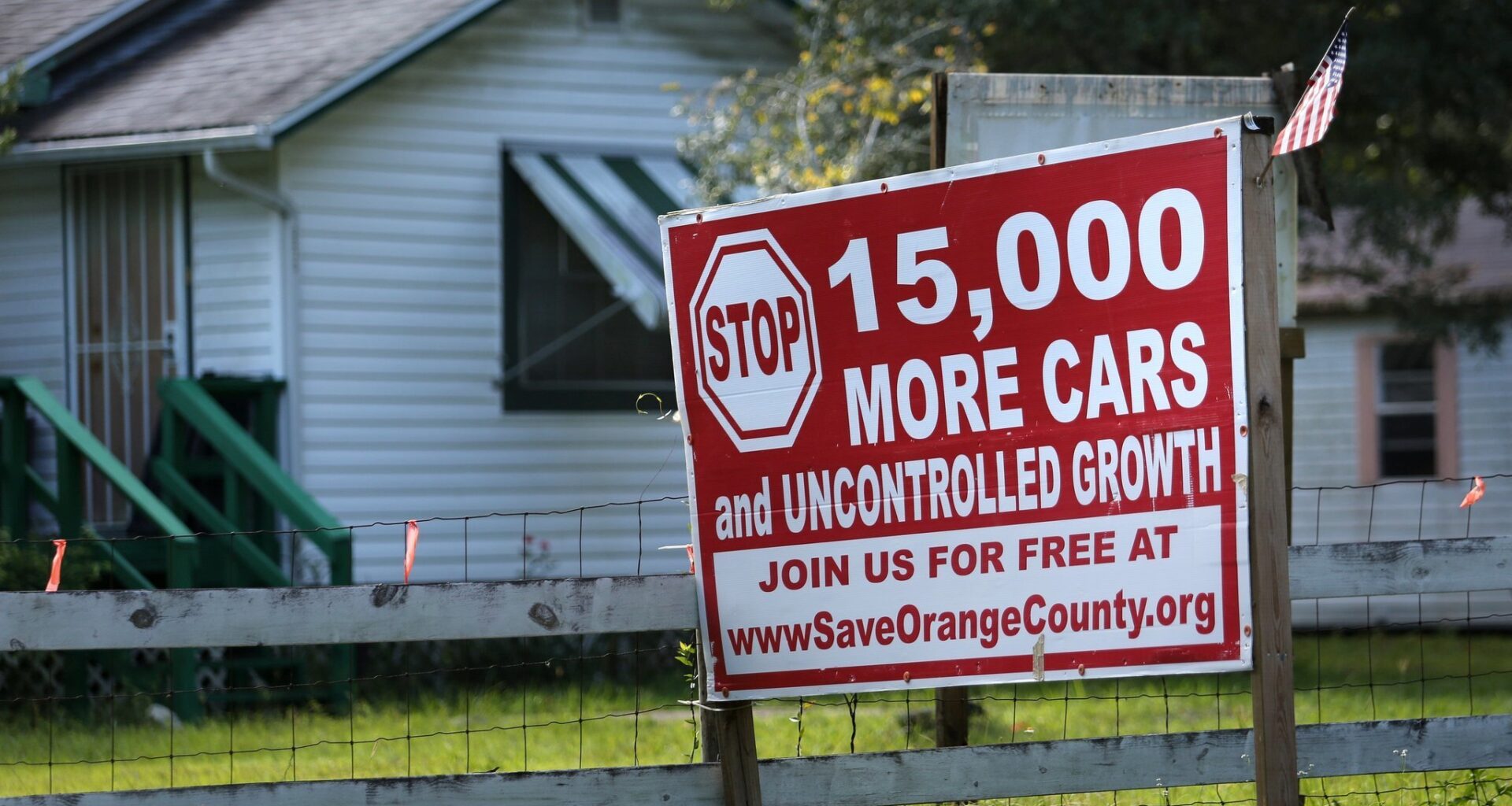
Developers behind Sustanee have resurfaced, applying for Agricultural Enclave certification under a new state law that took effect July 1 for a proposed master planned 1,800-home community in rural east Orange County. The move marks the latest chapter in a long-running land-use dispute over the former Rybolt family cattle ranch, following repeated denials by county commissioners.
The Orange County Board of County Commissioners will hold a public hearing at 2:00 p.m. on Aug. 25. The hearing is narrowly focused on whether two District 5 parcels totaling 1,400 acres qualify as Agricultural Enclaves under Florida’s Senate Bill 686.
Described by land-use attorneys as a Live Local Act for agrarian land, SB 686 creates a fast-tracked process for properties certified as Agricultural Enclaves, which are pockets of rural land largely bordered by existing growth. Opponents view the exact same parcel not as an isolated pocket, but as a critical transitional border.
If the property is certified, state law will eliminate the need for local comprehensive plan amendments and rezoning votes, requiring Orange County to allow single-family housing on the site that matches the density of adjacent developments as a conforming use. Under the legislation, local governments will have to hold a certification hearing within set deadlines or face automatic approval of the site’s enclave status by default.
The parcels in question include a cattle pasture tract along Chuluota Road and undeveloped land at Lake Pickett North, the proposed site for Sustanee. The developer entity behind the project, Lake Pickett North LLC, bought 678.6 acres from interests associated with the Rybolt family in 2014. 2026 Orange County tax records show the remaining land is still owned by Rybolt family interests.
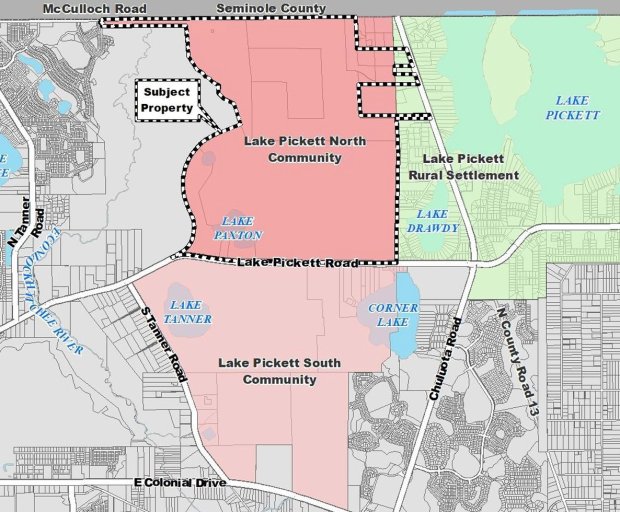
Orange County Property Appraiser
Map showing the proposed Sustanee development in rural east Orange County, bordering Seminole County. (Source: Orange County Property Appraiser)
The former Rybolt Ranch is a vital stretch of the Econlockhatchee River Basin, threaded with wetlands and habitat-rich uplands where cinnamon and royal ferns grow, and environmental records have documented gopher tortoises, sandhill cranes, wood storks and bald eagles.
As detailed in project submittals from the lead developer Columnar Holdings and planning firm Canin Associates, since acquired by Kimley-Horn, Sustanee would be organized into eight distinct neighborhoods. The plan incorporates 90,000 square feet of community amenity space, multi-use trails extending westward to connect with the University of Central Florida and Research Parkway and 18 acres reserved for a public middle school and fire station.
To justify the density shift, the developer cited Central Florida’s population boom, noting that Orange County is projected to add roughly 500,000 residents by 2050, creating acute housing demand near major employment hubs.
County officials explicitly noted that they did not initiate this hearing process. Under state law, only property owners have the right to apply, and the county is legally obligated to evaluate it.
Further, Florida law mandates that if the Board of County Commissioners fails to approve or deny the application within 90 days of receipt, the parcels automatically become certified by default.
To qualify for certification under SB 686, a property must be unincorporated, undeveloped, and surrounded on at least 75% of its perimeter by existing urban development or land designated for future residential or commercial use. If certified, state law requires the county to allow single-family housing on the property matching the density of surrounding neighborhoods as a conforming use.
A history of failed land-use attempts for Sustanee site
The application represents at least the sixth proposal since 2009 to build a large-scale residential development on the site, as previously reported by Orlando Sentinel reporter Stephen Hudak.
In 2022, Sustanee developers abruptly pulled their land-use application hours before a scheduled commission vote following a unanimous rejection by the planning board.
When the project returned in January 2024, county commissioners voted 4–3 to deny the land-use amendments.
In late September 2025, Orange County joined a statewide lawsuit in Leon County Circuit Court alongside local resident Rachel Hildebrand and more than two dozen other local governments to challenge the constitutionality of Florida’s Senate Bill 180. The suit argues state lawmakers violated the Florida Constitution’s single-subject rule by sneaking statewide growth-control freezes into a disaster recovery bill, unconstitutionally stripping local home rule powers and nullifying voter-approved rural boundaries.
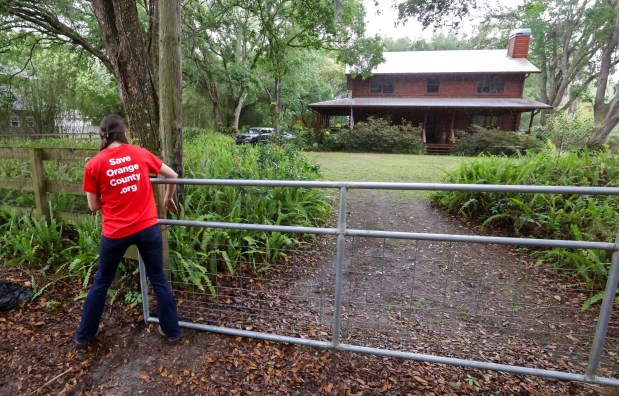
Joe Burbank/Orlando Sentinel
Rachel Hildebrand at her rural home on Chuluota Road in east Orange County, Wednesday, April 8, 2026. Hildebrand is fighting plans for an 1,800-home development proposed for the cattle pastureland across from her home. (Joe Burbank/Orlando Sentinel)
A shift in power from county to state
Veteran environmental attorney Clay Henderson, former executive director of Stetson University’s Institute for Water and Environmental Resilience, noted that state legislation leaves local commissions with little leverage. Henderson is not involved in the SB 180 litigation.
Henderson explained that local governments traditionally managed growth through inherent zoning powers until the landmark Growth Management Act of 1985 gave the state authority to mandate local planning frameworks. While that law required counties to adopt state-approved comprehensive plans, he noted that recent state legislative moves have used state authority to restrict local governments from controlling growth.
“Zoning was historically seen as an inherent part of the police powers of local government,” Henderson said. “Now, they’ve turned that on its ear … and in the case of this Agricultural Enclave Act, allowing developers to bypass growth management altogether.”
That statutory change shifts the battleground in the developer’s favor. The upcoming hearing is strictly limited to state enclave criteria, bypassing past environmental and traffic debates.
If commissioners vote to deny certification, Florida law requires them to issue written findings proving the property fails state standards, a decision the developer can immediately challenge in court.
But if the board approves the application, or fails to act before the 90-day statutory clock runs out, the parcels will automatically become certified by default, granting the property agricultural enclave status and clearing the regulatory path for the project’s master plan.
Have a tip about Central Florida development? Contact me at SKinbar@GrowthSpotter.com or (407) 420-5246. Follow GrowthSpotter on Facebook and LinkedIn.