
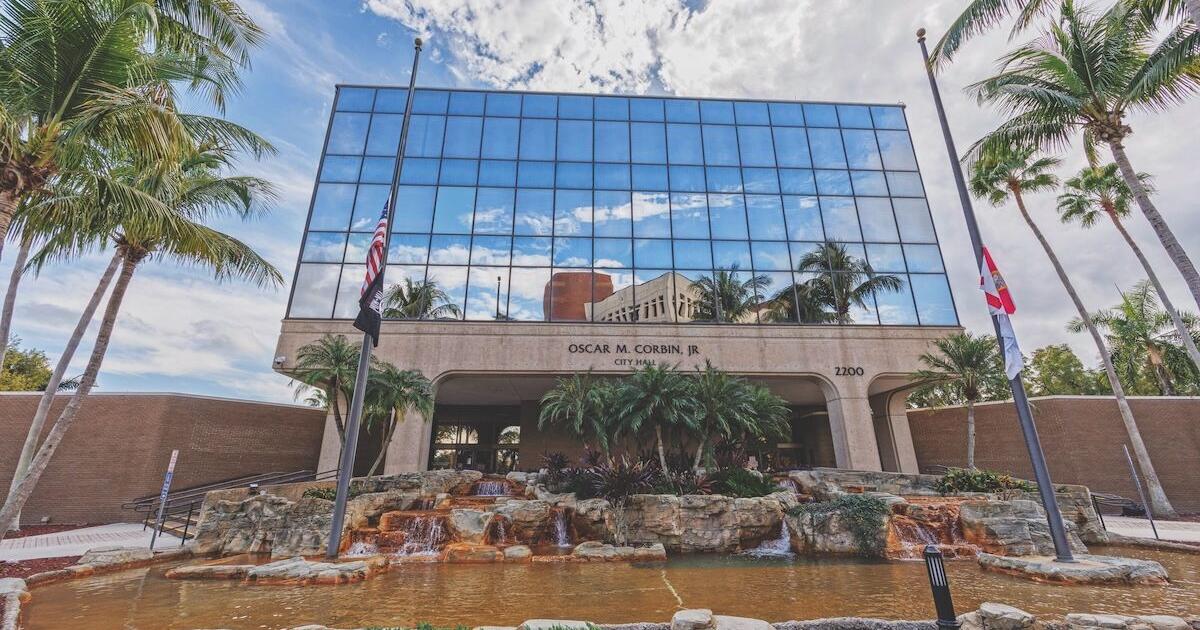

ort Myers City Hall is where council members will vote Aug. 3 on a proposed increase to the city’s property tax rate cap, along with changes to the fire assessment fee cap and a bond issue for capital projects.
Brian Tietz
Fort Myers has, for years, enjoyed rising property values driven by surging population growth, leading to increasingly low tax rates.
That’s set to change in fiscal year 2026-27 as City Council moves forward with plans to raise the millage, or property tax, rate for the first time in a decade to manage slowing growth and rising costs.
Councilors plan to vote on increasing the millage rate cap for the coming fiscal year at their regular meeting Aug. 3. They also are set to vote on raising the fire assessment fee cap by 30% and issuing $40 million in bonds to pay for capital projects.
A higher cap on property taxes and fees would give officials flexibility to increase revenue as they continue creating next year’s budget. It would allow the city to make up a projected revenue gap and pay for capital projects but could cost homeowners hundreds of dollars more per year on their tax bills.
As required by state law, the city’s final millage rate and annual budget will be decided at public hearings in September before fiscal year 2026-27 begins Oct. 1.
The potential millage rate change is driven in part by projected flat population growth, with the city expected to remain at about 102,000 residents, City Manager Marty Lawing said.
The city’s ad valorem tax base grew 0.45% in 2026 to about $14 billion.
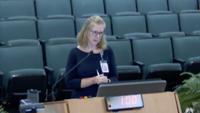
Fort Myers Financial Services Director Christine Tenney presents budget projections during a July 28 City Council workshop. City officials say slowing tax base growth and rising costs are driving discussions about increasing the property tax rate.
Fort Myers government
“Much lower than what I expected, but it is what it is,” Financial Services Director Christine Tenney said. “Hopefully it’s just a one-time year and next year we’ll see some better results.”
Falling apartment values were largely responsible for a $195.2 million dip in the city’s 2026 tax base, but that was offset by a relatively strong $257.6 million in new construction growth.
Strong recent revenue years also have left the city with a healthy $44.4 million in reserves, not including an additional emergency contingency fund.
“That’s always important when you live in Southwest Florida and have all the weather uncertainties and now economic uncertainties,” Tenney said. “So, it’s a good place to be.”
The slowdown comes as the city faces cost pressures from capital improvement projects and services needed after years of growth, along with broader economic uncertainty tied to inflation, energy costs and Amendment 3.
If 60% of voters approve Amendment 3 in November, the measure would increase the nonschool homestead property tax exemption to $150,000 in 2027 and $250,000 in 2028. While homeowners would pay less in property taxes, the change would also reduce a primary source of local government revenue, potentially leading to higher property tax rates or increased fees to help fund city services.
As discussed at a July 28 City Council workshop, councilors will vote Aug. 3 on increasing the millage rate cap from the current 6.5 mills to 7.3112, or from $6.50 to $7.3112 per $1,000 of taxable property value.
In other words, a resident with a home worth $100,000 in taxable value would see the annual city property tax rise from $650 to $731.12.
That increase of 0.8112 mills would generate an additional $10.4 million in revenue for the city in fiscal year 2026-27, city staff said.
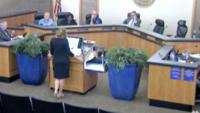
Fort Myers City Council discusses the proposed fiscal year 2026-27 budget during a July 28 workshop. Council members are considering the city’s first property tax rate increase in a decade.
Fort Myers government
Councilors could still vote to lower the rate at a final budget meeting in September but would not be able to raise it. On Aug. 3, they could also approve a lower or higher cap, up to 10 mills.
The higher the final rate the city adopts in September, the more support it will need from councilors.
Rules require a simple majority vote to adopt a rate up to the rolled-back rate of 6.6465 mills, which is designed to generate the same amount of revenue as the previous year, excluding new construction.
If councilors adopt a rate between 6.6465 and 7.3112 mills, they will need a two-thirds vote. Anything higher than 7.3112 mills would require unanimous approval.
Rising personnel costs, growing service demands and capital infrastructure projects include a new $147.2 million police headquarters, Midtown spending, a new fire station, roads, utility projects, and parks and recreation improvements.
The city plans to take on $17.1 million in debt service payments in fiscal year 2026-27.
Alongside a potential property tax increase, a maximum 30% increase in the fire assessment fee would raise the residential rate from $218 to $283.40.
City staff also has recommended no changes to stormwater or solid waste fees.