

JEA CEO Vickie Cavey is taking a leave of absence, according to messages sent to board members of the city owned utility and Jacksonville City Council.
Jordan Pope, senior vice president of administrative services for JEA, sent Council members an email saying Cavey would be on leave effective immediately for at least two weeks but “fewer than 60 days.”
Pope said JEA board Chair MG Orender designated Jody Brooks, JEA chief administrative officer, as interim CEO during Cavey’s absence.
Pope’s message to Council members did not provide a reason for Cavey’s leave, nor did an attached message from Orender to JEA board members notifying them of the situation.
“I am fully confident that the JEA leadership team will continue to deliver the exceptional level of service that our community deserves and expects during this time,” Orender said in his message.
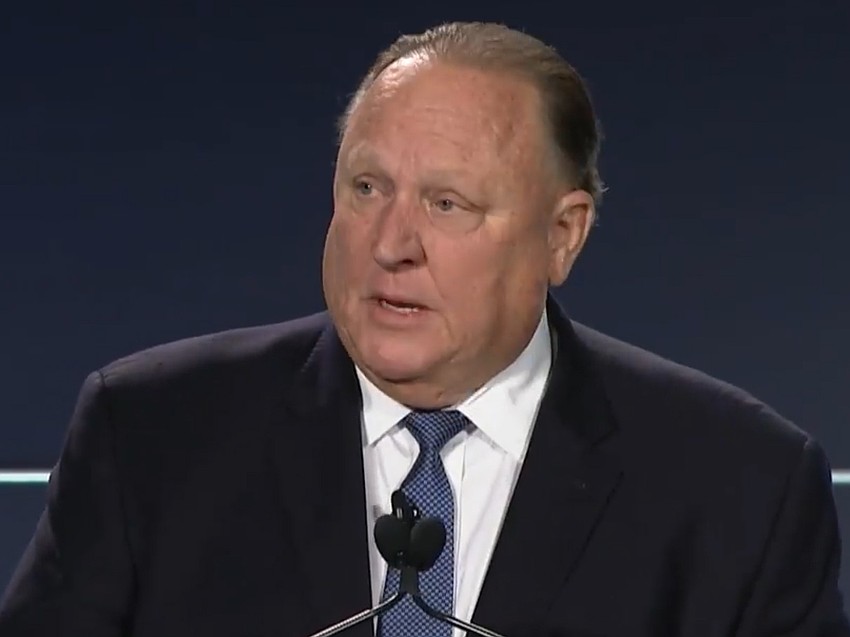
MG Orender
Cavey’s leave of absence comes after months of scrutiny into allegations of racism and a toxic workplace environment under her leadership and questions about millions of dollars in uncollected fees.
Cavey has denied the allegations.
Capacity fees
The announcement of Cavey’s leave came two days after a Council auditor reported to a Council committee that JEA may be owed as much as $75 million in uncollected capacity fees dating back to 2003, more than double the utility’s own $29.2 million estimate.
Council auditor Brian Parks presented the $75 million estimate to the Council Financial Audit and Oversight Committee, a figure based on a review of JEA’s capacity fee records dating back more than two decades.
The fees are a one-time charge required before a water meter is installed and utility service begins. Fee amounts are based on water meter size or projected daily consumption.
Parks told committee members that about $20 million of the estimated missed payments came from multifamily units, noting those developments may not have seen enough growth over the years to require additional capacity fees, so it could be possible that $55 million was the maximum overall amount uncollected by JEA.
In a statement, Cavey said she was committed to working with Council, the Council auditors and any other stakeholders on resolving the capacity fee issue.
“We thank the Council Auditor’s Office for its work reviewing JEA’s capacity fees and for providing its findings to the FAO Select Committee. We appreciate the opportunity for a thoughtful and transparent discussion about how these fees support the infrastructure needed to serve development and our growing community,” Cavey said.
“I also want to recognize the hard work of JEA team members who have carefully reviewed these issues, identified areas requiring attention and taken meaningful steps to correct them. Their diligence reflects our commitment to accountability, continuous improvement and responsible stewardship of the resources entrusted to us by our customers.”
In another statement, JEA spokesperson Myers Vasquez said Brooks’ estimate of $29.2 million and the Council auditors’ estimate of $75 million differed because the two parties measured the issue differently. While JEA estimated what may be owed based on current conditions and 2025 customer flows, the Council Auditor’s estimate represents the maximum amount that could have been assessed over the past 22 years if all potential capacity fee increases had been collected, Vasquez wrote.
In June, a report from the city’s Office of the Inspector General found that JEA took appropriate measures to address its past failure to collect capacity fees.
That report, issued after a three-month investigation, found JEA’s past failure to collect the capacity fees resulted from causes that included historical data gaps and record transitions, technological and systemic failures, organizational silos and communication failures and lack of policy and resource prioritization, according to a JEA release.
This is a breaking story. It will be updated with additional information.