
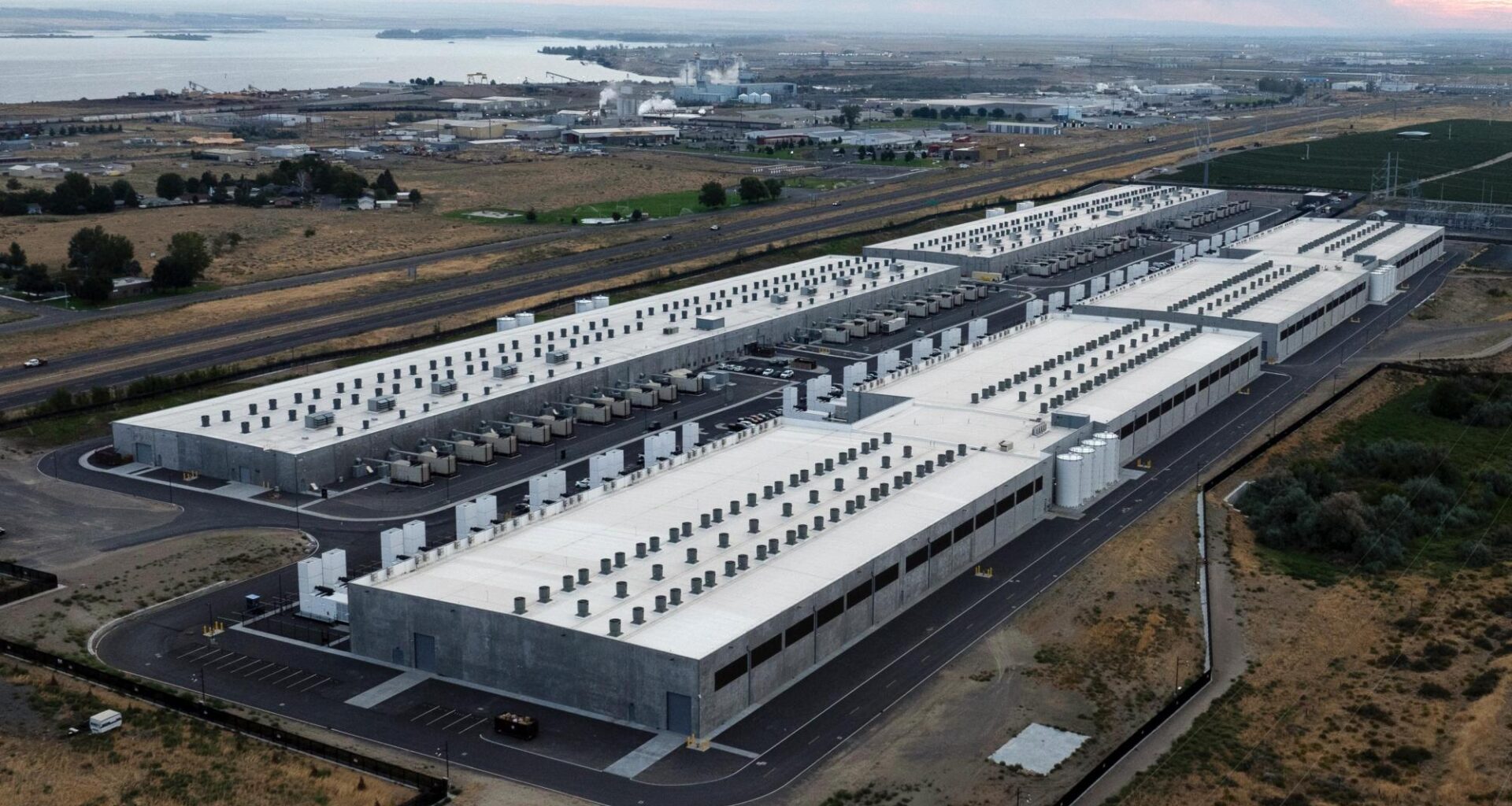
Artificial intelligence has become an unexpected issue in Florida’s race for governor. Some candidates want to encourage data centers while pressing them to acquire their own nuclear reactors. Others would impose new regulations, require special community subsidies or even halt construction altogether.
The debate is healthy. But it should begin with a simple question: What problems are we trying to solve?
Florida already has the institutions and laws needed to protect consumers while allowing economic growth. Creating new barriers risks sacrificing one of the state’s greatest competitive advantages at precisely the moment AI is reshaping the global economy.
Florida has spent decades becoming one of America’s most technology-friendly states. The University of Florida partnered with NVIDIA to incorporate one of the world’s fastest university supercomputers into research and teaching. Other Florida universities’ researchers are using AI to improve treatments for cancer and heart disease, and to improve patient care. Miami has become a leading digital gateway to Latin America. We should build on that leadership.
A major concern surrounding data centers is electricity. AI requires extraordinary computing power, and computing power requires electricity. Some worry that new data centers will force families to subsidize technology companies through higher utility bills. Fortunately, Florida already has a system designed to prevent exactly that. The Florida Public Service Commission sets utility rates and is already developing pricing structures that ensure large customers pay the costs they create.
Florida also benefits from something many states no longer have: vertically integrated electric utilities that plan generation, transmission and distribution cooperatively, coordinate investments and negotiate effectively with large electricity users.
 Mark Jamison
The important point is that regulators, utilities, and data centers already have the tools to unlock value and address individual situations.
Jobs are another source of concern. AI is often portrayed as a machine coming to replace workers. History suggests otherwise. Every major technological advance has automated some tasks while creating others. Tractors dramatically reduced the number of farm workers. Computers reduced clerical work. Yet those innovations also made people more productive, raised incomes, lowered prices and created entirely new industries.
Businesses are discovering that AI works much the same way. Rather than replacing employees wholesale, it increasingly complements them, allowing people to accomplish more in less time.
Data centers themselves create employment. Construction of a large facility typically employs hundreds or even thousands of electricians, plumbers, equipment installers, engineers and construction workers. Once operating, the facilities need fewer people but still require permanent employees to support equipment and sophisticated electrical systems, manage operations and provide security.
Communities receiving their first large data center experience meaningful increases in private employment and wage growth, but those that develop data center clusters attract even more business. But not all data centers are created equal: Hyperscale centers run by the big tech firms create more jobs than centers built to lease space to others.
This matters for Florida. Miami is the principal digital gateway between North America and Latin America because of its business climate and unique concentration of fiber optics and internet infrastructure. But cities in Brazil, Mexico, Chile and Colombia are investing aggressively to capture AI infrastructure and the high-paying industries that follow it. The competition is accelerating.
None of this means data centers should receive special treatment. Like any business, a center should pay the costs it imposes on suppliers and comply with environmental regulations. But centers should also receive something Florida has traditionally offered every industry: predictable rules, business friendly and sound regulation, and the freedom to succeed.
AI will reshape the economy whether Florida participates or not. We should not shackle our state, causing our children and grandchildren to fall behind.
The question facing the next governor is whether Florida intends to be the leader in building that future, is ready to yield that position to someone else.
Mark Jamison is a nonresident senior fellow at the American Enterprise Institute, where he works on how technology affects the economy. He is also the director and Gunter Professor of the Public Utility Research Center at the University of Florida’s Warrington College of Business.