
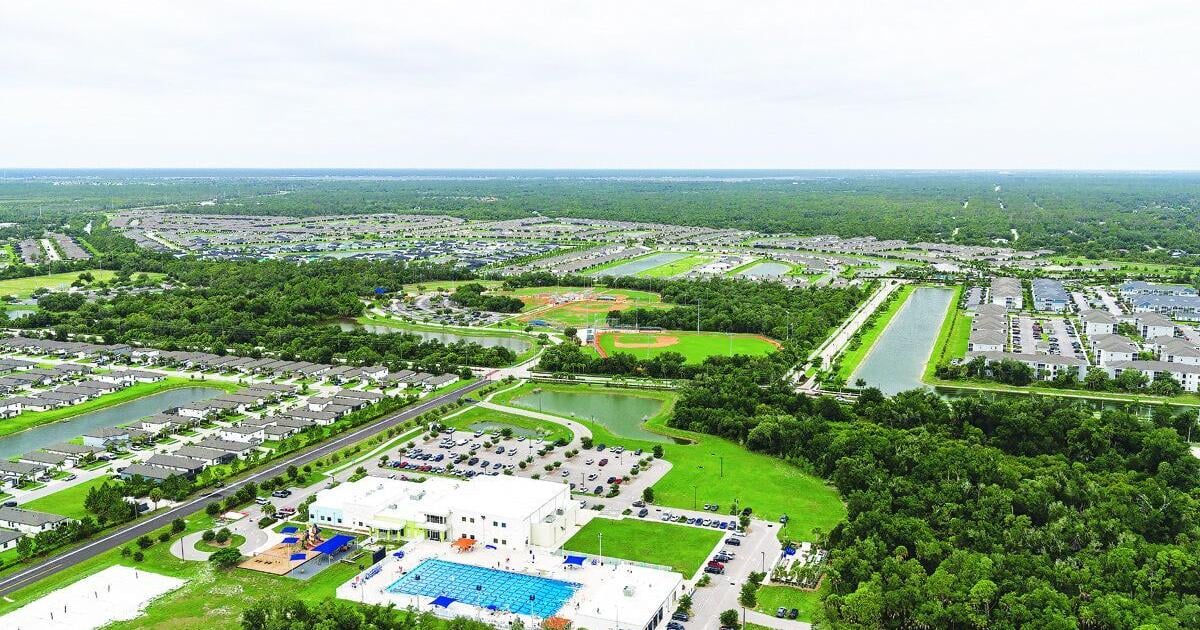

West Port is among the large residential developments contributing to Charlotte County’s population growth and increasing demand for infrastructure and public services.
Brian Tietz
Charlotte County is in the midst of growing pains. Although the influx of new residents has slowed since the COVID-19 pandemic, migration from other states continues to strain infrastructure and services, prompting officials to revise plans for future needs.
The county’s population grew by nearly 10,000 residents between April 2024 and February 2025, increasing from 212,424 to 224,147.
According to the U.S. Census Bureau, the Punta Gorda Metropolitan Statistical Area, which encompasses all of Charlotte County, is consistently ranked among the fastest-growing areas in the U.S. and was the fifth fastest-growing metro region in 2024-25.
To prepare for future population growth, the county hired Bonita Springs-based Metro Forecasting Models to conduct a study. Its consultant found the county’s rapid growth had reduced service levels and increased demand for new facilities — including fire stations and libraries — and for more first responders and law enforcement. In just seven months, the county’s population grew 5%, from 224,147 residents in February 2025 to 235,255 in October 2025; emergency services received 11 more calls a day.
David Farmer, CEO and co-founder of the firm, presented the study’s findings before the Board of County Commissioners in December, saying he was surprised by the results. In nearly two-and-a-half years, from June 2023 to October 2025, the county’s population increased 16.9% — the amount of growth the county normally would experience in a decade.

David Farmer, CEO and co-founder of Metro Forecasting Models, presents findings showing Charlotte County’s rapid population growth is increasing demand for infrastructure and government services.
Brian Tietz
The report also projected significant housing growth.
“At full buildout, the study area has the potential for nearly 280,000 housing units, more than double the existing number of housing units,” he said.
Between 2025 and 2030, approximately 17,000 more housing units are expected, and by the end of September 2025, the county had 134,690 residential units.
When the population increases by another 33,000 residents — a milestone projected to be reached around 2030 — the county will need at least two new fire stations, two new neighborhood shopping centers, one new community shopping center, one new community park and one new library. Farmer said if growth continues without those investments, the county will fall short by three to four fire stations.
Charlotte County is expanding water and wastewater infrastructure, including improvements to treatment facilities, to meet the demands of a growing population.
Brian Tietz
Water treatment, wastewater and reverse osmosis facilities already are being expanded or are slated for future expansions and improvements in a county that has suffered one of the worst droughts in years: As of May, Charlotte County and Southwest Florida were experiencing an extreme drought, with 100% of Charlotte County affected.
Recognizing the need for more infrastructure and services, county commissioners placed a referendum on the November ballot asking voters to approve a 20-year extension of the 1% local option sales tax to fund countywide capital improvement projects, including expansions of the county’s water and wastewater systems.
Shaping a Retirement County
One of Charlotte County’s frequent points of criticism is the lack of large land parcels zoned for commercial and industrial development in many parts of the county — a problem that began when early developers platted much of the county into small residential lots.
Author Jason Vuic writes in The Swamp Peddlers that Port Charlotte lots were nationally advertised in various publications. The ads promised that for $10 down, purchasers could choose an 80-foot-by-125-foot homesite for $895. Thousands of these platted lots were sold, and Charlotte County began to be known as a retirement community because there was little industry and few employers. Today, residents 65 and older comprise 40.6% of the population, with a median age of 60 years.
Charlotte County Utilities Director Tom Spencer discusses water and wastewater infrastructure improvements designed to support the county’s long-term population growth.
Brian Tietz
As the population surged over the last several years, demand has grown for more local and higher-paying jobs, in addition to land on which to build commercial and industrial facilities. But the lack of buildable land remains a problem. About 42% of Charlotte County’s 444,160 acres is in conservation under the authority of state, federal and local governments and private entities, according to Florida State University’s Florida Natural Areas Inventory study. It is ranked No. 11 out of the state’s 67 counties for the amount of land set aside for conservation, an issue that has been important to county voters. In 2006, voters approved a $77 million bond referendum to purchase environmentally sensitive lands with a program targeting 20 years of funding through 2027.
As more people moved into the county, remaining parcels of land were developed for residential housing, and residential growth outpaced commercial development. County officials now are working to achieve a balance, but as of 2025, residential properties continued to represent a significant portion of the county’s tax base.
Between the county’s abundance of platted residential lots and conservation areas preserved in perpetuity, the number of large land parcels zoned for commercial and industrial development is limited. The exceptions are areas surrounding Punta Gorda Airport, which has a 4,380-acre mixed-use zoning district called Enterprise Charlotte Airport Park, and Babcock Ranch, whose developers planned for 6 million square feet of commercial retail and office space within the community’s 18,000-acre development footprint.
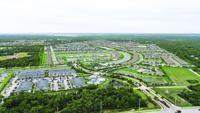
Large-scale residential communities continue to expand across Charlotte County as officials plan for future infrastructure, parks, libraries and public safety facilities.
Brian Tietz
Metro Forecasting Models recommended the county adopt policy changes permitting higher-density development near existing commercial and industrial employment centers, and reevaluate government facilities to maintain the county’s level of service. Farmer also recommended the county reserve more land for nonresidential uses or residents will take unnecessary trips on major corridors, increasing traffic congestion.
Farmer said many commercial entities have not yet recognized the population growth in Charlotte County, and that the available commercial square footage required for the growing population keeps falling as more residential communities are developed.
Economic Development Rises to the Challenge
As the population has grown, major businesses and manufacturers have also begun to take notice of Charlotte County, a trend welcomed by Economic Development Director Kay Tracy. She said the county’s location and relative affordability compared with neighboring counties are factors, but a combination of elements is driving the momentum.
“We offer strategic access to Interstate 75 and regional markets,” she said. Tracy also cited available land for development, a growing population, educational opportunities, high-wage and diverse employment opportunities and quality of life as contributing factors. She has been working to attract manufacturing, warehousing, flex-use and industrial firms to the county.
The largest concentration of industrial-zoned land in Charlotte County is located near Punta Gorda Airport and Jones Loop Road in unincorporated Punta Gorda, an area Tracy said presents a major opportunity for future economic growth. She also said the airport corridor is well suited for a mix of industrial, logistics, aviation-related and commercial development.
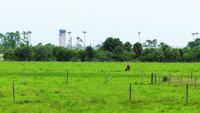
Land surrounding Punta Gorda Airport remains one of Charlotte County’s largest opportunities for future commercial, industrial and aviation-related development.
Brian Tietz
In the near future, Tracy said, residents can expect continued site preparation, infrastructure investment and growing interest in the Jones Loop area near Punta Gorda Airport from businesses, such as aviation maintenance company NAS MRO and healthcare provider AdventHealth, which value the area’s proximity to I-75 and the airport. Among the recent large land purchasers on Jones Loop Road is Amazon, which purchased 233 acres near Punta Gorda Airport and Jones Loop Road for $20.1 million. While the retail giant has not disclosed exactly what will be built on the site, local officials anticipate it will serve as a logistics and transportation hub.
“From a workforce perspective, this growth aligns directly with our Careers on the Coast initiative, especially our From Classroom to Career education series, which is helping prepare local students for careers in aviation, logistics and skilled trades,” Tracy said. “The goal is not just to grow but to grow in a way that creates meaningful career opportunities for our residents.”
Looking toward the future, Tracy said she wants Charlotte County to continue evolving into a more balanced and resilient economy over the next five to 10 years. She said that includes expanding career pathways for students and young professionals in advanced technology fields, such as cybersecurity and semiconductors.
Echoing Farmer’s recommendations, Tracy said there should be more workforce housing to support working families, along with “continued development that complements our natural environment and quality of life.” She added that attracting more young professionals and families to Charlotte County to build careers and long-term futures is just as important.
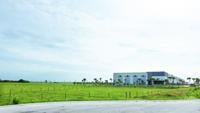
Enterprise Charlotte Airport Park near Punta Gorda Airport is expected to play a key role in attracting industrial, aviation and logistics businesses to Charlotte County.
Brian Tietz
“Through our partnerships with Charlotte County Public Schools, Charlotte Technical College, Florida SouthWestern State College and Florida Gulf Coast University, we are building a strong pipeline from education to employment,” Tracy said. “Ultimately, our goal is simple: to ensure that as Charlotte County grows, our workforce, our economy and our community grow together.”
Meanwhile, Charlotte officials are preparing for the next 20 years. A recent advisory committee has recommended more than 40 capital projects to be funded by the 1% local option sales tax. County officials broke ground in May for two new fire and emergency medical services stations in high-growth areas of the county: Station 17, at Tucker’s Grade and U.S. 41, will serve South County, and Station 6 will serve the Cleveland area off U.S. 17, east of downtown Punta Gorda.
The county has already begun road-widening projects throughout the county, and a number of Farmer’s recommendations are on the list of projects earmarked for the future. Whatever that looks like for Charlotte County.