
An ongoing debate among Apopka’s leaders about hiking tax rates is now focusing in part on a city spending plan with millions for new positions — including a communications director paid more than the new mayor.
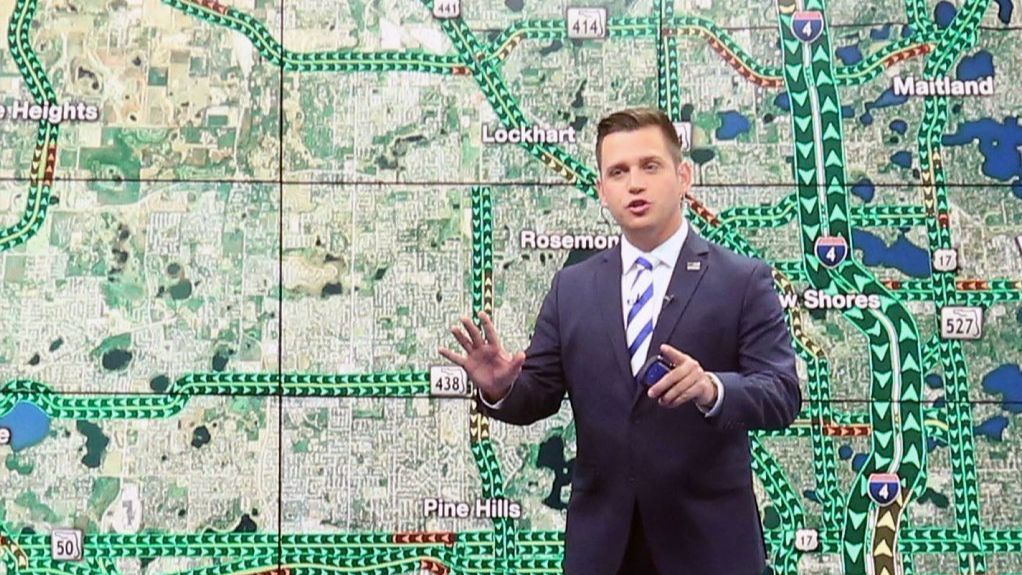
At their first meeting to set the preliminary millage rate on July 15, commissioners unanimously approved hiring Steven “Trooper Steve” Montiero as public information director, a role Mayor Nick Nesta has said is critical to providing the public with accurate and consistent information on city issues.
Montiero will get a base salary of $180,000 annually — far above the $133,350 paid to Nesta, who took the gavel April 28.
Montiero’s resume states that he served since 2010 with the Florida Highway Patrol as a master state trooper, public information officer and reserve trooper. Since 2017 he’s also been a traffic safety expert for CBS WKMG News 6 in Orlando.
Montiero’s starting salary will be more than Orange County — with a population more than 20 times that of Apopka — pays its longtime communications director Jeff Williamson, who earns about $166,000 annually and has been in the job since 2019.
The communications director for Kissimmee, Alibeth Suarez, is paid about $115,000 a year. She’s held the role since 2024 in the city of nearly 86,000, about 20,000 more than Apopka.
At the second millage meeting on Monday, Apopka resident Matthew Hutchinson questioned Montiero’s salary during public comment. “I love Trooper Steve,” Hutchinson said. “But $180,000?”
Montiero declined comment on his hiring as he is still employed by News 6 and doesn’t start in Apopka until Aug. 10.
 Apopka City Commissioner Nadia Anderson has opposed efforts by Mayor Nick Nesta to get the City Commission to approve an increased preliminary property tax rate for the upcoming fiscal year starting Oct. 1. (Provided photos)
Commissioner Nadia Anderson has held up the required unanimous approval of the rate increase, citing her concerns over the level of the proposed hike. She also said she had concerns over both the timing and need for the new public information director position, as well as the creation of a new chief of staff in the mayor’s office.
Preliminary budget documents include about $8.54 million slotted for new positions and about $2.98 million saved from position reductions.
Nesta defended the staffing budget as a matter of catching up on the city’s needs.
For too long, he said, positions were left vacant with their responsibilities shifted to existing employees. One such example is Radley Williams, hired as Parks and Recreation director in 2020 but serving as interim city administrator since April 2025.
“There’s a tipping point to where you can hire more people and actually save money versus having overtime,” Nesta said. “And we’re working to find that tipping point.”
With two months left in the current fiscal year, Nesta said overtime pay totals about $3.4 million. Commissioner Yesenia Baron said her calculations show the city has paid a total of about $12.7 million in overtime in the last three years.
Vice Mayor Diane Velazquez added that there are too many projects left unfinished due to staffing levels. “When something happens we take our staff away from whatever they were doing and we put them on the next project and then this project never gets done,” she said.
Finance Director Blanche Sherman has declined to provide additional details on spending for new positions.
Repeated attempts to get salary information for the chief of staff position and the employment agreement for Montiero from Human Resources Director Joseph Patton were also unsuccessful.
Commissioners have to approve a millage rate by Friday to meet the state’s Truth in Millage Act deadline. The mayor and commissioners will meet for a third time Thursday to try to agree on a proposed millage rate, after hitting a roadblock in the first and second meetings.
City staff have recommended a hike of .75 mills in the meetings and Anderson has adamantly opposed it — preventing the unanimous vote needed to adopt it.
“I 100% still do not support, and will not support, a .75-millage rate increase,” Anderson said Monday. “I think I was very clear on my stand on that last time.”
A .75-mill increase would raise the rate from 4.4376 mills to 5.1876 mills, with each mill equaling $1 of tax for every $1,000 of a property’s assessed value.
Nesta has said his goal is a .50 increase, but he stressed that adopting the higher .75 rate now gives staff more time to finalize the budget. Under state law, commissioners can lower a preliminarily approved rate but face challenges raising it.
“The goal for this is to then bring it back to our staff members and really start to drill down and remove what we can remove,” he said.
Commissioners will then set the actual rate and adopt the budget in September.
In an email from Nesta received Wednesday night, he said that since assuming office his administration has taken a detailed look at the current year’s budget and the challenges that carried into this fiscal year.
“One of the realities we inherited was a budget that relied on approximately $7 million in reserve funds while also projecting revenues that are now expected to fall short by several million dollars,” he said. “Those are significant issues that must be addressed honestly and responsibly if we want to put Apopka on a sustainable financial path.”
Nesta said he’s also focused on establishing a clearly defined executive leadership structure that creates accountability, improves communication between departments, and ensures residents receive the level of service they expect.
Reducing the millage rate without identifying sustainable revenue or corresponding reductions in services may require difficult decisions affecting areas such as parks, public safety, infrastructure and other services residents value, he said.
A .75-mill increase would boost tax revenue by about $6.6 million, or almost 32%, while a .50-mill increase would garner an additional $4.4 million.
With a .50-mill increase a property owner would pay about $493 for every $100,000 of assessed value — about $50 more than the current rate. That could mean property tax bills going up about $200 for a house assessed at $400,000. A .75-mill increase would increase the tax bill on that house about $300.
Anderson has said she wants to see how the city will meet Nesta’s goal of limiting an increase to .50 mills before she’ll support the higher cap. She also reminded commissioners of the looming statewide vote asking residents whether they want to slash property taxes.
During public comment Monday, residents shared mixed views on the rate hike and new positions.
Rod Olsen told commissioners he doesn’t favor an increase, but also noted the city doesn’t have the infrastructure to support its growth.
“We have children walking to school in the ditches because the sidewalks aren’t there,” Olsen said.
Leroy Bell said he understands the need for an increase, but questioned some spending: “We don’t need to put another burden on the community with all these new positions.”
But retiree Jim Grumber told commissioners that although he doesn’t favor a tax increase, he sees it as paying for city services.
“How quick do I want that fire department to be at my house if I have a fire? How quick do I want my police there when I get a break-in?” he asked them rhetorically.
This story has been updated with comments received late Wednesday from Apopka Mayor Nick Nesta.