
ORLANDO, Fla. — Central Florida is preparing for advanced air mobility as electric vertical takeoff and landing aircraft, known as e-VTOLs, move closer to test flights in the region.
The Greater Orlando Aviation Authority recently approved construction of a vertistop near Terminal C at Orlando International Airport, while state officials say the Orlando-to-Tampa corridor is the first step in Florida’s pilot program.
The Florida Department of Transportation is leading the state’s advanced air mobility pilot program. Officials have not provided an exact timeline for when testing will begin, though e-VTOLs are expected to take flight in the next few months.
The aircraft is designed for short, regional trips. Bob Thomas, an associate professor of aeronautical science at Embry-Riddle, said the technology has limits tied to battery capacity and aircraft weight.
“With the electric aircraft, you are limited by the range and the batteries, and batteries are weight, so there is a delicate balance between how much battery you put on versus how far you can fly and then also what you can carry,” Thomas said.
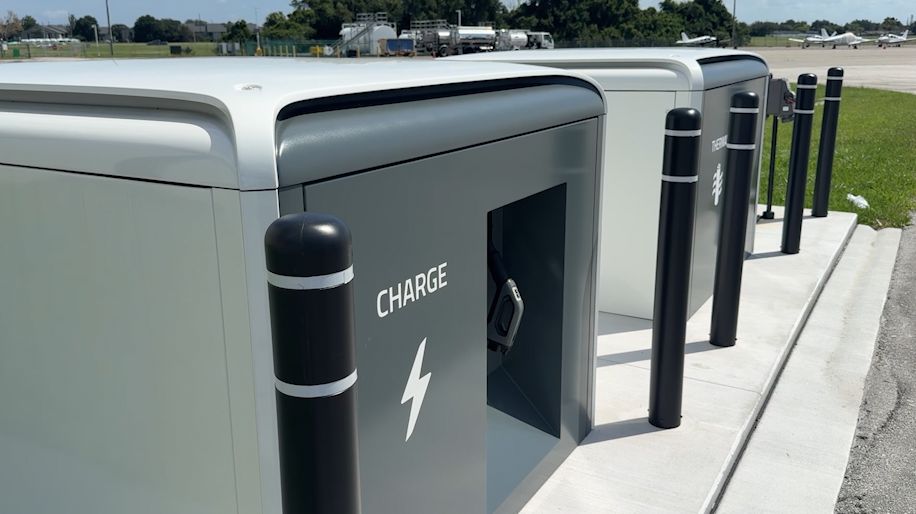
As Orlando prepares for testing, one possible stop for the aircraft could be Signature Aviation at Kissimmee Gateway Airport, where charging equipment was installed earlier this year. Michael French, vice president of resident success at Signature Aviation, said the system works much like charging an electric vehicle.
“As opposed to pulling a fuel truck up to one of these aircraft, we would simply bring the aircraft over here and plug it in and charge it up,” French said.
French said charging times can vary depending on the aircraft’s battery level and desired state of charge. He said some charging could take under an hour, while shorter operations have taken 20 or 30 minutes.
Supporters of the technology say it could help connect more of the state through general aviation airports. French said Kissimmee Gateway Airport could serve as one of those access points. “Seeing the opportunity for the potential for more regional type operations and those types of things, connecting more of the state using general aviation airports like Kissimmee as gateways for more people to access general aviation is also exciting,” French said.
Orange County is also studying where vertiports could be built. Possible locations could include airports, attractions, and other areas, though no passenger service has been approved.
At a June county commission meeting, Orange County Commissioner Kelly Semrad raised concerns that the technology could serve wealthier passengers before the region addresses existing transportation needs. “What I think is totally ridiculous is we are talking about little helicopters flying people around before we even have a working, before we can even get SunRail on the weekends,” Semrad said.
Semrad also said that if public and private investment supports advanced air mobility, Orange County should look at ways to bring in revenue from the industry. “This should not be entering our market unless we are finding methods and ways to charge to guarantee that we are recouping funds for the people that we represent who are stuck in the roads,” Semrad said.
County staff members are reviewing that possibility. For now, e-VTOLs are not approved for commercial passenger flights. The Federal Aviation Administration said it has established requirements for pilots and airworthiness to help ensure safety.
In a statement, the agency said, “The FAA will ensure advanced air mobility meets the same high standards that define today’s commercial aviation system.”
Thomas said safety remains the top priority in aviation. “I think you should also have some faith that the aviation community is very safety group, so anything that we do in aviation, safety is always number one priority,” Thomas said.