
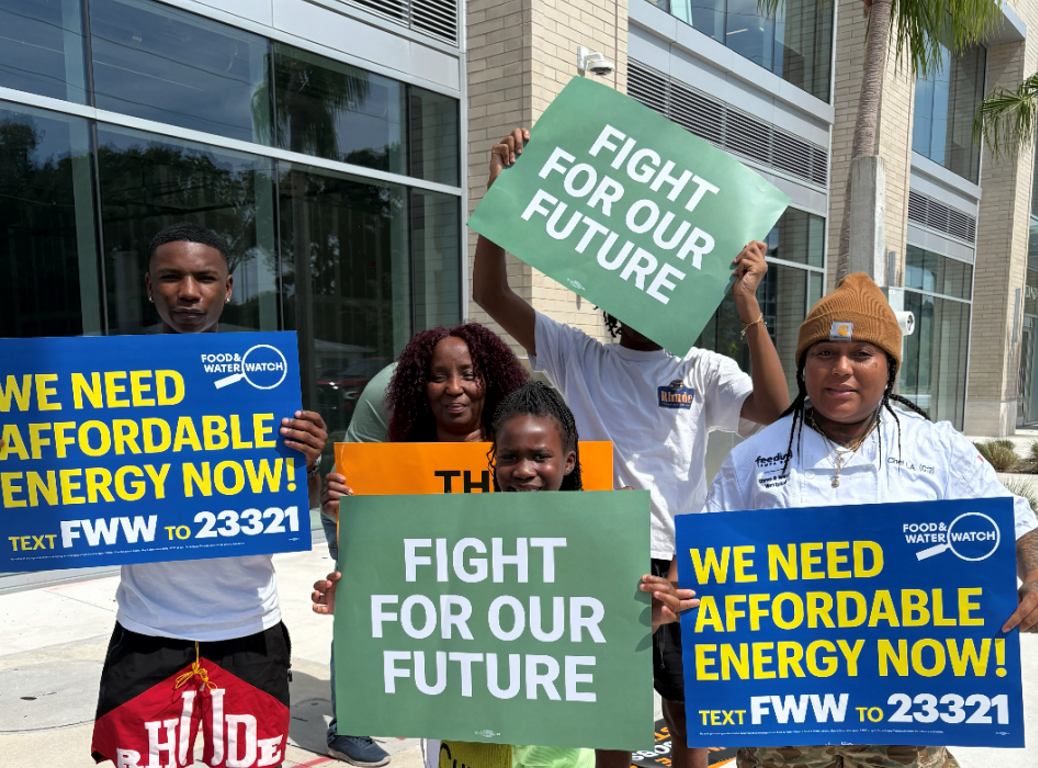
Protest in front of TECO offices on July 25, 2026. Photo Courtesy of Food and Water Watch.
Advocates gathered outside Tampa Electric’s offices on July 25 to mark the one-year anniversary of record 100-degree heat in Tampa.
It was a protest organized by the nonprofit Food and Water Watch and the Hillsborough Affordable Energy Coalition.
They are calling for an affordable energy reform following a recent report revealing TECO customers have seen their bills skyrocket by 81% over the past five years.
It is an increase of over $900 dollars a year—more than three times the rate of inflation.
That’s according to Isabella Moeller, the Florida organizer for the nonprofit Food and Water Watch.
“Our investor owned utilities such as Tampa Electric, Duke Energy, Florida Power and Light have been receiving massive rate increases year after year, all of which are rubber stamped by our utility regulators, the Public Service Commission,” said Moeller. “This has now caused Floridians to pay some of the highest electricity bills in the nation.”
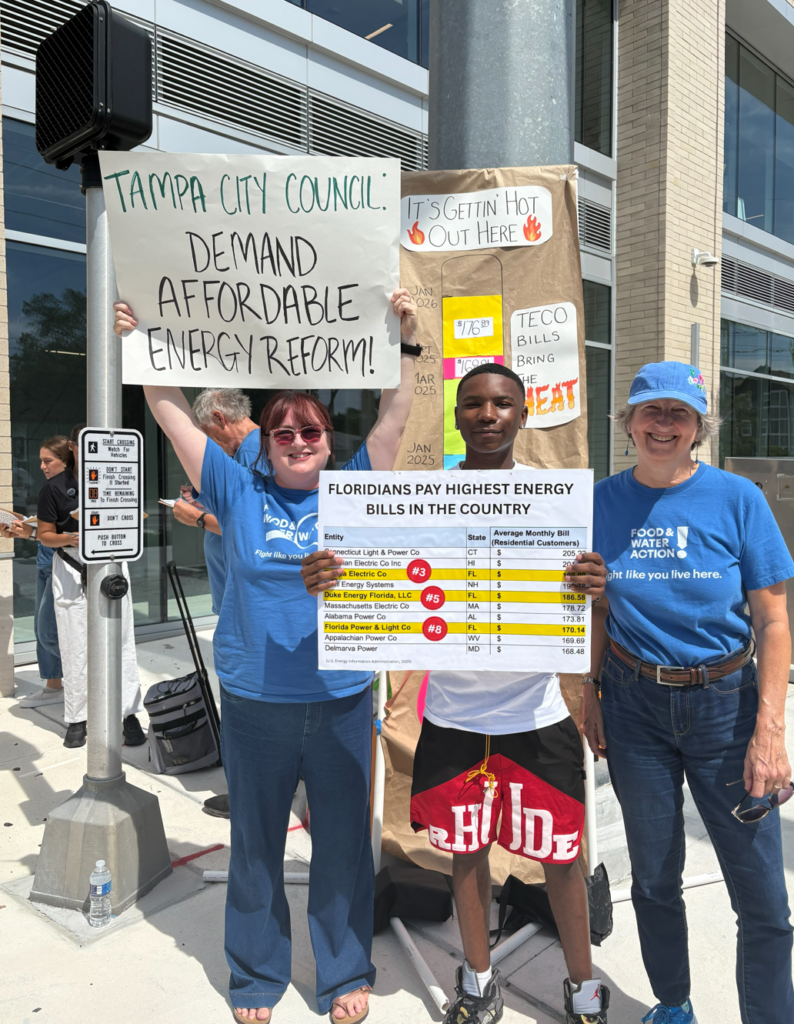 Protest in front of TECO offices on July 25, 2026. Photo Courtesy of Food and Water Watch.
TECO is removing a storm recovery charge from bills this month which they argue would save customers about $20 per 1,000 kWh.
But the group warns this is a minor decrease and that base rates are still historically high.
Food and Water Watch also expect TECO to request another rate hike in 2027.
They also warn that customers with other companies like Duke Energy may also face higher rates soon.
“There’s currently a case happening right now with the Public Service Commission that’s coming up this month in August,” said Moeller. “They’re going to be reviewing this large user tariff that Duke Energy has requested to see if it is in compliance with the new data center law.”
If passed, the proposal would allow Duke Energy to treat data centers as a large corporation using its grid.
Some consumer advocates say that proposal sidesteps the new law and would lead to ratepayers footing the costs.