
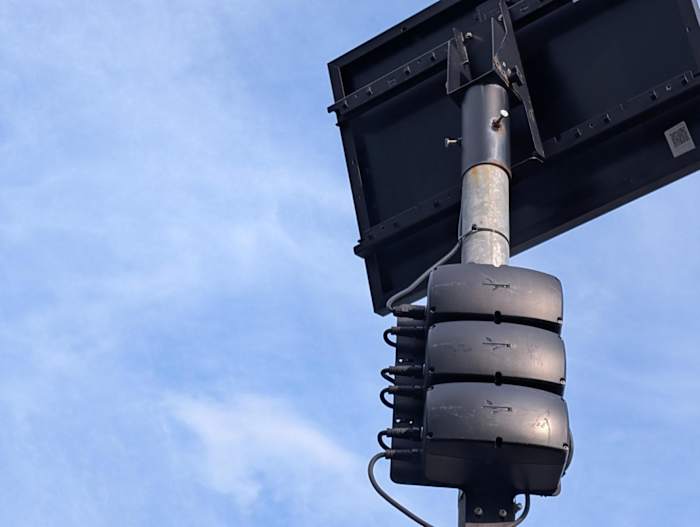
LAKE CITY, Fla. – A proposal to let Lake City voters decide whether the city should continue using automatic license plate reader cameras failed Monday night, with the City Council voting 2-3 against sending the question to the November ballot.
The Lake City City Council was set to take up a debate playing out in communities across the country: the use of camera and sensor technology that can track vehicles and collect data — and whether it’s a public safety tool or an overreach.
On Monday night, council members discussed “Flock Cameras” and considered Resolution No. 2026-094, which would have put the issue on the November ballot — letting voters weigh in on whether Lake City should keep using automatic license plate reader cameras.
If approved, the measure would have appeared during a special election Tuesday, Nov. 3, held in conjunction with Florida’s 2026 general election.
The debate drew passionate comments from council members and residents alike, reflecting a broader national conversation about public safety, privacy, and the role of government surveillance.
What voters would be asked
According to the resolution, voters would have been asked whether the City of Lake City or its contractors should continue installing and maintaining automatic license plate readers and cameras that collect and store license plate and other vehicular data.
The proposed ballot language stated that a vote “YES” would support continued installation and maintenance, while a vote “NO” would oppose it.
City documents also stressed the result would be nonbinding — meaning the vote would not automatically change city policy without further action by city leaders, but it would show where voters stand.
Council weighs safety against civil liberties
Councilman James Carter, who supported putting the question to voters, framed the issue in constitutional terms.
“That’s not the point… government should not search people without a warrant,” Carter said. “Private companies do not have the ability to arrest you.”
Carter acknowledged the cameras have shown results but questioned whether effectiveness alone justifies their use.
“Sometimes it does,” he said of catching criminals. “The question I would argue is whether the usefulness alone justifies it.”
Carter also raised broader concerns about the direction of government technology use.
“This is a much broader issue of building a surveillance state,” he said. “These items make me uncomfortable.”
Carter ultimately argued the community should have a direct say.
“I think that we should put it to the voters and I’m curious what you guys think,” he said.
Supporters point to crime reduction
Councilwoman Chevella Young pushed back, arguing the cameras have made a tangible difference in Lake City.
“They were placed there for safety… they have made a great difference for our city,” Young said. “Before the Flock cameras, crime was getting all the attention.”
Young dismissed privacy concerns by noting surveillance is already widespread.
“We’re always on camera,” she said. “I say they’re there, they made a great difference and we expect them to keep making a difference in our city.”
Councilman Ricky Jernigan echoed that sentiment.
“The Flock cameras is needed in certain areas of our community,” Jernigan said. “If we have more pros than we have cons than we need to keep them.”
Residents speak out
Public comment reflected the same divide. One resident drew a sharp distinction between private and government-owned surveillance.
“There is a very large distinction between being on private cameras and being on publicly owned cameras,” the resident said. “There is no protection for your privacy.”
Another resident referenced the circumstances under which the cameras were originally adopted.
“We panicked. We were having a crime issue,” they said. “We did not know as much about the Flock cameras as we do now. We have an obligation to make sure that the 4th Amendment is not being infringed upon,” they said. “Crime can always be fixed in other ways.”
Police chief sounds off
Lake City’s police chief Gerald Butler defended the program, saying it has helped in major investigations, including violent crimes.
He said the technology does not take a picture of the driver and does not collect cell phone information, and it requires officers to log in using city-issued dual authentication, entering a case number and call number before accessing data, with audits tracking all activity.
“I’m concerned if we do remove that, it would hinder our ability to keep the crime rate down,” Butler said.
Prior agreements with Flock Safety
The agenda packet also includes previous agreements with Flock Safety, Inc. dating back to 2023, involving license plate readers and audio detection devices, providing additional context for Monday’s discussion.
Separately, Lake City has promoted the use of Flock technology in the past, including a 2025 social media post about the department implementing a Flock gunshot detection system.
Copyright 2026 by WJXT News4JAX – All rights reserved.