
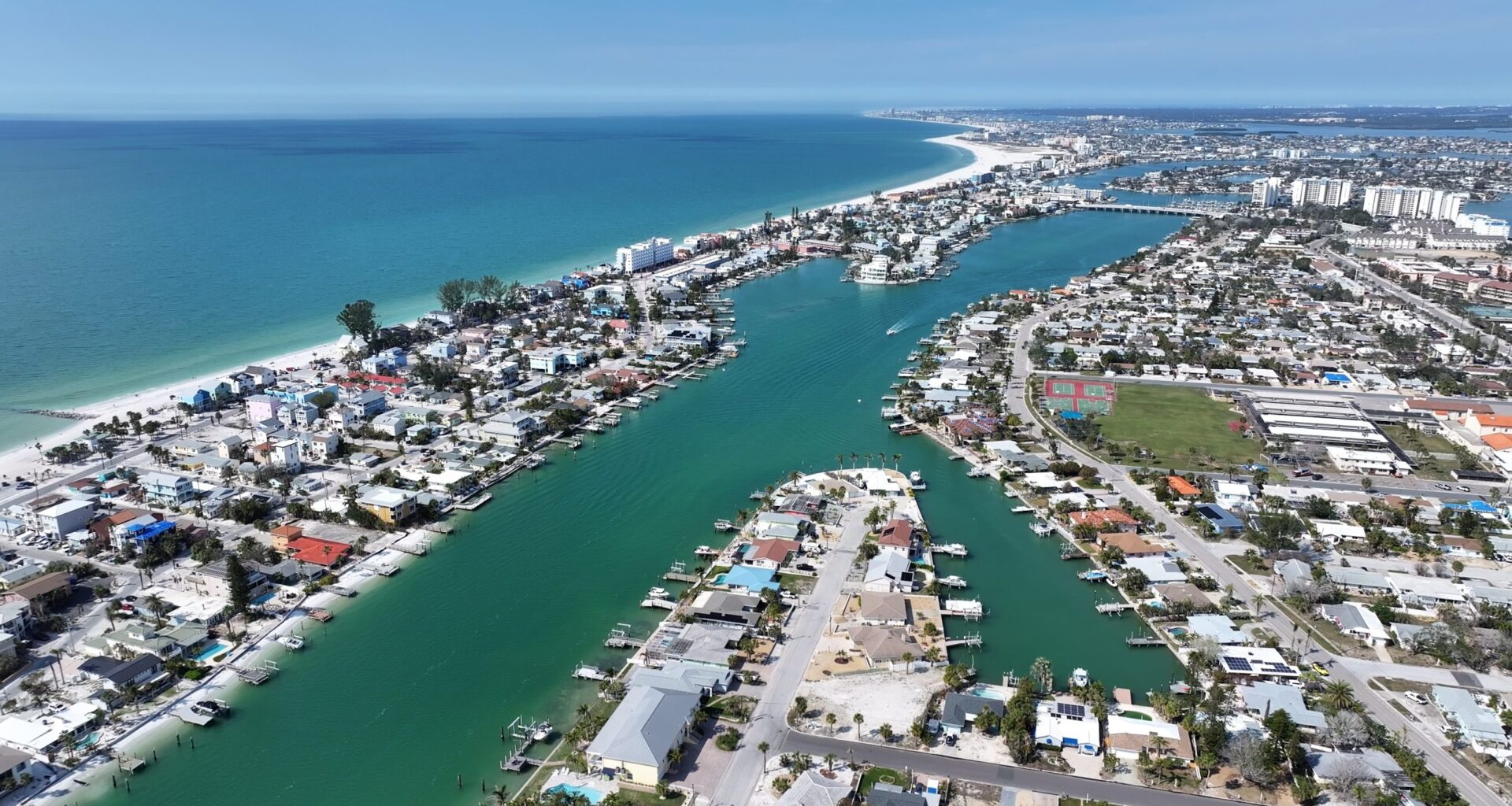
 St. Pete Beach, Florida Credit: ByDroneVideos / Shutterstock
St. Pete Beach Commissioners left the door open to a potential property tax increase during their July 28 meeting by setting a tentative maximum millage rate for fiscal year 2027, but they did not approve a tax hike.
The commission directed staff to advertise a tentative rate of 3.6715 mills, up from the current 3.0913 mills. The advertised rate is the highest the city can adopt later this year, but commissioners may lower it during September budget hearings.
At the proposed ceiling, the City would generate nearly $3 million more in gross property tax revenue than under the current rate. After accounting for the City’s estimated 95% collection rate, officials expect to collect about $2.85 million of that additional revenue.
Several Commissioners said they currently favor keeping the existing millage rate but want more public input before ruling out an increase.
“If we can’t, frankly, get a good set of input from the residents,” Mayor Scott Tate said, “then we fall back and we go, ‘There’s no raise this year.’”
This post first appeared at The Gulfport Gabber, which is part of the Tampa Bay Journalism Project (TBJP), a nascent Creative Loafing Tampa Bay effort supported by grants and a coalition of donors who make specific contributions via the Alternative Newsweekly Foundation. If you are a non-paywalled Bay area publication interested in TBJP, please email [email protected]. Help the Gabber keep publishing by making a donation.
What the increase could cost
The city’s current 3.0913-mill rate generates an estimated $15.98 million in gross property tax revenue.
Under the tentative 3.6715-mill rate, the owner of the city’s average homesteaded property, with a taxable value of about $478,882, would pay approximately $278 more per year. That equals roughly $23 per month.
The owner of a $500,000 home with $450,000 in taxable value after the standard homestead exemption would pay about $261 more annually.
The City’s rolled-back rate is 3.0757 mills. Under state law, that rate would generate roughly the same amount of property tax revenue as the previous year after accounting for increases in taxable property values.
The City’s Finance and Budget Review Committee recommended a higher ceiling of 3.8330 mills. That rate would generate about $3.84 million more in gross revenue than the current rate and cost the average homesteaded property owner about $334 more per year.
Commissioners chose the lower 3.6715-mill ceiling instead.
City plans public outreach
City Manager Frances Robustelli recommended holding public meetings in each commission district before Commissioners adopt a final tax rate. Staff also plans to survey residents about whether they support a tax increase and how any additional revenue should be spent.
Potential priorities include parks, roads, seawalls, public facilities, and resiliency projects.
A preliminary citywide parks assessment estimated more than $2 million is needed to address playground equipment, court resurfacing, landscaping, irrigation, signage, dog park surfaces, and sod. The estimate does not include several other park improvements, including fencing, bathrooms, lighting, and installation costs for some materials.
Robustelli said the City must also prepare for major investments in stormwater infrastructure, flooding mitigation, and sea-level-rise projects.
“The pipes aren’t going to fix themselves,” Robustelli said. “The flooding’s not going to stop.”
The City will adopt its final millage rate and budget following public hearings in September.
The St. Pete Beach Commission’s next meeting is Wednesday, Aug. 19 at 6 p.m.
This article appears in Jul 30 – Aug 05, 2026.
Related