
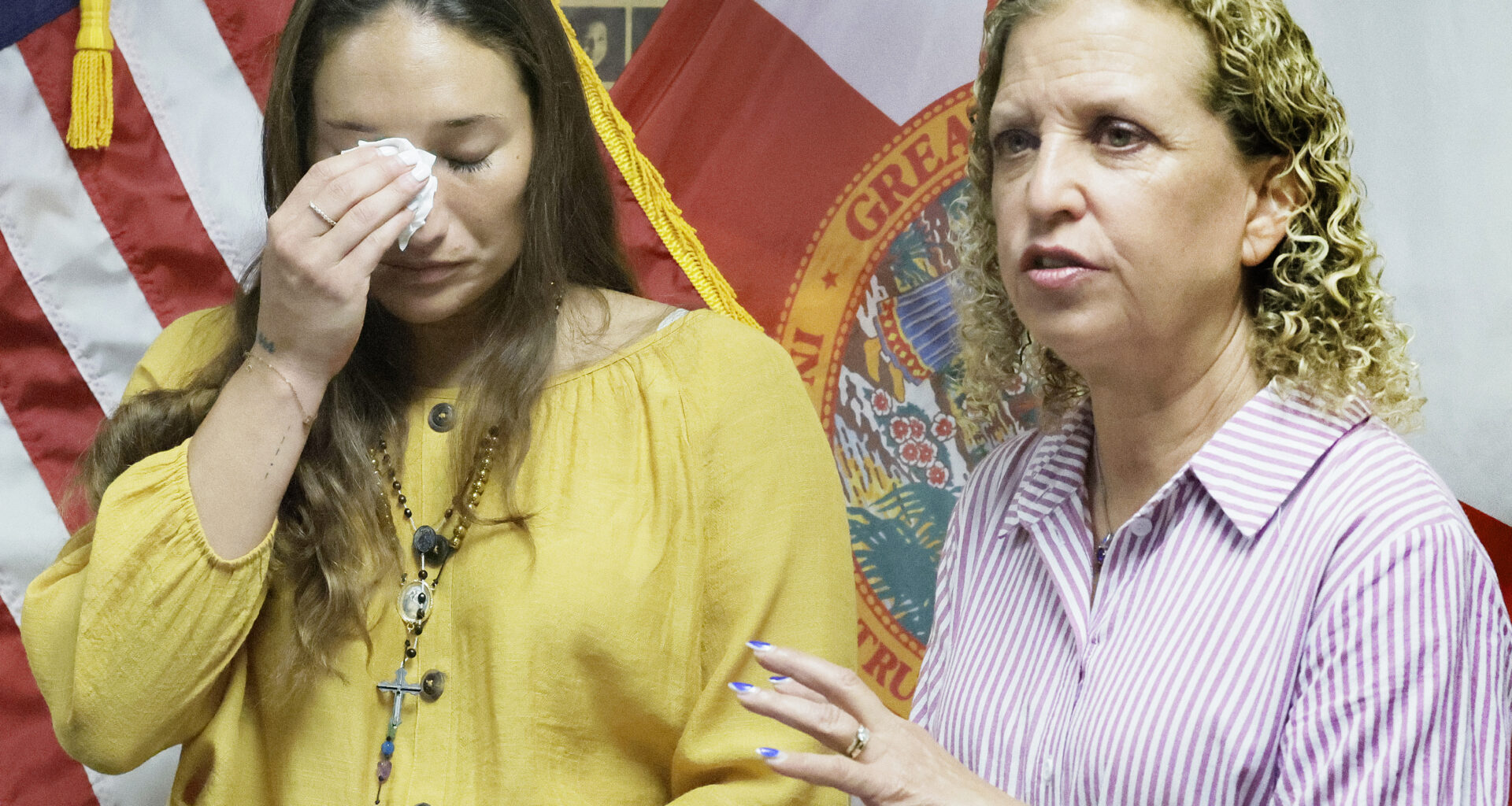
Claudia Carolina Rodriguez Caglianone is free again — but her level of fear remains as high as her uncertainty about her future in South Florida.
A legal U.S. resident from Venezuela since 2017 who arrived in South Florida on a tourist visa, Rodriguez, 28, emerged from just over two weeks of confinement by Immigration Customs Enforcement on Monday amid word of deportation flights to her earthquake ravaged homeland, and words of reinforcement from the U.S. Government that immigrants who have lost their authorizations to live in the United States should leave the country.
On its face, Rodriguez’s residency background in the U.S. seemed devoid of any reason to force her to leave. There is no criminal background. She applied for political asylum six months after her arrival from life under the regime of then-President Nicolas Maduro. In 2023, she received Temporary Protected Status and went on to earn a graduate degree in business administration from St. Thomas University in Miami-Dade County.
Arrested at the airport
But last month, Rodriguez, a resident of Davie, was arrested by Immigration and Customs Enforcement at Fort Lauderdale-Hollywood International Airport. She was headed to North Carolina to visit friends and watch the World Cup Final with them.
Her first stop in U.S. custody: An eight-day detention stint at the ICE field office in Miramar. She was transferred on July 24 to the Broward Transitional Center in Pompano Beach.
Shortly after 5 p.m. on Monday, she was back in society, free after aggressive advocacy from U.S. Rep. Debbie Wasserman, D-Weston, whose district in Broward County is heavily populated by Venezuelans. The congresswoman received referrals to the case from Rodriguez’s family members, friends and various other intermediaries.
“I’m so grateful and relieved that Claudia is with her family again,” Wasserman Schultz said at a crowded emotionally charged news conference at her office in Sunrise on Tuesday.
“I was proud to help put a spotlight on her case, but there are 300,000 Florida families who had TPS ripped away just like Claudia, and they are just as vulnerable to the kind of cruel arrest and detention that she and her family just went through,” Wasserman Schultz told reporters from both English and Spanish language media organizations. “She’s clearly no threat to our community. And the atrocious pain and uncertainty that she and her family were put through, and all the immense, wasteful expense it costs taxpayers, are just appalling. The end of TPS means more and more of our neighbors will be targeted by ICE. I’ll keep fighting to keep families like Claudia’s together, and to put an end to Trump’s racist cruelty. There are still too many Claudias going through this same horror.”
It was not immediately clear what triggered Rodriguez’s arrest after being a lawful resident in the U.S. for nearly a decade, although the Trump Administration terminated TPS for hundreds of thousands of Venezuelans last September.
Equally unknown: Why Rodriguez was released less than a month after her arrest.
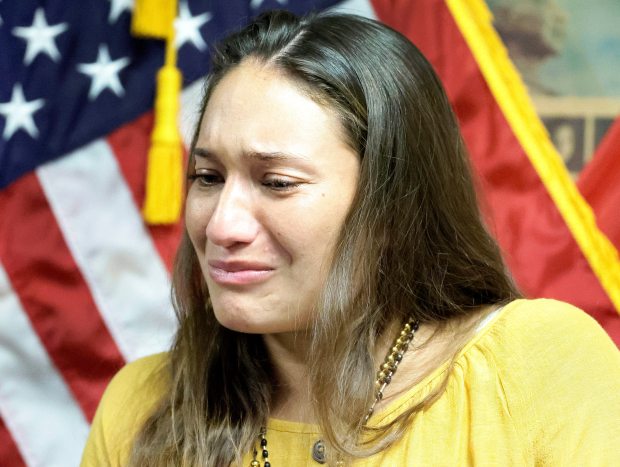 Claudia Carolina Rodriguez Caglianone, of Davie, cries at a Tuesday news conference as she speaks about conditions inside an ICE facility in Miramar. She was detained at the facility for eight days. (Carline Jean/South Florida Sun Sentinel)
Foul conditions
Last week, the administration, in an apparent effort to re-emphasize its determination to clear the country of foreign nationals who have resided in the U.S. for lengthy periods of time, canceled TPS for hundreds of thousands of Haitians, prompting mass layoffs across a broad spectrum of industries in South Florida and elsewhere around the nation.
At Tuesday’s news conference, Wasserman Schultz and Rodriguez made it clear that the young woman’s experience in ICE custody constituted violations of her human rights and is a prime example of the treatment detainees are receiving as they await government decisions about impending deportations or other resolutions of their cases.
The congresswoman, who made an unannounced inspection to the Miramar facility several weeks ago, said that segment of Rodriguez’s detention exceeded a 72-hour limit allowed by federal law. And the conditions, she said, were deplorable.
“I feel like I was an animal in a zoo,” Rodriguez told reporters. “Everyone was sleeping on the floor.”
She said she had no access to a shower and was unable to change clothes for the entirety of her time in Miramar.
“I think they only cleaned the room twice. They didn’t clean the toilets,” she said. “Every time we asked for water, they would say, ‘Drink water from the sink.’”
Wasserman Schultz accused the Trump Administration of lying about its deportation objectives, which was originally declared by Trump as an effort to clear the country of the “worst of the worst,” namely those with criminal backgrounds.
The congresswoman declared that Rodriguez did not come close to matching that description.
The Department of Homeland Security’s Immigration and Customs Enforcement arm did not immediately respond to emailed questions Tuesday seeking details about the case.
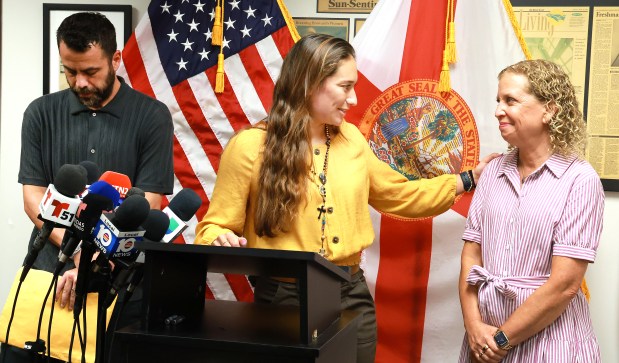 Family member Gabriel Dominguez, left, and Claudia Carolina Rodriguez Caglianone, of Davie, speak with Congresswoman Debbie Wasserman Schultz about conditions at ICE facilities during a Tuesday news conference in Sunrise. (Carline Jean/South Florida Sun Sentinel)
Gabriel Dominguez, a cousin who stood at Rodriguez’s side during the news conference, said he was eternally grateful for his relative’s return.
The experience, he said, was “heart-wrenching for the entire family. We are a very, very close-knit family, and going through that experience was the biggest gut punch we faced together. She’s my little cousin. My job is to protect her, and to feel like I was unable to do that was heart-breaking.”
But upon his cousin’s release Monday, he said, “it was an unbelievable feeling.”
“You try to look for a silver lining and try to understand why things happen,” Dominguez added. “And in a moment like yesterday to have her home and to be with my entire family was just a feeling [of being] overwhelmed by gratitude.”