
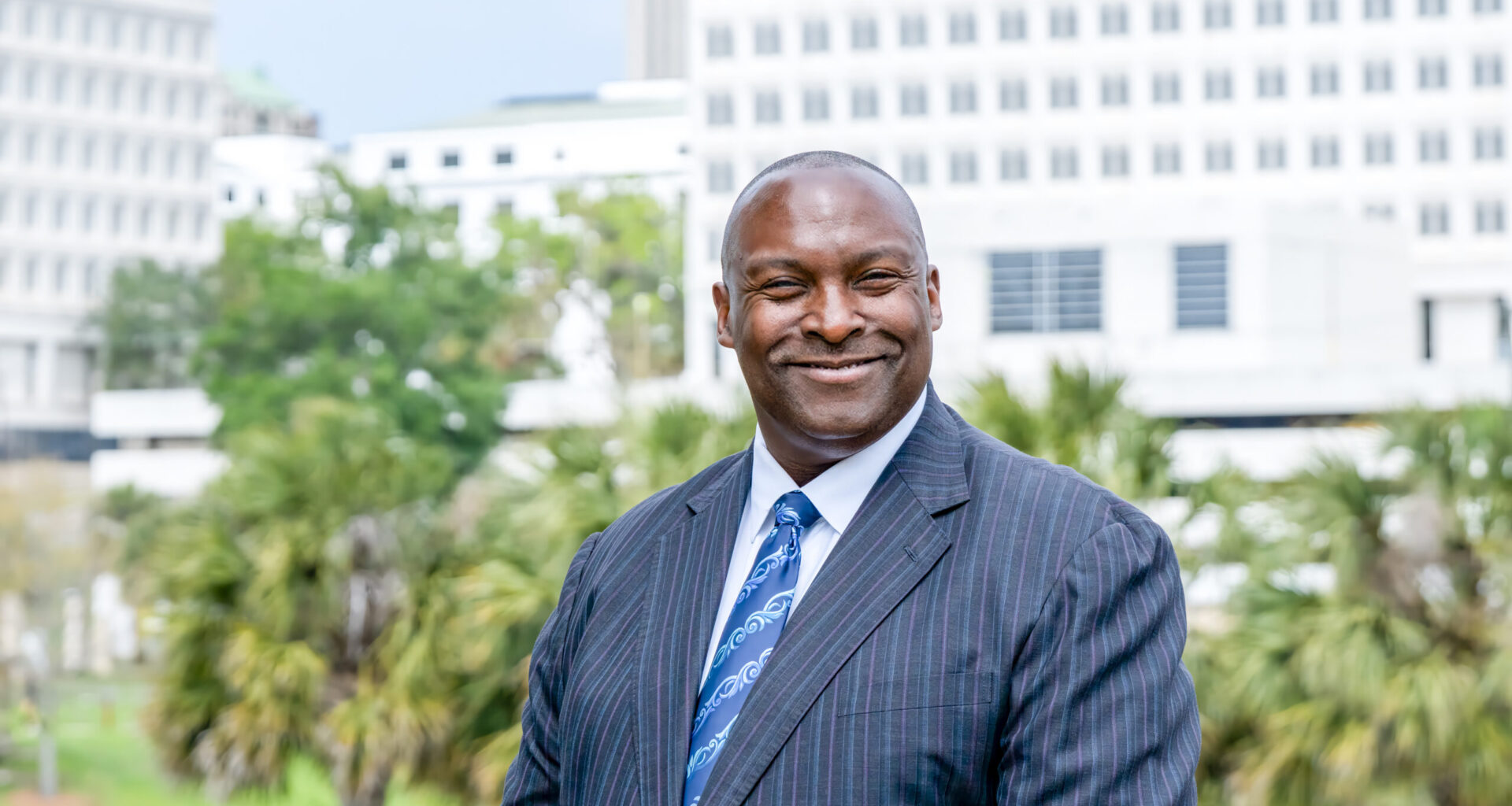
Civil rights lawyer Daryl Parks is one of four candidates running to succeed Tallahassee Mayor John Dailey, who announced last year he would not seek a third term.
Other candidates in the race include former Sen. Loranne Ausley, IT entrepreneur Michael Foust and City Commissioner Jeremy Matlow.
Florida Politics asked all candidates to answer a few questions. We are publishing their responses unedited so voters can hear directly from candidates. Here’s what Parks told us:
— Profession: I built a nationally recognized civil litigation firm based in Tallahassee, and I continue that work as managing partner of Parks Law, LLC, alongside my work as a small business owner and investor.
— Education: I moved to Tallahassee to attend FAMU, working my way through school as a dishwasher and fast-food worker as the first in my family to attend college. I earned dual degrees in Economics and Political Science from my FAMU and a JD from FSU College of Law.

— Years in the city: 40 years.
— Community involvement: Community has always been central to my life: I have served as chair of the Leon County Sickle Cell Foundation for 25 years, served as Chairperson at Bond Community Health Center, and remain active at Bethel AME Church. I also served FAMU as Vice Chair of its Board of Trustees and Chairman of its Foundation. I support access to justice through my work with Legal Services of North Florida helping to establish a legal aid center in Gadsden County. Expanding access to justice is an example of my belief that success means little unless it helps others succeed too.
— What spurred you to run? Why are you in this race? I was born and raised in Polk County, and I came to Tallahassee to attend Florida A&M University, where I worked my way through school as a dishwasher and fast-food worker. After earning my degrees from FAMU and later my law degree from FSU College of Law, I chose to build my life, my law practice, and my businesses here in Tallahassee. I am running for Mayor because Tallahassee is at a turning point, and too many families, students, young workers, and small business owners feel squeezed by rising costs, broken systems, and a city government that has not kept pace with their daily reality. I am running to make Tallahassee more affordable, to ensure a fairer distribution of municipal resources, and to create the kind of innovative and opportunity-rich city where young people can build a future instead of feeling like they have to leave to find one. I am not a career politician. I am a lawyer and businessman who has spent my career fighting for what is just and right, and I will bring that same sense of purpose and discipline to City Hall.
— The cost of groceries, gas, housing and utilities is top of mind for voters right now. What specific policies do you propose to make life more affordable for residents? The single biggest challenge facing Tallahassee is affordability, which means lowering costs and raising incomes. As mayor I would focus on issues within the city’s purview that reduce costs, like building workforce housing on underused city-owned land, lowering utility costs through bill credits, weatherization help, and on-bill financing so upgrades pay for themselves from day one. I will also use my platform as mayor to encourage economic development and job creation through an Economic Integration Task Force that brings the city, county, universities, and regional business leaders together around one shared jobs strategy.
— How do you balance the need to increase the housing supply to make housing more affordable with the desire to preserve Tallahassee’s canopy roads, charm and character? Where would you look to develop, and what should be left as it is? You can protect what makes Tallahassee beautiful and still build houses people can afford. The fight we are having is not really about trees. It is about local rules that pit environmentalists against developers. I believe in smart growth, and to me that means building where the roads, water, and sewer lines already are instead of pushing further out into the county, including workforce housing on underused city-owned land. It means neighborhoods where people can walk or bike to the grocery store instead of being stuck in a car for every errand. And it means new development pays its own way, so the family that has lived here for twenty years is not stuck with a higher tax bill to pay for someone else’s subdivision. I also want to overhaul our permitting department with a free Public Ombudsman, a Day-One Checklist, and a “How Can I Say Yes” culture that gets housing built faster without cutting corners, and expand our urban tree canopy so the historic neighborhoods that give Tallahassee its character stay cool and green as we grow. This is not development versus preservation. We can have both.

— The city is home to FSU, FAMU and TSC. How would you better leverage those institutions to retain graduates and create more high-paying jobs? Our graduates do not leave because they dislike Tallahassee. They leave because the jobs are in other places. So, we have to create jobs here. I want low cost startup space downtown so the research coming out of our universities turns into companies here instead of somewhere else, and I want our schools, including Lively Technical College, training people for work that actually pays, from coding and cybersecurity to skilled trades. I will also launch an Economic Integration Task Force and an annual Big Bend Economic Summit to bring FSU, FAMU, TSC, and regional business leaders together around one shared jobs strategy, and use that momentum to turn downtown into a live-work-play innovation core anchored by student-driven tech incubators at FAMU and FSU. We should also stop sitting on the assets we already have. The Tallahassee Memorial Healthcare and FSU partnership may be one of the biggest job creators this region has seen, and I want a medical research hub built around it. And the magnet lab is world famous. Scientists book time there years ahead, yet there is no hotel and no restaurant at Innovation Park. That is a business opportunity we are ignoring.
— When it comes to spurring growth and attracting employers, how generous should the city be with subsidies and incentive packages? I did not get a handout when I started my firm. I got a bank loan, and I paid back every dime. I understand the need to attract new business, but I am skeptical of writing checks for the sake of writing checks. Many employers want something cheaper than cash from us: a permit process that works, land that is shovel-ready, competitive utility rates, and workers who are trained. Those things help every business already in town, not just the ones that are looking to come here. When a project is genuinely transformational and needs an incentive, then put it in writing and mean it, with enforceable community benefit terms attached as a condition of approval. Hire local. Buy from local small businesses. Hit your job numbers or give the money back. And I will post the results on a public investment dashboard, updated every quarter, so taxpayers can see every dollar, every project, and every result in plain language. Handing out money without follow up is how cities lose people’s trust.
— Beyond adding more police officers, what strategies would you pursue to reduce violent crime and improve trust between law enforcement and the community? Public safety comes down to two things: prevention and accountability. That means going after the root causes of crime and poverty with youth programs, neighborhood investment, better street lighting, and real economic opportunity in the communities that have been overlooked for too long. I will fight for brighter streets, active Neighborhood Watch programs, and community policing so residents actually know their officers by name, along with afterschool mentorship, safe parks, and youth programs that stop crime before it starts. When law enforcement is part of building those programs, not just responding after something goes wrong, it goes a long way toward rebuilding trust. With strong accountability and good policing, residents deserve a city where police, fire, EMS, and emergency dispatch actually work together under one clear strategy, so no neighborhood waits longer, feels less safe, or gets less attention than another. That means modern crime-fighting tools and faster 911 response times in every zip code, backed by competitive pay and staffing plans for police, fire, and EMS, plus real support for the Consolidated Dispatch Agency answering our emergency calls. I want a public safety approach that holds government accountable and expects professionalism from our officers, because you cannot have safer neighborhoods without both prevention and a strong response when something happens.