
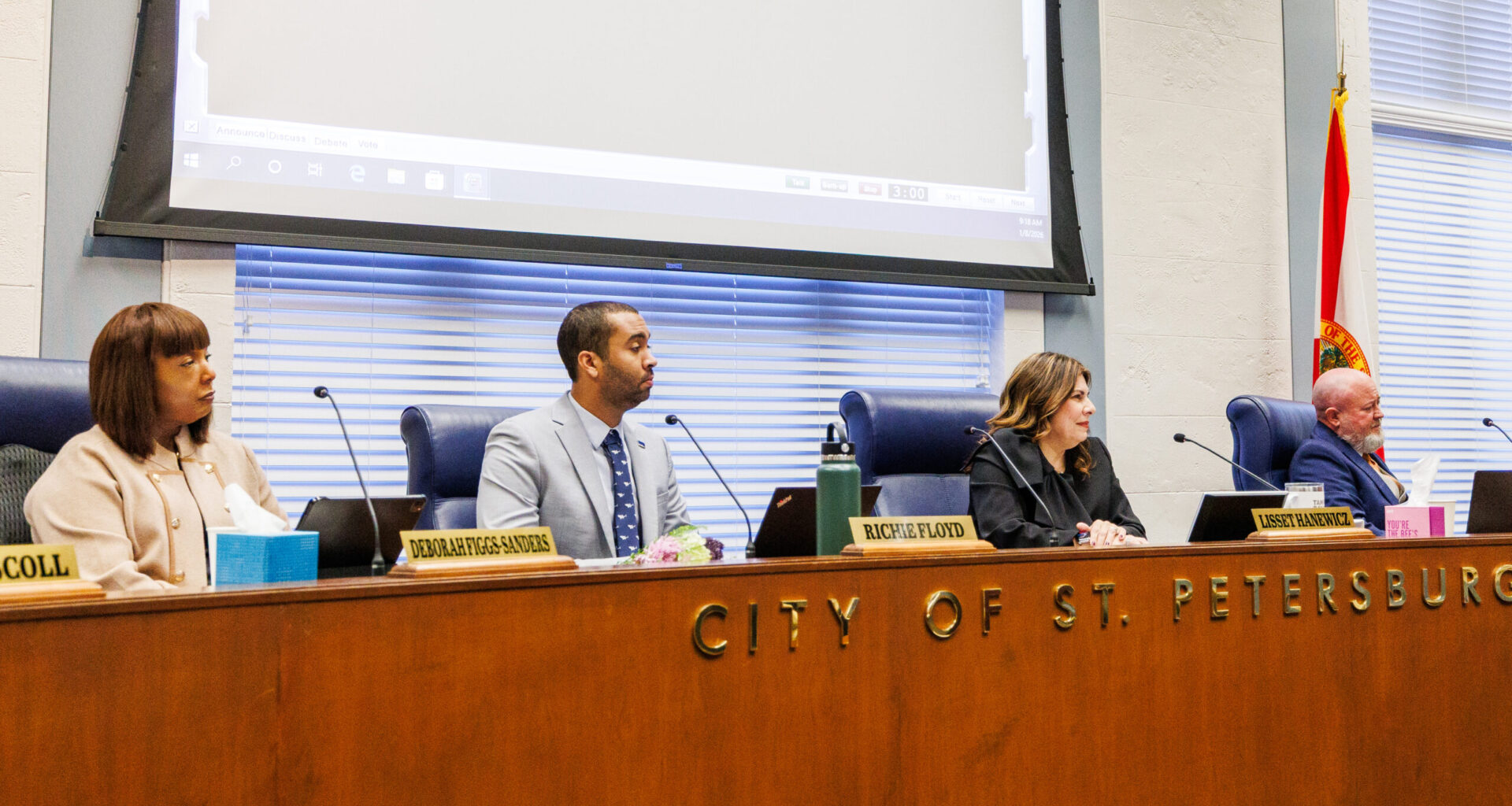
The St. Petersburg City Council is mulling a utility rate increase they say is necessary next year simply to keep existing services and infrastructure projects from slipping backward.
The increase comes as the city prepares to ask voters to approve a separate $600 million bond package in November aimed at fast-tracking St. Pete Agile Resilience projects, but Council members argued that the two funding requests serve different purposes.
They said proposed utility increases absorb rising operating costs and preserve the city’s existing five-year capital plan, while the general obligation bond would allow St. Petersburg to add major projects it otherwise could not afford.
Under the proposal, a typical household using 3,500 gallons of water a month would see its overall utility bill rise about 7%, or nearly 8% for customers with reclaimed water. The plan includes increases of 7.5% for potable water, 6.5% for wastewater, nearly 10% for reclaimed water, 8.5% for stormwater and 6% for sanitation.
Public Works Administrator Claude Tankersley said holding rates steady would not merely delay new projects, the city would have to find cuts within the utility operations it already provides. He attributes the price increase to the same inflationary pressures affecting residents.

“We’re not really adding anything at all to the operations,” Tankersley said. “We haven’t added any staff. We’re not adding any new operational activities. We’re just staying current.”
Council Member Brandi Gabbard said communication with residents is critical as the Council tries to distinguish the rate proposal from the November referendum.
“I think we need to have a real transparent conversation about that and the differences between the annual rate increase and what that does and the GO bond in November,” Gabbard said.
Council Member Copley Gerdes said the proposed rates and the bond should not be treated as competing options. He acknowledged that another increase could generate pushback, but said allowing the utility systems to fall behind is worse.
“I would much rather deal with some of that pushback than actually go backwards,” Gerdes said.

Council Member Richie Floyd said the city should examine the combined impact of the increases residents have absorbed over the past decade, and suggested lowering fixed costs for residents who conserve water, continuing to discourage high consumption and reconsidering other charges imposed on the utility systems.
“If we looked at that cumulatively, it does look like a really large burden being placed on one generation,” Floyd said. “For the last decade, our increase cumulatively … is significant. All of us in the city right now, we feel it and we feel like we’re more than making up for a lack of investment in the past.”
The proposal is scheduled for a first reading Aug. 13 before returning for a public hearing and final vote.