
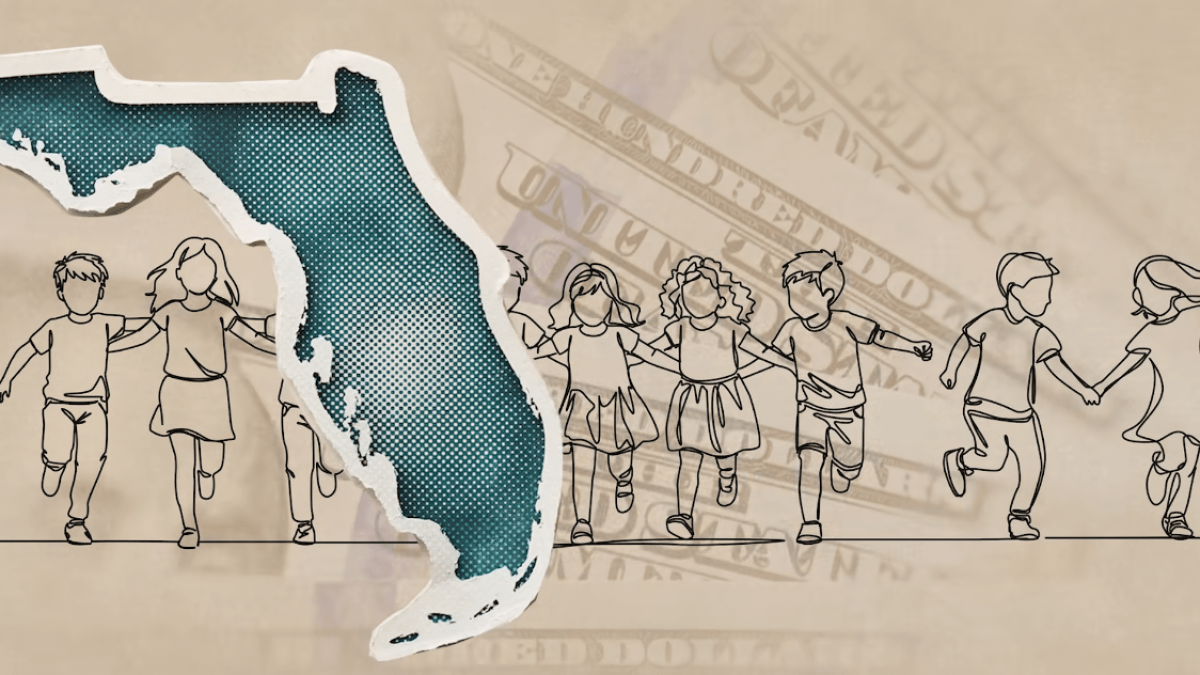
A proposed property tax measure that Florida voters will consider in November could provide homeowners with a larger homestead exemption but also reduce funding for children’s programs that many South Florida families rely on.
For Julianna Bazile, a Broward County mother of three elementary school-aged children, after-school care and summer camp programs are essential to balancing work and family life.
“They’re currently in an after-school program with their school, and I enrolled them in summer camp this year as well,” Bazile said.
The programs allow Bazile to maintain her full-time job despite a demanding schedule.
“From having to wake up at 5 o’clock in the morning to come home at 7:30 p.m., I would not know what I would do without this program,” she said.
Currently, those services are provided at no cost to her family through programs funded by the Children’s Services Council of Broward County.
That funding, however, could be affected if voters approve a constitutional amendment that would increase Florida’s homestead exemption. During a special legislative session in June, lawmakers approved a proposal that would raise the homestead exemption to $150,000 in 2027 and $250,000 in 2028.
While the proposal would reduce taxable property values for many homeowners, it could also decrease property tax revenue collected by local governments and independent taxing districts.
In Broward County, approximately 13 cents of every property tax dollar collected supports special districts, including the Children’s Services Council. The council funds a variety of programs, including summer camps, swim lessons, reading initiatives, school nurses, early learning programs and mental health services for children and families.
Maria Juarez Stouffer, chief program officer for the Children’s Services Council of Broward County, said the organization could face significant budget reductions if the amendment is approved.
“The first year, if this passes, we would take approximately a $15 million budget cut. And then year two would be approximately $30 million,” Juarez Stouffer said.
Juarez Stouffer says about 99% of the council’s funding comes from property tax revenue, leaving few alternatives if collections decline.
“If these services have to be reduced, then that is going to impact families, potentially their ability to work in the same way that they’re working now,” she said.
According to the council, the projected funding loss would represent about a 10% reduction to its programming budget in the first year and roughly 20% in the second year. How children’s services councils and similar taxing districts across Florida would offset those losses remains uncertain.
For Bazile, the programs have provided more than childcare. She credits them with helping one of her children improve academically.
“Ever since he got into the after-school program with the reading time, and even during the summer it continued for him, that was amazing for me,” she said.
She worries about what losing those services would mean for her family.
“If this program goes away, I’m most likely going to have to switch careers,” Bazile said. “I would have to stop working in Palm Beach, come back to Broward and find something closer to the school so I could pick them up after school.”
The proposed amendment would not reduce funding for Florida’s public school system, but independent local taxing districts, including children’s services councils, could experience lower tax revenues if the measure passes.
The Children’s Trust, which provides similar services in Miami-Dade County, said it is evaluating the potential financial impact.
In a statement, the organization said it is “currently reviewing property tax revenue estimates from a variety of sources and assessing potential scenarios to ensure we can protect our core mission and continue serving children and families effectively. Our priority is to be prepared to deliver the maximum level of services possible based on the funding available after voters make a decision regarding the proposed property tax legislation.”