
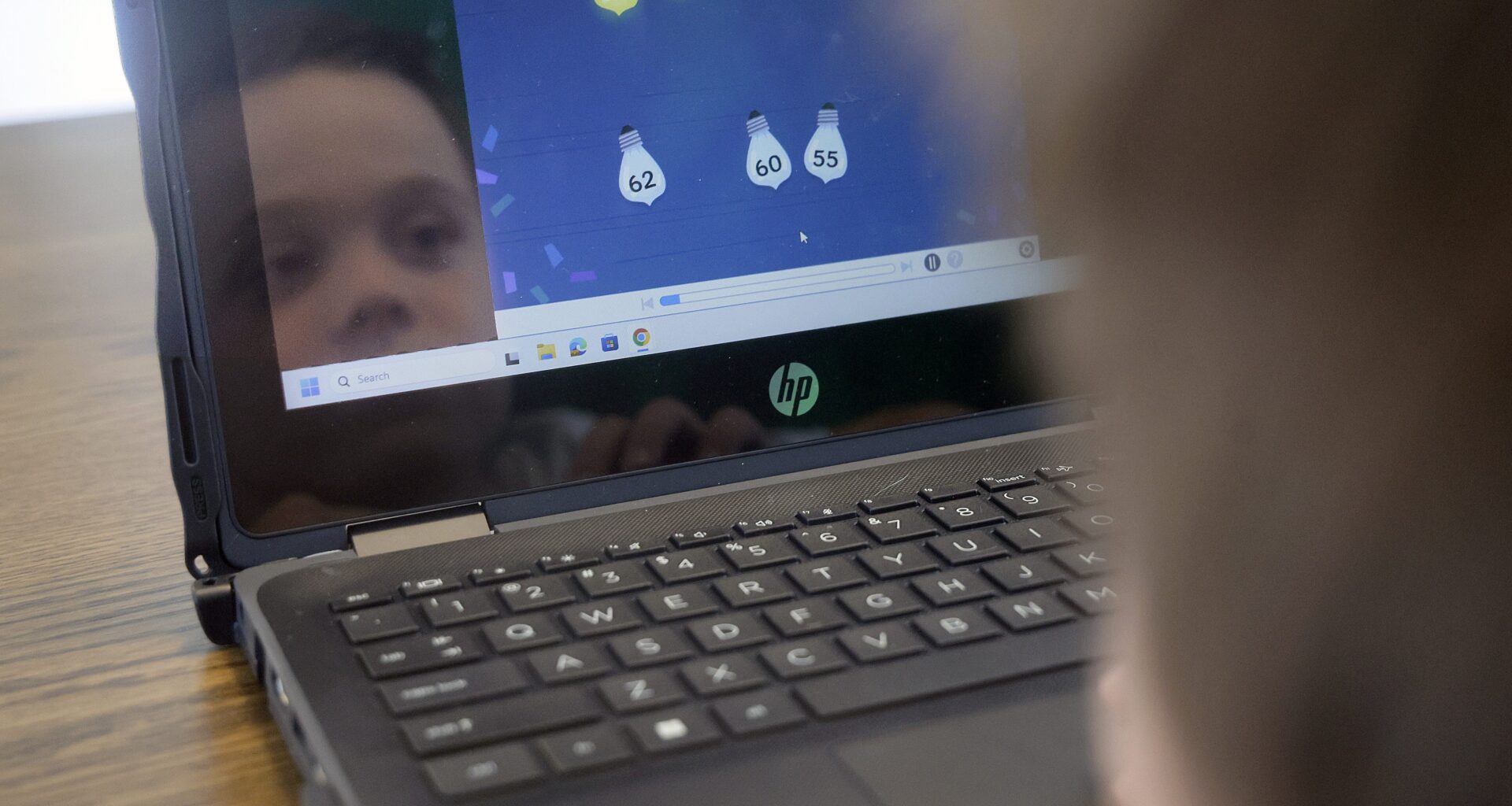
Broward elementary schools may spend more time teaching and less time testing during the new school year.
Following complaints from parents, teachers and School Board members about overtesting, the district plans to reduce district-required testing minutes for elementary students by more than 65% for the new school year, which starts Monday, according to a district memo.
The total minutes will drop from 2,385 minutes last school year to 835 minutes this coming school year, according to the memo, called “After-Action Report on Instruction, Assessment and Testing Reduction.”
District-required testing will be reduced by 100% in kindergarten and first grade, the memo states. The reductions do not include any state-mandated tests, such as the Florida Assessment of Student Thinking or the FAST Star Early Literacy Program Test.
The changes follow a February School Board workshop on testing where more than a dozen parents complained that the district spends too much time testing, particularly the lower grades.
Board members agreed and asked Superintendent Howard Hepburn to come up with a plan.
“We listened to our parents, we’ve listened to our teachers, we’ve listened to our principals, and we especially have listened to our board members about screen time and assessment concerns, and we’ve reacted accordingly,” Hepburn told the South Florida Sun Sentinel.
The proposal pleased School Board Chairwoman Sarah Leonardi.
“We gave the directive, and instead of justifying all of the assessments that are given, they found a way to reduce them,” Leonardi told the Sun Sentinel. “Do I think more can be done? Sure, but I think this is a really good first step.”
All the tests being removed are given by computer, and district officials say the changes will also help address concerns raised by parents about excessive screen time on electronic devices.
The specific changes are as follows:
— Remove a beginning-of-year science test for grades kindergarten to 4, as this “reduces early-year testing where the instructional return does not outweigh the testing burden,” the memo states. This results in 45 minutes less testing per grade.
— Remove a middle-of-year science test for grades kindergarten to 4, which “reduces mid-year testing and allows teachers more time to provide personalization and differentiation,” the memo states. This also results in 45 minutes less testing per grade.
— Reduce the number of questions for a science beginning-of-year test for fifth graders by eliminating questions of subject matter that has yet to be taught. This “maintains relevant content while removing items not aligned to instruction at that point in the year,” the memo states.
— Remove a four-times-a-year test for kindergarten students on letter names, letter sounds and other concepts, which “reduces redundancy and protects early literacy instructional time.”
— Remove an i-Ready Diagnostics and Personalized Pathways assessment, which measures reading and math skills, for kindergarten and first grades, which “directly addresses screen-time concerns and developmental fit in early grades,” the memo states. This results in about 300 fewer minutes of testing and screen time exposure for each grade.
Hepburn told the Sun Sentinel that the district conducted an analysis of all the non-state-required testing in the district and sought input from teachers, principals and parents.
A large number of the tests eliminated measured students’ proficiency in science. This was one of the district’s weakest areas in 2023, with just 46% of fifth-grade students proficient in a state-mandated test, which was lower than the state average. But in 2026, that jumped to 64%.
“If you look at our science scores over the past three years, science needed to be taught in those early grades,” Fabian Cone, the district’s chief academic officer, told the Sun Sentinel. “So our science test was meant to make sure the teachers really taught science with fidelity.”
But with improvement in science teaching, teachers and principals told district officials that the beginning and mid-year science tests could be dropped, Cone said.
“Science still has to be taught. It just doesn’t have to be necessarily assessed” multiple times a year, Cone said.
About a dozen parents voiced concerns about overtesting, particularly in elementary schools, at a Feb. 17 workshop.
Jill Seigel, a parent and PTA president at Tropical Elementary in Plantation, told the School Board at the meeting that she became concerned after watching testing happening while she was volunteering in her daughter’s kindergarten class.
“I got to watch them take a test about Venus flytraps, which are very important to all of us. But it was very hard to watch kindergartners do it because the content was so difficult for them on a computer,” Seigel told the board, saying the children had to scroll and click multiple buttons to navigate the test.
“It might seem simple to all of us to use computers regularly, but as somebody who tried to encourage outdoor play and normal kid play, my kids don’t go into kindergarten ready to use a laptop mouse and all of that,” Seigel said.
Jordanna Egan, an elementary teacher in Broward, told the board at the same meeting that i-Ready tests are time-consuming.
“We can’t test during lunch, recess or specials and many of our students have accommodations, so these tests take days to complete. Sometimes two weeks just testing,” Egan told the board. “My most recent intern, when her university supervisor came to observe her, I said, ‘She hasn’t taught a lesson yet because we did iReady reading and math and it took us nine days to do.”
School Board members have been divided on the use of i-Ready, which some parents dislike but many principals support. The School Board voted in July to renew a contract with i-Ready but not use the tests for kindergarten or first grade. Board member Debbi Hixon argued that computer programs like i-Ready have helped the district receive an A grade for the past three years, after being B-rated for most of the previous decade.
“We gave (teachers) some professional development and helped them with the software, and now we’re seeing more proficiency in our students,” Hixon said at a July 28 meeting.
Board member Adam Cervera disagreed.
“I just want to make sure that we’re very clear that it’s the people in the classroom that bring us the A ratings, not these computer programs,” he responded.