
I recently had an interesting encounter with a stranger in my Ormond Beach community. I was walking toward my car chatting with my 18-month-old when I heard: “Speak English!” I forgot to mention, we speak Spanish. I had heard of foreign-language speakers experiencing this, but as a person whose maternal language is English, I did not think it was coming for me. What’s more, she began to rant about me not being a “true American” and doing my baby an injustice by not speaking English.
There is no visible or inherited reason why this should matter to me. A blonde U.S. citizen from Kentucky who benefits from SPF 75+, most would assume I speak English. Even so, I fell in love with Spanish as a sixth-grader. My attraction to fiestas and accents blossomed into deeper curiosities, then a master’s degree, and later, a doctorate. More than just my career now as a professor, Spanish has afforded me immersive travel opportunities and meaningful inter-cultural connection. It also allows me to raise my daughter in Spanish with my husband here in Florida, where it is increasingly part of the community. We see Spanish as a gift to pass on; the stranger saw it as a national threat.
I wondered what was “un-American” about it. Was enjoying burritos, listening to the Spanish guitar, or dancing salsa un-American, too? I thought of Fidel Castro’s Cuba, where a dangerous sense of nationalism led to banning Western trends in art and self-expression, fueling 68 years of isolation. What was unamerican about exercising my First Amendment right –– freedom of speech –– in any language, when the Constitution does not mention an “official language”? Hasn’t our independence benefited from Spanish partnerships, like Spanish General Bernardo de Galvés defeating British occupation in the South during the Revolutionary War, and the Puerto Rican Borinqueneers fighting for U.S. independence in the Korean War? Alas, drive-by critics aren’t often open to listening.
What is clear is that even for a citizen who is fully bilingual, is a former neighbor of KFC headquarters, and has plenty of local English-speaking friends she can laugh about this with, these confrontations feel bad. Feeling like an outsider, I considered my daughter, and how an encounter like this later could make her want to hide her heritage; uprooting crossed my mind. I felt discouraged, but what if my social situation were truly delicate –– like if I were someone who had just migrated here out of desperation? It would have felt crushing. That is when I realized the importance of community, and that I wanted to stay and help people build theirs.
Instead of returning home to shop Miami real estate, I considered how notions of linguistic superiority and cultural intolerance often begin early in life, systemically. Thereby, so should exposure to linguistic diversity and cultural awareness. I contacted my pastor about hosting a Spanish-language playtime curriculum for our toddlers. In response, our church family helped create a loving environment where children learn to associate Spanish with fun, friends, and the calling to love our global neighbors.
A win, but I still wanted my daughter to interact with other Spanish speakers. I logged into Facebook and searched for Spanish family groups in my area. There were none dedicated to encouraging bilingual children and their families to meet and play in Spanish. In effect, I launched a group to do just that. Each week, I announced meetups, our community building goal, and went to meet the few families who showed up. Growing each week, it now has 19 families.
The echo of the voice trying to silence us is indecipherable now, muffled by sounds of children laughing and diverse accents sharing success stories and plans –– the sounds of an American community. She saw someone she didn’t understand. We see an opportunity for our children to understand more of the world, through love and a willingness to listen. This is what speaking American is all about. It isn’t about waiting for people to speak to you in your language. It’s about jumping language barriers. Maybe you have experienced discouragement when you truly believed in something, but you didn’t have group support. I hope this encourages you to go out and find that community and, if it isn’t there, create it.
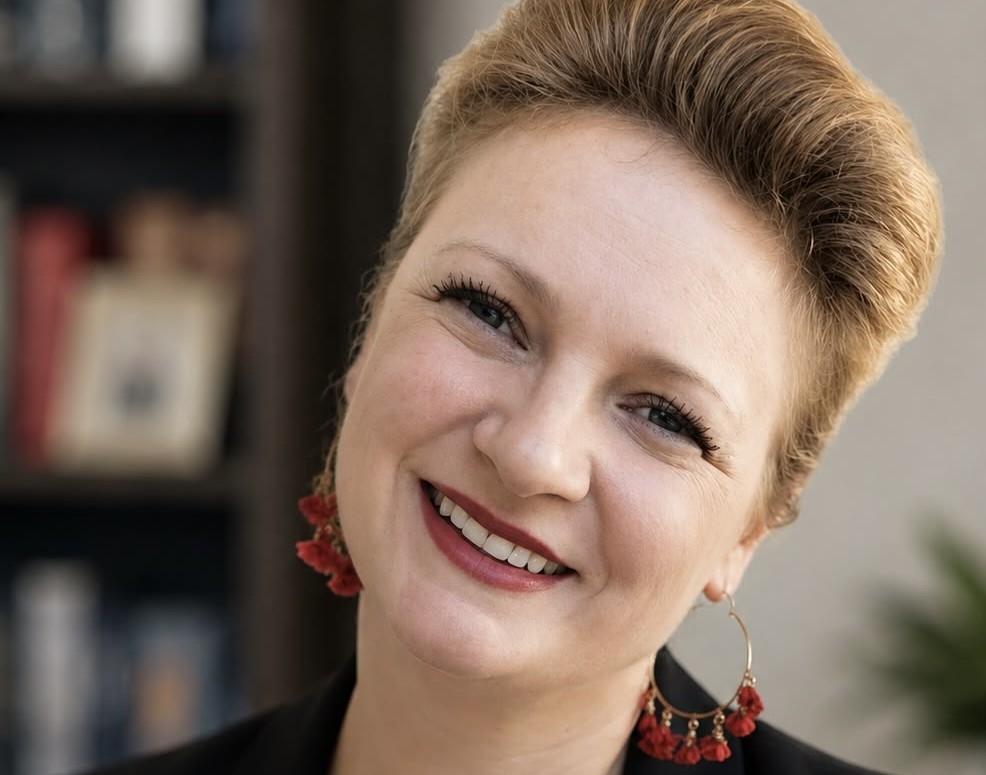
Haley Osborn is Assistant Professor of Spanish at Eastern Florida State College and a mom raising a bilingual child.