
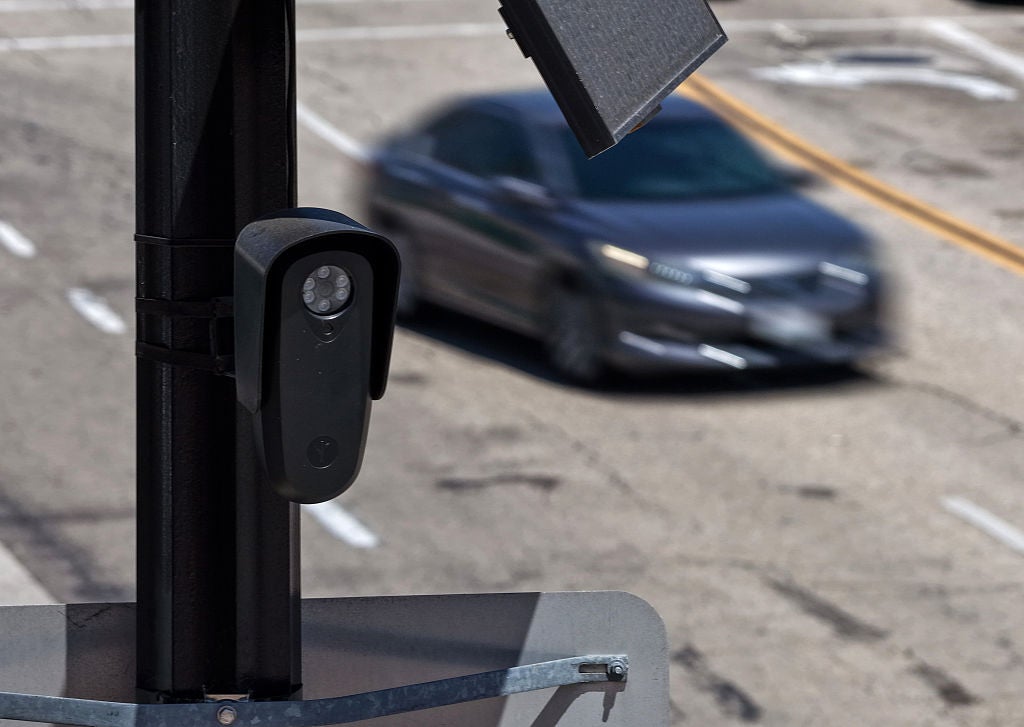
Facing renewed public pushback over surveillance technology, St. Petersburg Police Chief Anthony Holloway is standing by his department’s use of Flock license plate readers, arguing the cameras exist to solve crimes, not to track ordinary citizens.
Fifty of the automated devices are currently active across the city, part of a program the department launched in 2021. Rather than capturing faces, the cameras log images of vehicles and their plates, information officers use to recover stolen cars, locate missing people, and build criminal cases. The system also allows investigators to quickly rule out vehicles that have nothing to do with a given case.
“We’re not monitoring people. We’re monitoring incidents,” Holloway said, addressing ongoing public skepticism. “I’m not going to convince everybody of that, but what I can tell you from the St. Petersburg Police Department is we want to use this so we can continue to make our city safer.”
Holloway’s defense comes as privacy advocates continue to question how long the data is kept and whether the tool opens the door to abuse. Department leaders counter that a recent case demonstrates its worth: In July, Flock data allowed investigators to trace a suspect’s vehicle and make a fast arrest after a city employee was shot and killed.
To guard against misuse, Holloway said footage is purged after 30 days, and any officer running a search must first document a report number or a legitimate law enforcement purpose. The department also runs monthly compliance checks, randomly pulling officers for review of their computer and phone activity, a process he compared to drug testing.
“They’ll be held civilly liable if that person wants to sue them for running their tag or running their information. So, that’s on that officer. If he or she is using this for police purposes, I will stand behind them 100%. If they’re using it for personal reasons, they’re on their own. They’re going to have to figure out why they did it, and they have to explain one to the court, because they could possibly be charged also with a criminal charge, and they won’t be working here at this police department,” he said.
Sharing footage across agencies isn’t automatic, either. Holloway said any outside agency seeking access must have its chief or sheriff file a written request laying out the justification. Flock has confirmed that cross-agency sharing stays off unless the owning agency turns it on, and the company logs every search in a permanent, tamper-proof audit trail.