
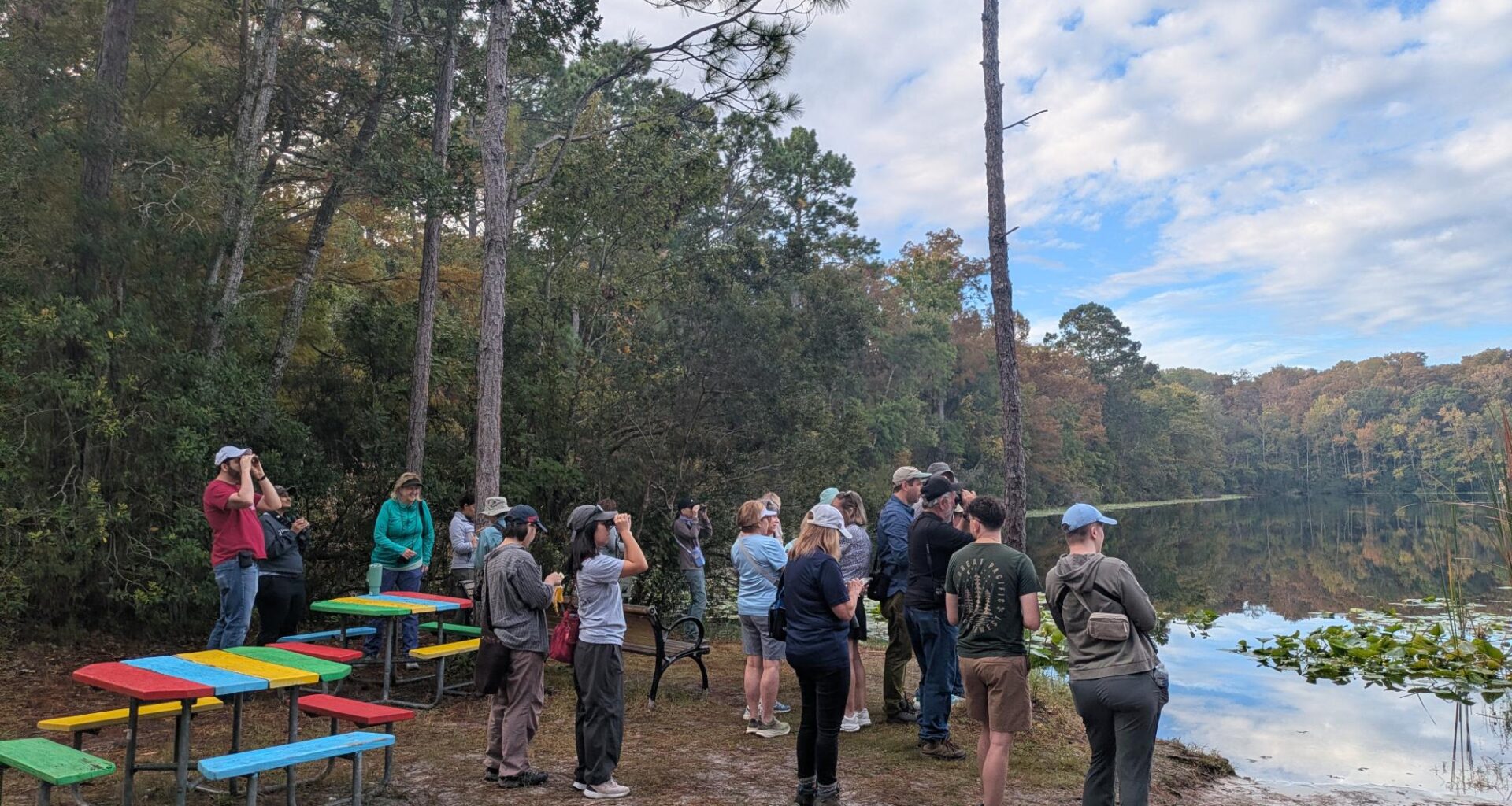
The University of North Florida’s campus provides habitat for a wide variety of birds, but artificial light, reflective windows and ongoing development pose risks to local and migratory species.
UNF students and local Audubon volunteers are documenting bird-window collisions through Lights Out Northeast Florida. The regional initiative identifies high-risk buildings and promotes reduced nighttime lighting and safer windows for migrating birds, according to the Duval Audubon’s website.
UNF senior Alana Anderson has spent almost a year surveying UNF’s campus for birds that have been injured or killed after colliding with windows. Anderson said the program’s primary goal is to determine which buildings cause the most collisions.
“We do walks and find deceased or hurt birds and get the data,” Anderson said. “We want to install some type of stickers or bird-safe glass so that there are less bird deaths on campus.”
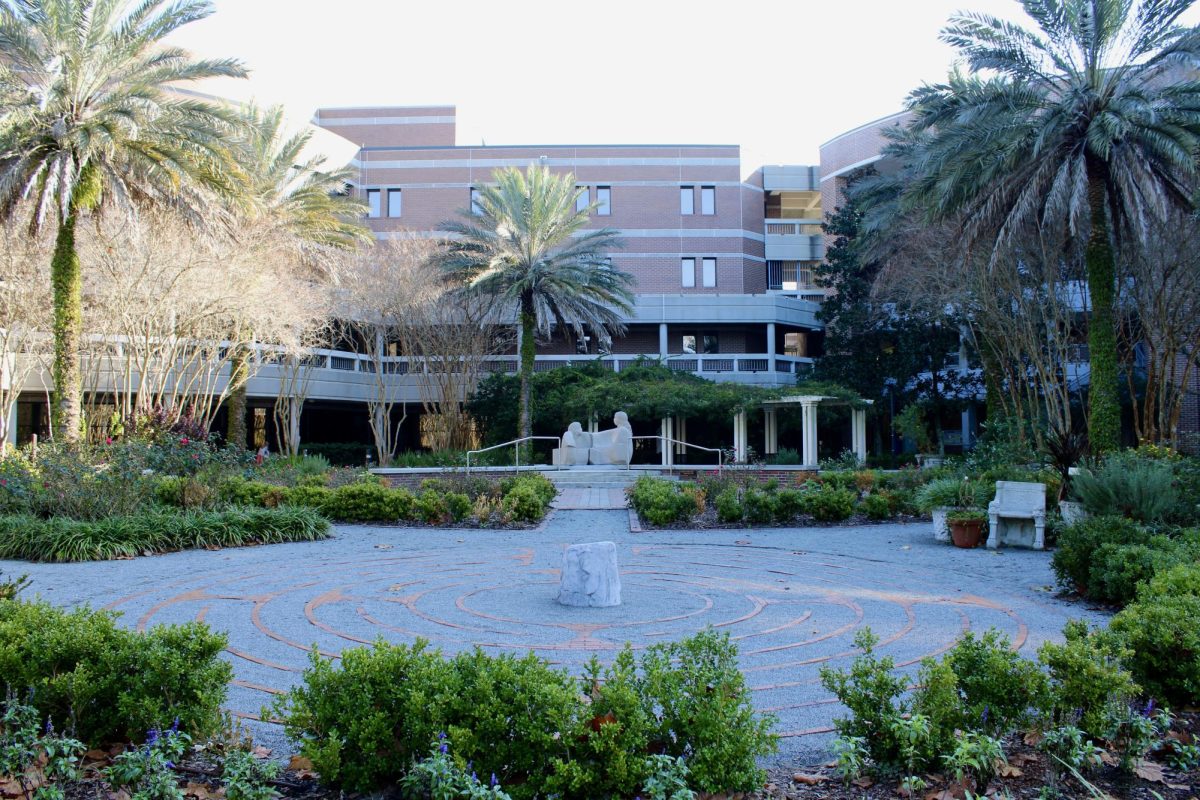
Anderson conducts surveys on Tuesday and Thursday mornings, although she said more than 70% of the program’s reports have come from people who contacted her after finding a bird. She said the Brooks College of Health building and the Student Union are two of the most problematic areas on campus, as documented by the program.
 Sasha Koresh
Of the data collected by Anderson, 42% of birds found deceased or injured on UNF’s campus had collided with the Brooks College of Health Building.
The information provides advocates with evidence to use when asking the university to make changes, said Elizabeth Filippelli, vice president of Duval Audubon and co-leader of the Lights Out initiative.
“Without collecting the data, it leaves us vulnerable to people saying, ‘Well, how do you know this?’” Filippelli said. “Well, now we have the data.”
Will McMahon, UNF’s assistant director of campus sustainability, said he works with Anderson and the Duval Audubon Society to help collect data on bird collisions across campus.
According to McMahon, Lights Out at UNF is still collecting data on campus. He said Campus Planning and Physical Facilities are aware of the initiative, but Anderson and McMahon have not yet presented the data to them.
“Meeting with UNF leadership to kind of take this one step further is the hope. But everyone I’ve talked to so far has been super supportive,” said McMahon. “This is something I will support as much as I can.”
Birds often collide with windows because they see reflections of trees, plants or open sky and mistake the glass for a clear flight path, said Filippelli. Artificial lights can also disorient migrating birds, particularly when they travel at night.
Filippelli said the Light Out Program encourages responsible outdoor lighting rather than asking campuses or businesses to eliminate lighting entirely.
Mike Taylor, curator of Herps, Birds and Others at Jacksonville Zoo and Gardens, has worked with local Audubon Society chapters and other organizations for about seven years to document bird collisions and encourage businesses and government agencies to reduce nighttime lighting.
Birds do not recognize transparent or reflective glass as a solid barrier, said Taylor. A window may appear to provide a clear path through a building or resemble open sky because of its reflection.
Taylor said more than 1 billion birds are estimated to die from building collisions each year in the United States alone.
Homeowners and building managers can help protect migrating birds by turning off or reducing nighttime lighting, directing outdoor lights downward and using blinds, timers or motion sensors, according to Duval Audubon Society’s website.
Anderson said another possible solution to bird collision-related deaths is to place closely spaced dots, decals, or other visual markers on the exterior of windows so birds recognize the glass as a solid surface. Buildings can also use bird-friendly glass or incorporate artwork and other designs into window treatments.
Filippelli said white exterior markers are among the most effective deterrents.
“We have solutions,” Filippelli said. “It’s just a matter of encouraging people to take action.”
Development creates additional challenges
Many migratory birds travel at night and navigate using the moon and stars. Bright city lights can disorient the birds, causing them to circle buildings, expend energy and descend into urban areas, according to Taylor.
The birds often seek out trees, bushes and other green spaces to rest. When they attempt to continue their journey the next morning, they may fly into windows that reflect the sky or nearby vegetation, according to Taylor.
“It’s a two-prong problem — the lights and the windows,” Taylor said.
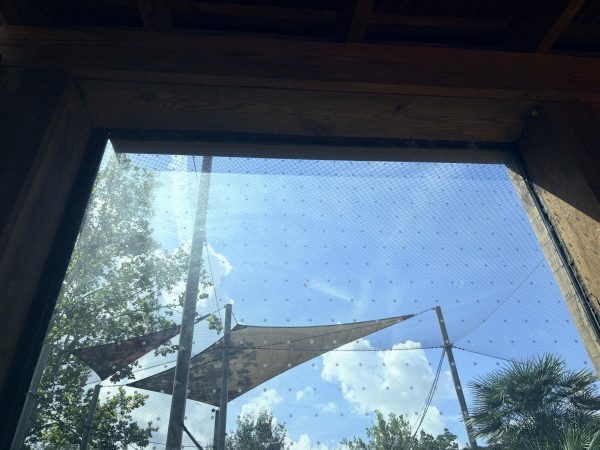
Taylor said the group’s long-term goal is to encourage the adoption of requirements for bird-safe windows in new construction. Adding bird-friendly glass during a building’s initial construction would raise costs by less than 1%, he said.
Bird-safe glass typically features visible patterns that help birds recognize a surface as a barrier. Taylor said some of the most effective designs use small markings spaced about 2 to 4 inches apart.
 Sasha Koresh
Jacksonville Zoo and Gardens recently incorporated bird-safe glass into a major construction project. Taylor said it was the zoo’s first large project to use the glass throughout the development.
Gregory Kohn, a UNF professor who studies avian sociability, said construction near ponds and the nature preserve reduces the amount of space available for birds and their fledglings. It can also create an “edge habitat,” where developed land meets forests or wetlands, potentially increasing the risks young birds face from predators and other threats.
Currently, UNF is developing two full-size soccer fields and one half-size soccer field near Ogier Gardens.
“The facility will stay on the other side of the road from Ogier Gardens, so the existing gardens will not be affected by the new construction of the training fields,” said UNF Director of Campus Planning, Design and Construction Christopher Wainwright in a July interview with Spinnaker.
However, Kohn said construction on campus has coincided with a significant decrease in the number of bird species he observes.
“Part of the reason people come to UNF is because it’s a beautiful campus, not because they want a soccer field,” said Kohn.
Kohn said birds can provide important information about the health of an ecosystem because different species rely on different food sources and habitats. Some eat insects, while others eat seeds, fish or aquatic organisms.
Changes in those populations can signal broader changes in the environment, according to Kohn. He said decreases in migratory and insect-eating birds are particularly concerning because they may reflect habitat loss and declining insect populations.
“By looking at changing bird populations, you can look at what’s going on in those environments,” Kohn said.
Lights Out volunteers hope their collision data will lead to window treatments and lighting practices that reduce those risks. Filippelli said organizers want to work collaboratively with UNF rather than place blame on the university.
Anderson said she views the data collection and public outreach as her personal contribution to creating change on campus.
“I’m just a volunteer, and this is my project,” Anderson said. “[Duval Audubon] is backing me and trying to get the change done.”
As the next migration season approaches, Lights Out organizers are encouraging students and employees to report injured or dead birds and support efforts to make campus buildings safer.
“We really want to partner with people,” Filippelli said. “We’re flexible.”
Northeast Florida offers diverse bird habitats
Northeast Florida is positioned along the Atlantic Flyway, one of four major routes birds use to migrate across North America. Its combination of coastline, wetlands, forests, rivers and developed areas allows residents to observe many different species within a relatively small region.
Taylor said the number of birds flying over Jacksonville can exceed 1 million in a single night.
Kate Zeray, a Duval Audubon volunteer who helps organize educational programs and bird walks, explained that flyways are like highways for migrating birds.
“You can see such a variety of birds in Jacksonville, and you can do it all in one day,” Zeray said. “You can go see shorebirds on the coast, then go to UNF and see some songbirds.”
Zeray said fall migration is one of the best times to observe birds as they travel south toward warmer climates. Warblers are a particular highlight, she said, because of their variety and active behavior.
 Sasha Koresh
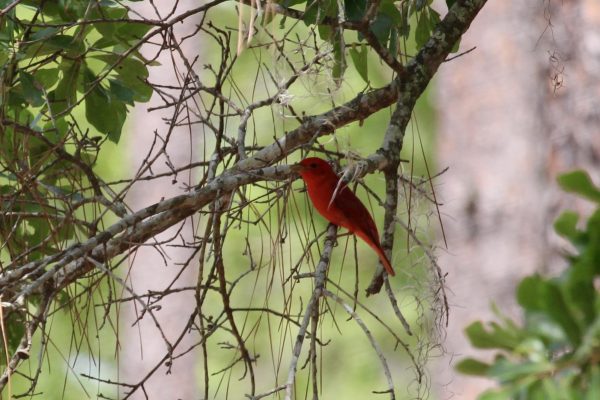
Summer Tanagers are the only completely red bird in North America, according to Cornell Lab.
Birds commonly seen during UNF bird walks include blue jays, crows, cardinals, tufted titmice and Carolina wrens. Near campus lakes and ponds, visitors may see anhingas, great egrets, white ibis and other wading birds, according to Zeray.
According to Kohn, fish crows, summer tanagers, cuckoos and several warbler species can also be seen on campus.
During Zeray’s last UNF bird walk, she said the group documented 24 species in two hours.
Kohn said the trails and ponds surrounding the campus nature preserve are among Jacksonville’s best birding locations, particularly during migration.
“Every year, I get excited about the warblers I see,” Kohn said.
The surrounding shopping centers and development can concentrate birds in UNF’s remaining wooded areas, making the campus an important stopping point, Kohn said.
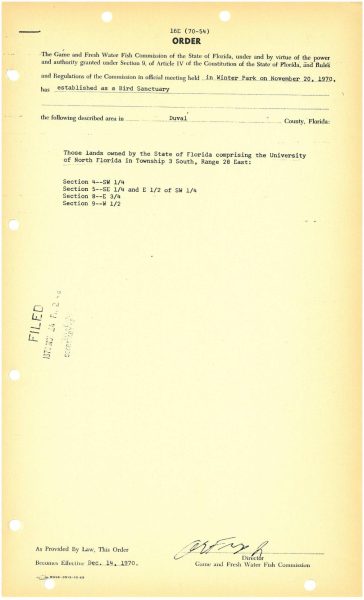 The document that establishes UNF as a designated Bird Sanctuary, dated Dec. 14, 1970.
In 1970, two years before UNF began accepting students, it became a state-protected bird sanctuary by the Florida Fish and Wildlife Conservation Commission. However, according to McMahon, that designation no longer exists within the FWC, but UNF still meets the requirements and remains recognized.
“You can have a safe campus and be responsible, and allow wildlife to thrive,” Filippelli said.
UNF students and faculty interested in learning more about UNF Lights Out can find more information on their Instagram, @UNF_LightsOut. Lights Out UNF also accepts volunteers to help record bird collision data on campus.
“The more people, the better,” said Anderson.
___
For more information or news tips, or if you see an error in this story or have any compliments or concerns, contact [email protected].