
Kay Wysocki is, in the nicest sense of the phrase, a skunk person.
She is the founder and director of Pet Skunk Advocates & Rescue, a Pinellas County nonprofit dedicated to the welfare of the striped skunk, which lives throughout the state of Florida.
Operating under a Class III Wildlife License from the Florida Fish and Wildlife Conservation Commission, the group also takes on other domesticated or non-releasable wild creatures, including opossums and raccoons.
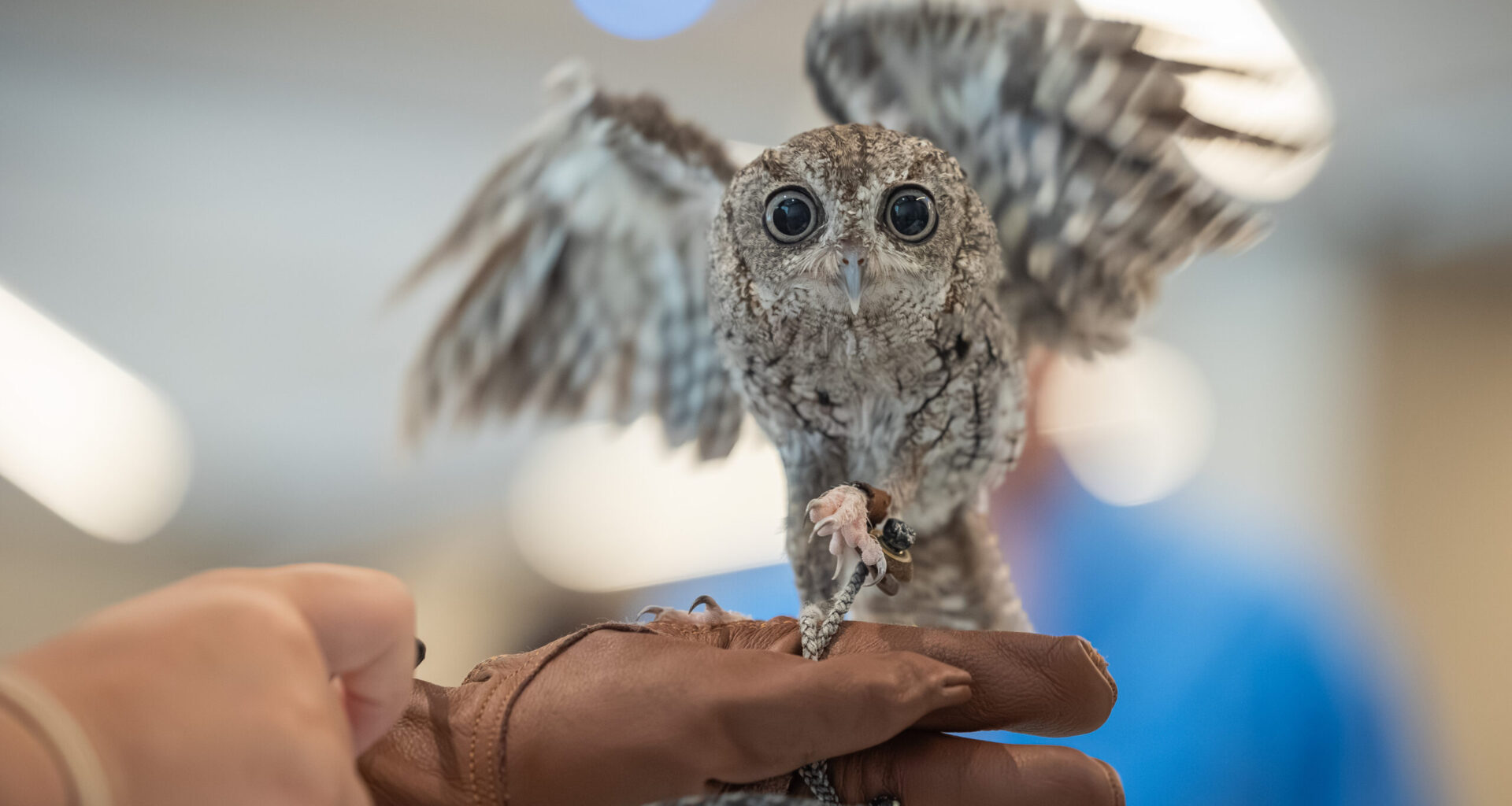
Wysocki and several of her furry friends will be on hand at the James Museum of Western & Wildlife Art’s fourth annual Menagerie at the Museum event Saturday. It’s a family thing, in which nearly a dozen bay area rescue, rehab and conservation groups set up shop in the spacious Mesa Room.
There, children can meet birds, reptiles and mammals of all shapes and sizes, in person, as knowledgeable, friendly and infinitely patient handlers talk about the animals, their needs in the wild and in captivity, and the importance of conservation.
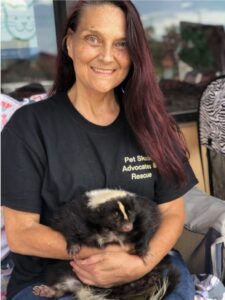
Kat Wysocki is the founder of Pet Skunk Advocates & Rescue.
None of Wysocki’s skunks have ever lived outdoors, by their own wits.
“These are skunks that are sold in pet stores, from breeders,” she explains. “And like any exotic animal, wherever you have a breeder, you have to have a rescue (organization). It’s unfortunate, but we go hand in hand.”
Legally, a skunk sold as a pet must first have its scent glands removed.
“Bottom line is, it’s just like declawing a cat,” Wysocki says. “These animals have been domesticated for well over 200 years, and it’s not just a matter of releasing them. Without scent glands, they have zero defenses.”
Wild animals simply do not make good pets. Little reptiles grow into large reptiles. Cute baby squirrels and raccoons become less cuddly and more dangerous as they grow, and their genetic instincts for survival kick in.
The striped skunk, considered a Species of Greatest Conservation Need in Florida (populations are at risk, or declining), has specific dietary and socialization requirements.
Still according to Wysocki, “You love them differently from any other animal. They are almost childlike in the way that they love you back.”
Her organization sponsors a program in schools, libraries and camps, called (again, with apologies to the noble skunk) “Reading Doesn’t Stink,” in which the staff educate children about common yard animals.
For example. “People have such a bad opinion of opossums,” says Wysocki. “They only live three to four years in the wild, if they’re lucky. They don’t carry diseases. They eat all the icky bugs. And people are so mean to them! And there’s no reason to be. They are one of the most beneficial animals that we have in our yards.”
Pet Skunk Advocates & Rescue doesn’t have a brick-and-mortar place to visit – the 2024 hurricanes took care of her last animal domicile, Wysocki explains – but donations are always welcome at the website, where much more information is available.
“We also adopt them out,” says Wysocki. “Obviously, I can’t keep every skunk that’s surrendered to us.
“I don’t get a ton in each year, but it’s pretty tough to adopt from me. Because I feel like people have already failed these guys in one way or another – and I’m not going to be the next one.”
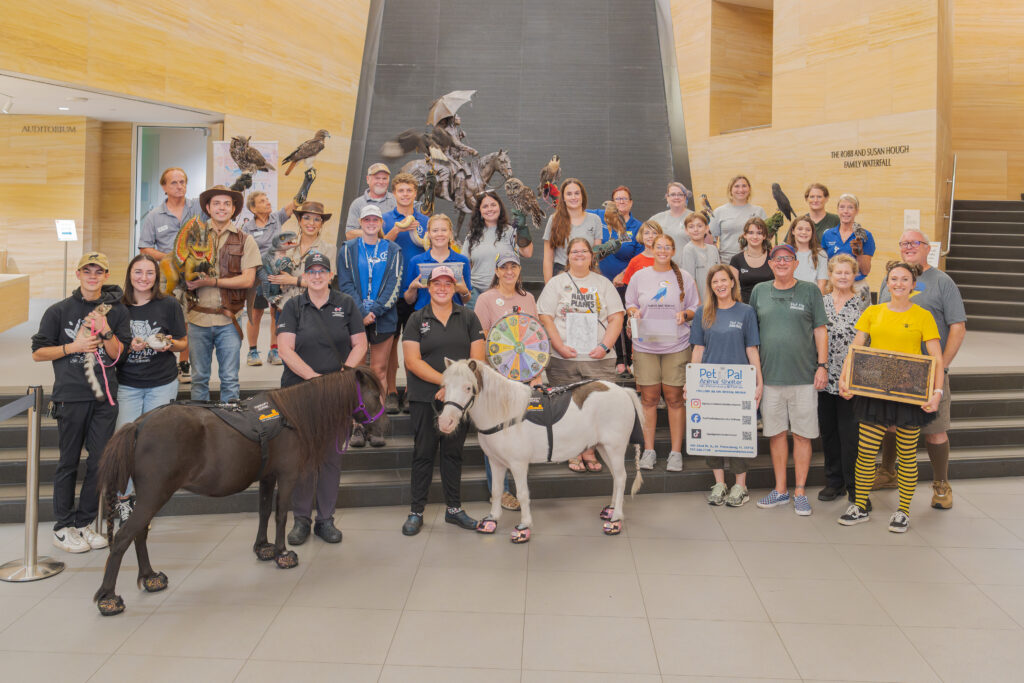
Menagerie at the Museum
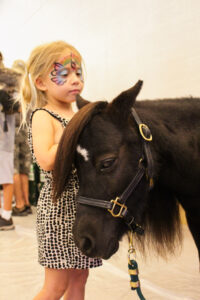 Alongside Pet Skunk Advocates and Rescue, visiting groups include Boyd Hill Nature Preserve, Friends of Strays, Honey’s Mini Therapy Adventures, Pet Pal Animal Shelter, Satchel’s Last Resort, Seaside Seabird Sanctuary and the Tampa Bay Watch Discovery Center.
Since the James Museum introduced Menagerie at the Museum in 2023, it has grown into one of its best-attended single-day events. Admission is by timed entry (every 30 minutes), so the room isn’t jammed with people – and animals – all at once.
Activities for children include artmaking in museum classrooms, animal-inspired face-painting by Glitter & Giggles, puppy and pet caricatures from Tampa Caricatures, a wildlife-themed scavenger hunt in the galleries and more.
Saturday’s hours are 10 a.m. to 3 p.m. Tickets are $5 per person; reserve your spot at this link.
Tickets include admission to the James Museum’s galleries of art.