
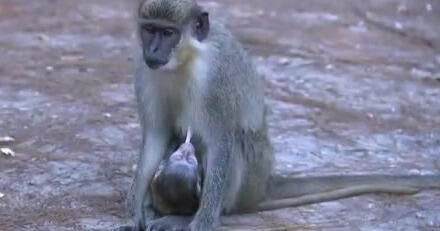
For nearly 80 years, vervet monkeys have lived in the mangrove by Fort Lauderdale Hollywood International Airport after escaping a South Florida medical testing lab and zoo in the 1940s.
David Blewitt has lived on the edge of the mangrove for decades.
“I’ve seen them many, many times,” he said. “They came over looking for bananas. They’re like little kids holding their hands up for an allowance.”
Missy Williams runs the Dania Beach monkey sanctuary.
“It would be interesting just to see if our followers would be on board with possibly wanting them to be grandfathered in as a native species in the state of Florida,” Williams said.
She’s posing the question on social media – should they be reclassified as native? That would change how monkeys are treated when they’re injured.
“We do have permits to be able to actually treat them,” Williams said. “Once trapped, we can’t release them. That’s because they’re considered a non-native species. If they are considered a native species, we’d be able to trap, treat, and release them back to their family group,” she said.
According to Williams, there are just shy of three dozen of these monkeys there.
“These animals are considered just non-native. They haven’t spread from the area they were introduced to. The population is very small. Matter of fact, it’s actually shrinking, and there seems to be no notable damage to the surrounding ecosystem,” Williams said.
“It is an absolute Pandora’s box waiting to be opened,” said Ron Magill from the Zoo Miami Foundation. He thinks grandfathering them in as native is a terrible idea.
“South Florida is the Ellis Island of non-native species. Everything comes into here. What happens is, if that happens in New York, if it happens in Michigan during the first winter, those animals are gone. They don’t survive. In Florida, it’s like being introduced to Club Med. They not only survive, they thrive, and then they become a real problem,” he said.
Magill is concerned if the population were to grow, they could spread disease and there are many unknowns.
“No one loves wildlife, no one loves animals more than I do, and it’s because of that I want to protect our native wildlife. I want to protect our ecosystems,” Magill said.
Williams stresses she is just testing the water now to see if there’s support out there.
Then she will consider whether she wants to petition the state.