
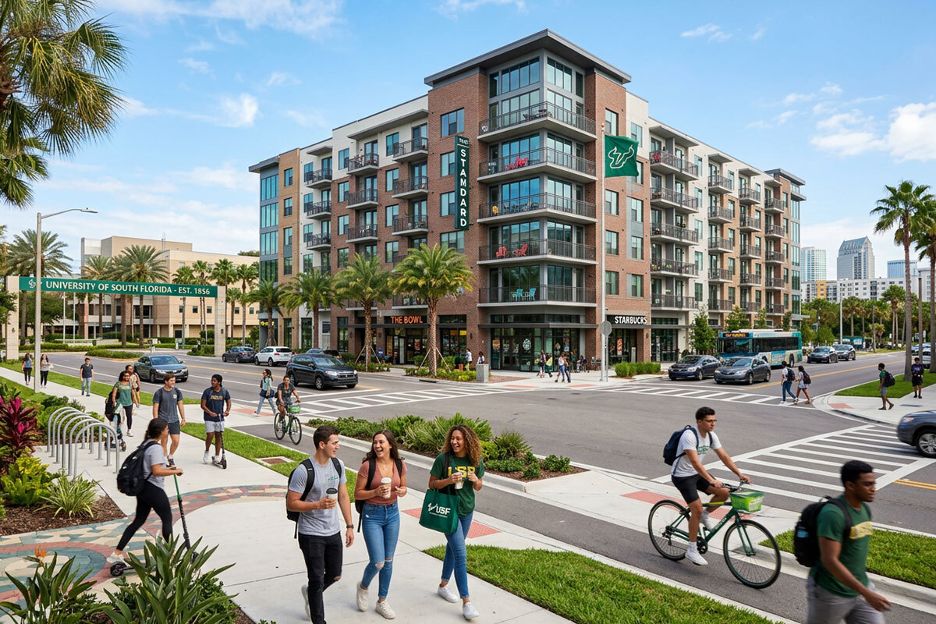
Courtesy Image
Tampa’s rental market is one of the most active in the US right now, and students are both a cause and a casualty of that activity. The city delivered over 12,500 new apartment units in 2024 alone, shattering its previous record by more than 4,000 units. That sounds like relief for anyone searching for a place to live. The reality is more complicated, and if you’re a student planning to rent in Tampa, you need to understand what’s actually happening before you start your search.
Why Tampa’s Rental Market Is Growing So Fast
The simple version: Tampa has been attracting new residents at a pace its housing stock hasn’t kept up with for years. Tampa’s job growth has nearly doubled the national pace over the last decade, driven by healthcare, technology, insurance, and financial services. That growth pulls professionals into the city, which compresses the rental market and pushes rents up across every segment, including student housing.
Tampa ranked 10th on Zillow’s list of hottest housing markets for 2024, characterised by low inventory, high demand, and competitive conditions. That heat hasn’t fully cooled. Even with the record 2024 apartment delivery, absorption has lagged behind construction: in the second half of 2025, Tampa absorbed just 1,060 units while 3,800 were delivered, a four-to-one gap between supply and demand.
What that means for you as a student is that the market has more options than it did two years ago, but the most affordable options near campus fill up fast and the newer units skew toward a price point designed for working professionals, not students on a budget.
What Students Are Actually Competing Against
Here’s the thing: most students don’t realize it until they’re mid-search. In Tampa, you’re not just competing with other students for rental properties. You’re competing with young professionals relocating from higher-cost states like California and New York, remote workers who can afford more than you, and a growing tech workforce drawn in by companies like Amazon, JPMorgan, and PricewaterhouseCoopers, all of which have expanded Tampa Bay operations in recent years.
Florida’s lack of state income tax makes Tampa more attractive to high earners than comparable cities in other states. That translates directly into rental competition: people with more disposable income are bidding on the same pool of properties you’re looking at, and they can afford to win.
The counterintuitive truth here is that Tampa’s rental growth has actually created a two-tier market. Brand new apartment complexes in Channelside and Harbour Island carry rents that target professionals, not students. But older stock in Seminole Heights, Ybor City, and the University of South Florida corridor offers genuine value if you know where to look and move quickly when something becomes available.
What Preleasing Data Tells You About Timing
Nationally, student housing preleasing hit 61% in February 2024, more than 10% ahead of the five-year average and well above the historic norm of 48% at the same point in the year. Students across the US are securing accommodation earlier than ever, and Tampa is no exception to that trend.
If you’re starting your search after April for a September move-in, you’re already behind most of the competition. The properties within walking or easy transit distance of USF’s main campus in north Tampa and the University of Tampa in the downtown area clear quickly. What remains later in the search season is either more expensive, further from campus, or lower quality.
The Neighbourhoods Worth Knowing Before You Search
Location matters more in Tampa than in most student cities because public transit is limited and car dependency is real. A cheap room 40 minutes from campus by bus sounds like a deal until you’re doing that journey twice a day, five days a week, through Florida summer heat.
The areas that work best for USF students sit along Fletcher Avenue and Fowler Avenue in north Tampa, close enough to walk or cycle to the main campus and served by the most reliable HART bus routes. For University of Tampa students, the Hyde Park and Ybor City corridors offer genuine character and reasonable prices relative to downtown.
Ybor City specifically is worth considering beyond just the price. It’s one of Tampa’s most culturally distinct neighbourhoods, with a historic Latin Quarter, an active weekend food and arts scene, and proximity to both UT and the downtown employment corridors where you’ll likely be interning. Students who live there consistently report that the neighbourhood itself adds something to the experience that a generic apartment complex near campus doesn’t.
How Student Housing Investment Is Changing Tampa’s Market
Tampa’s student housing market has started attracting serious investment attention, and that shapes what gets built and at what price point.
Purpose-built student accommodation in Tampa is a growing category, with developers recognising that USF’s 50,000-plus enrolment and international student numbers create sustained demand. The benefit for students is that PBSA properties typically offer all-bills-included pricing, modern amenities, and management that understands student needs better than general residential landlords. The downside is that newer PBSA can carry a premium over comparable private rentals.
The decision between PBSA and private rental comes down to your priorities. If you want predictable monthly costs, no utility bill surprises, and management you can contact easily, PBSA is worth the premium. If you’re sharing with friends and comfortable handling the admin of a private rental, you’ll pay less per room and have more space.
What to Do Before You Sign Anything in Tampa
Sort your accommodation before you arrive. This sounds obvious but the number of students who land in Tampa and start their housing search from a temporary address is significant, and it puts you at a disadvantage in a market where good properties move fast.
Check amberstudent for verified student apartments in Tampa near USF and UT campuses, filtering by distance to campus and bills-included status. In a city where neighborhood choice directly affects your commute time and daily quality of life, searching through a platform that lets you compare locations precisely saves you from the expensive mistake of signing a lease somewhere that turns out to be poorly connected to where you need to be.
Run the full annual cost before you commit to anything. Weekly rent multiplied by 52, plus utilities if they’re not included, plus transport costs based on your actual commute. That number tells you whether a cheaper room further from campus is actually cheaper when you account for the bus pass or the gas you’ll be spending every week.
Tampa’s rental market rewards students who move fast and plan carefully. The opportunities are there. But they go to the people who look early.