
SpaceX was back on the pad Tuesday with the Space Coast’s 51st orbital launch of the year, part of what’s lining up to be a busy month in Florida.
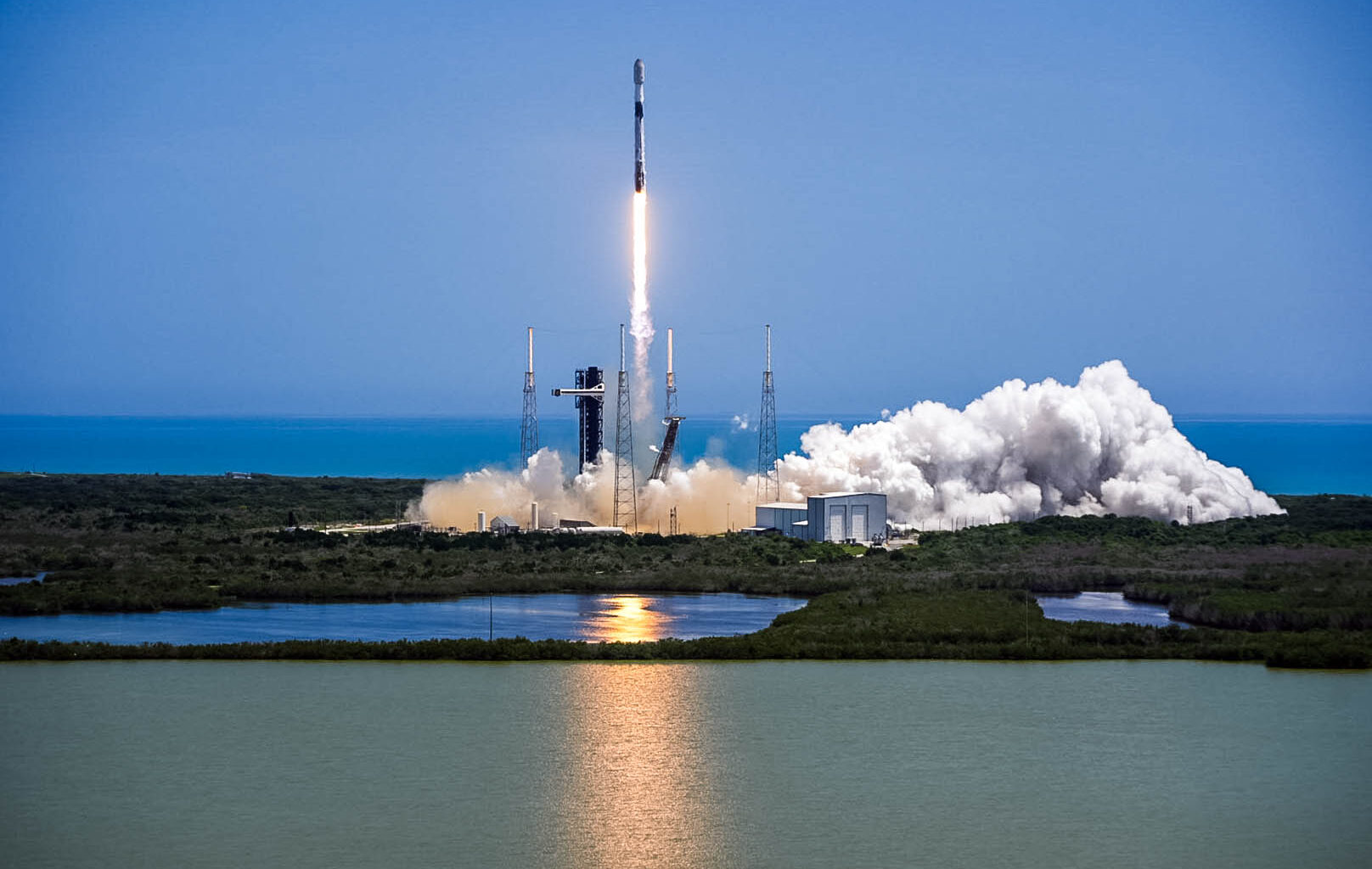
A Falcon 9 on the Starlink 10-19 mission with 29 Starlink satellites lifted off at 11:58 a.m. from Cape Canaveral Space Force Station’s Space Launch Complex 40. The launch came after the company scrubbed a Monday attempt.
The first-stage booster for this mission made its 18th trip to space with a recovery landing downrange on the droneship A Shortfall of Gravitas stationed in the Atlantic.

A SpaceX Falcon 9 launches with 29 Starlink satellites from Cape Canaveral Space Force Station’s Space Launch Complex 40 on Tuesday, Aug. 11, 2026. (Courtesy/SpaceX)

A SpaceX Falcon 9 launches with 29 Starlink satellites from Cape Canaveral Space Force Station’s Space Launch Complex 40 on Tuesday, Aug. 11, 2026. (Courtesy/SpaceX)

A SpaceX Falcon 9 launches with 29 Starlink satellites from Cape Canaveral Space Force Station’s Space Launch Complex 40 on Tuesday, Aug. 11, 2026. (Courtesy/SpaceX)

A SpaceX Falcon 9 launches with 29 Starlink satellites from Cape Canaveral Space Force Station’s Space Launch Complex 40 on Tuesday, Aug. 11, 2026. (Courtesy/SpaceX)

A SpaceX Falcon 9 launches with 29 Starlink satellites from Cape Canaveral Space Force Station’s Space Launch Complex 40 on Tuesday, Aug. 11, 2026. (Courtesy/SpaceX)

A SpaceX Falcon 9 rocket sits on the pad at Cape Canaveral Space Force Station’s Space Launch Complex 40 on Tuesday, Aug. 11, 2026 ahead of a planned launch with 29 Starlink satellites (Courtesy/SpaceX)
Show Caption
1 of 6
A SpaceX Falcon 9 launches with 29 Starlink satellites from Cape Canaveral Space Force Station’s Space Launch Complex 40 on Tuesday, Aug. 11, 2026. (Courtesy/SpaceX)
Over the weekend, SpaceX had also put a mission that was delayed from May back on the launch manifest, targeting a liftoff later this week. It’s a launch that could bring a sonic boom to Central Florida.
The Globalstar 2-R Launch 1 mission, which had been targeting launch on May 18, is now looking to lift off from Cape Canaveral on Saturday during a launch window from 9:12-9:27 p.m. A backup on Sunday has a 15-minute window that opens at 8:54 p.m.
The first-stage booster for this mission will be flying for the 33rd time and will attempt a recovery landing back at Landing Zone 40, meaning many counties across the region will be under a sonic boom advisory.
No reason for the delay was announced, but the booster originally assigned to the flight has since been switched out.
After that, SpaceX has another Starlink launch targeting August 20.
At the end of the month, SpaceX looks to fly its powerhouse Falcon Heavy from Kennedy Space Center for only the second time this year, the 13th ever since its debut in 2018.
The rocket, which is essentially three Falcon 9 rockets strapped together, looks to launch NASA’s Nancy Grace Roman Space Telescope headed for a spot 1 million miles from Earth. It’s set to lift off from KSC’s Launch Pad 39-A as early as Aug. 30 at 7:26 a.m.
SpaceX also has another resupply mission to the International Space Station which could launch sometime in August. Then, what would be only the second human spaceflight of the year from Florida could go up as early as Sept. 12 when the Crew-13 mission looks to fly up its four crewmembers, including Central Florida’s Luke Delaney.
Pictures: 51 Space Coast launches and counting in 2026
SpaceX has flown all but seven of the Space Coast launches so far this year with United Launch Alliance responsible for five, Blue Origin for one and NASA for one.
With all six remaining Atlas V rockets in its stable reserved for Boeing Starliner, ULA’s next launch is likely for its Vulcan rocket, but that is awaiting remedies to two issues since its last launch.
One of those will be fixes to the BE-4 engines provided by Blue Origin, which recently identified a valve on the engine as the likely source for the explosion that destroyed one of its New Glenn rockets on the pad at Canaveral’s Launch Complex 36 earlier this year.
New Glenn’s BE-4 engines are slightly different than the ones provided to ULA, but fixes to the BE-4’s for both companies will be applied in the coming months.
ULA still hopes to launch Vulcan before the end of the year. So far it has only flown four times, but two of those have featured issues with its solid rocket boosters supplied by Northrop Grumman. The most recent launch saw one of the booster’s nozzles burn off on liftoff.
Blue Origin, meanwhile, has to wait until fixes at the LC 36 launchpad are finished after suffering major damage from the explosion.
CEO Dave Limp, though, says New Glenn is still on track to fly again before the end of the year.
NASA’s Space Launch System rocket, which last flew on this year’s Artemis II mission, won’t fly again until Artemis III targeting launch in mid 2027.