
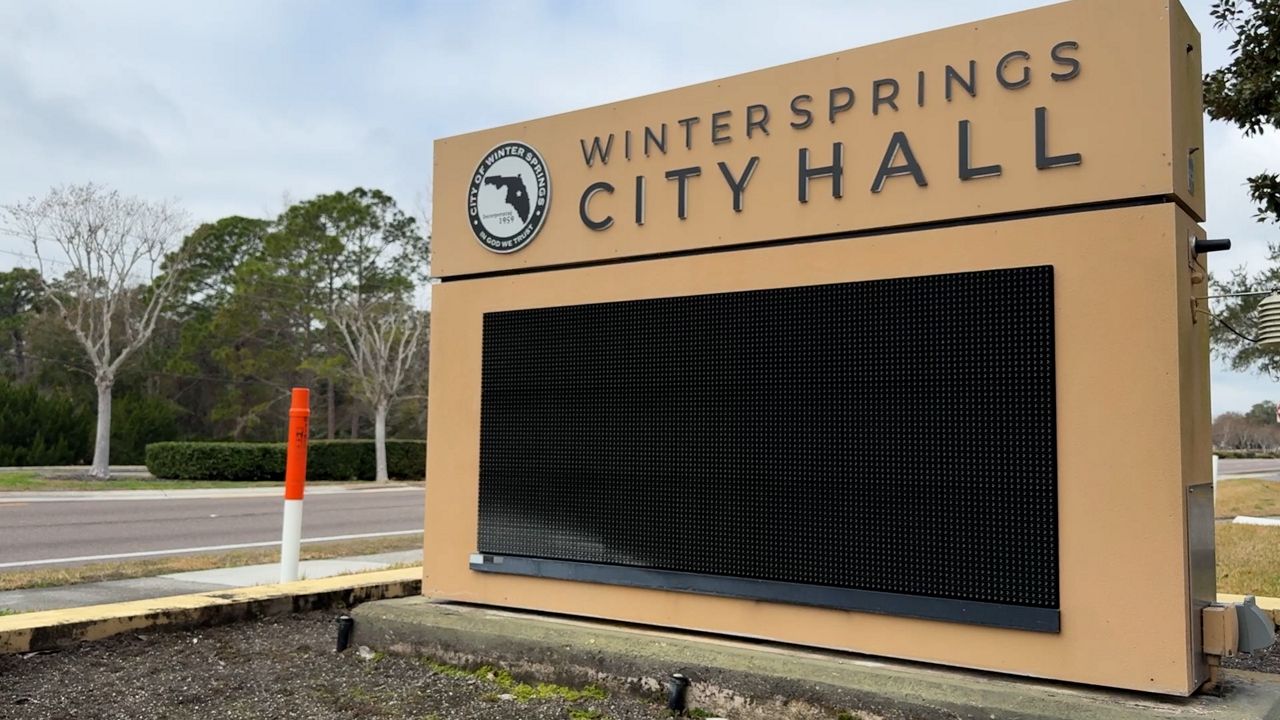
WINTER SPRINGS, Fla. — During an informational meeting Tuesday, Winter Springs officials discussed the possible budget impacts of Amendment 3, a proposed increase to the homestead exemption that would take effect Jan. 1, 2027, if voters approve it in November.
In Seminole County, Winter Springs has the highest percentage of homesteaded properties, with nearly 71% of residents participating. Seminole County Property Appraiser David Johnson said that makes the city especially vulnerable to revenue impacts if the amendment passes.
“In Winter Springs, the fiscal impact over a two-year period of time will be about $6.5 million,” Johnson said.
Johnson said the revenue impacts could begin in fiscal year 2027-2028. City officials said the change could mean a 22% hit to Winter Springs’ budget in 2027 and 38% the following year.
Johnson said the amendment would affect property values by increasing the homestead exemption but would not change the tax rate.
“The amendment is only contemplating doing something with the value, which is increasing the homestead exemption,” Johnson said. “Nothing happens on the other side of the equation, which is the tax rate.”
Winter Springs Mayor Kevin McCann told residents that city departments, including police, parks and recreation, community development and others, could face cuts if the amendment passes.
With the city’s millage not expected to increase for the next fiscal year and the budget expected to be finalized by the end of September, McCann said Amendment 3 would create a significant challenge for Winter Springs.
“We’re going to have to raise other fees,” McCann said. “Other sources of income are going to have to make up some of the short losses.”
Some residents said they are watching the issue closely as they weigh the potential for lower taxes against possible reductions in city revenue.
David Bowen, who has homesteaded his Winter Springs home and has lived in the city for 27 years, said he wants lower property taxes but believes spending must be addressed first.
“This is a slow thing,” Bowen said. “It has to be addressed first by spending and then addressed how you take less revenue, less tax, to cover what was reduced spending. Until we address spending, we’re not going to be able to get lower taxes.”
Johnson said residents should educate themselves on the amendment before the November vote.