
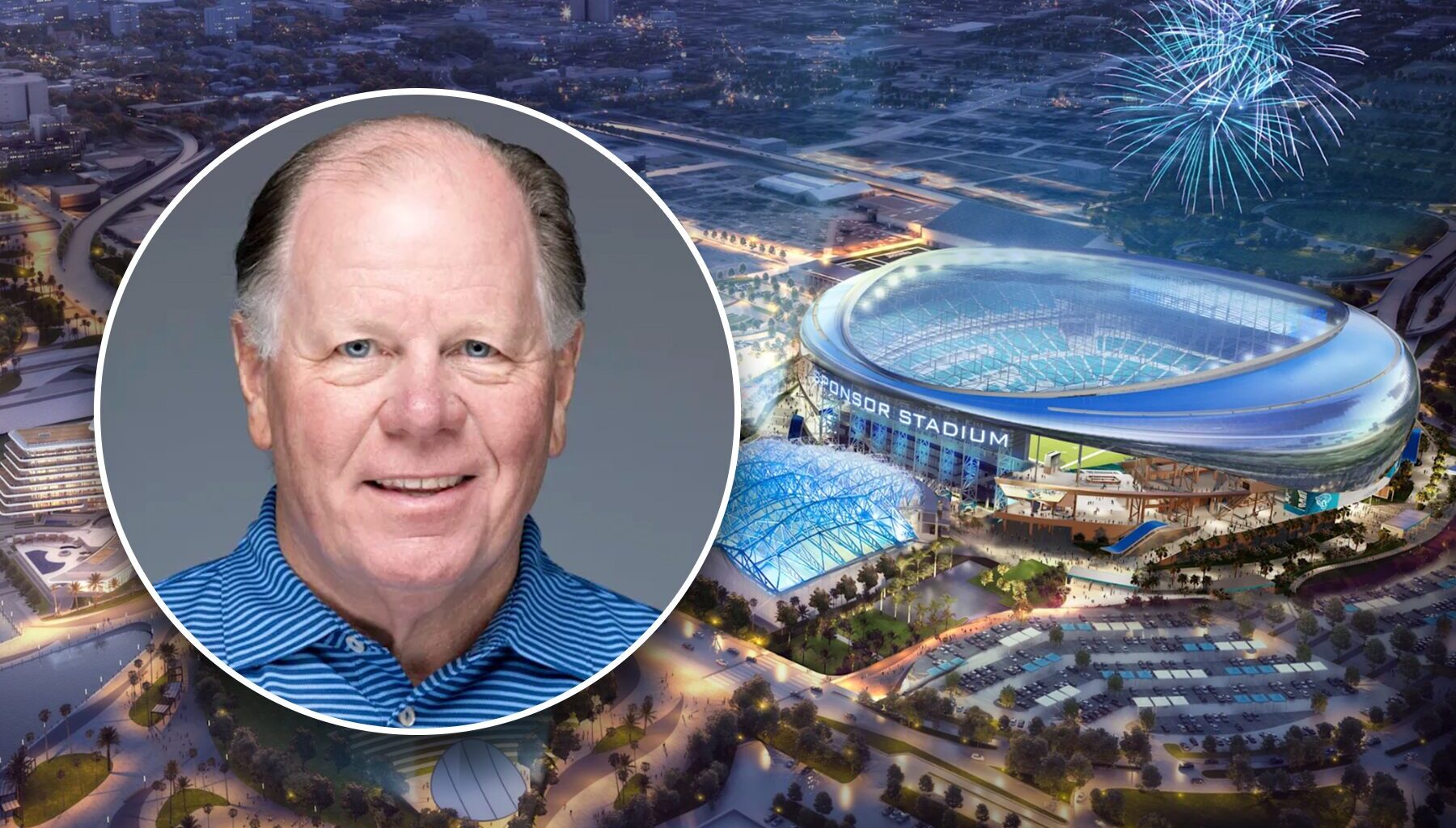
Perhaps no NFL franchise is more closely identified with its home county than the Jacksonville Jaguars. “Duuuval” is the team’s signature chant, thundered at games and woven into its identity.
But Jags Country doesn’t stop at the county line.
Asked by The Citizen what neighboring St. Johns County means to the franchise and its future, longtime team President Mark Lamping called it “critically important.”
“We know that there is a high concentration of wealth in particularly the northern part of St. Johns County, and there’s a tremendous amount of growth going that way,” Lamping told a gathering Tuesday at the River Club, 34 floors above Downtown Jacksonville, where the rising stadium and Four Seasons filled the windows behind him.
“So, from a customer standpoint, we know that we have to market very heavily,” he said.
Lamping has served as president of the franchise since 2012. Before joining the team, he led the development of Busch Stadium as president of the St. Louis Cardinals and later oversaw construction and operation of MetLife Stadium, home of the New York Giants and Jets.
The Ponte Vedra Beach resident said the Jaguars have worked for years to establish a palpable presence in destinations like St. Augustine and build relationships with local leaders. He also noted the ongoing growth of nearby Nassau and Clay counties as well.
Some connections are already firmly established. The Khan family’s Shipyards development selected St. Augustine’s celebrated Asado Life to open a 140-seat restaurant on the Downtown Jacksonville waterfront.
The live-fire restaurant will occupy the marina support building near the Four Seasons Hotel, the Jaguars’ new headquarters and EverBank Stadium.
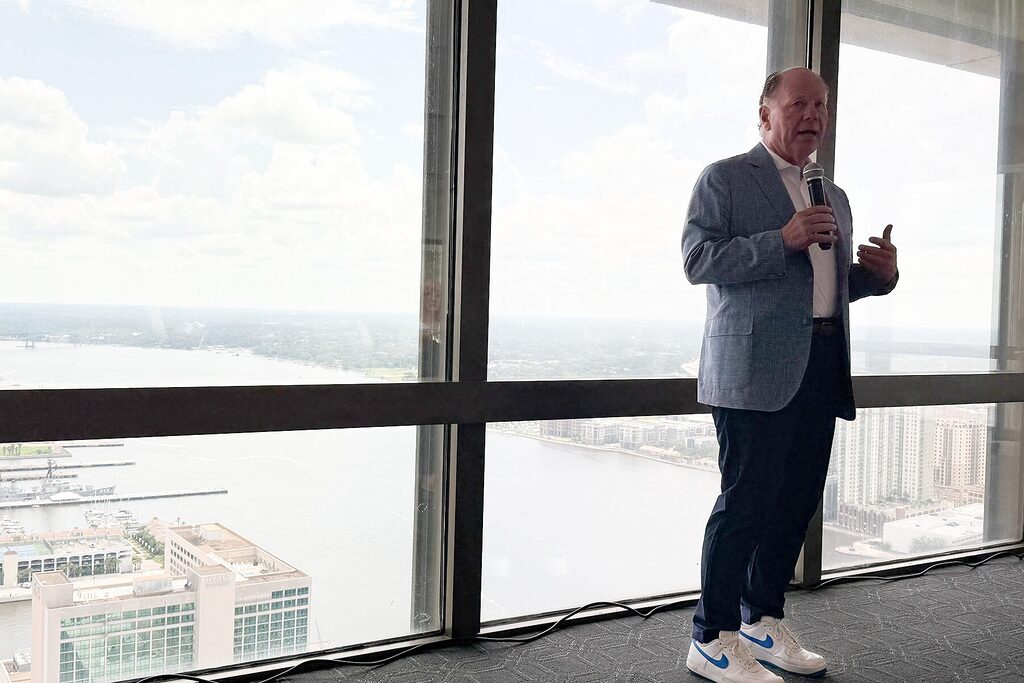 Lamping addressed a packed gathering at the River Club in Jacksonville. (St. Johns Citizen)
The heart of Jaguars country remains tethered to Downtown Jacksonville, Lamping said, but the franchise’s geographic reach has expanded dramatically south and east as the region has grown.
If plotted today, he said, the center of the team’s fan base would likely fall near the J. Turner Butler Boulevard and Interstate 295 corridor — and it continues moving south as St. Johns County expands.
That population shift even factored, albeit fleetingly, into the Jaguars’ early planning for the stadium’s future. Lamping said the team explored whether building closer to its growing fan base would make sense but quickly rejected the possibility, citing the economics and the importance of a vibrant Downtown Jacksonville.
“The idea was, should we be thinking about building the stadium someplace else?” he said. “And we quickly dismissed that.”
Instead, Lamping said, the franchise must make attending games as convenient and comfortable as possible for fans across Northeast Florida.
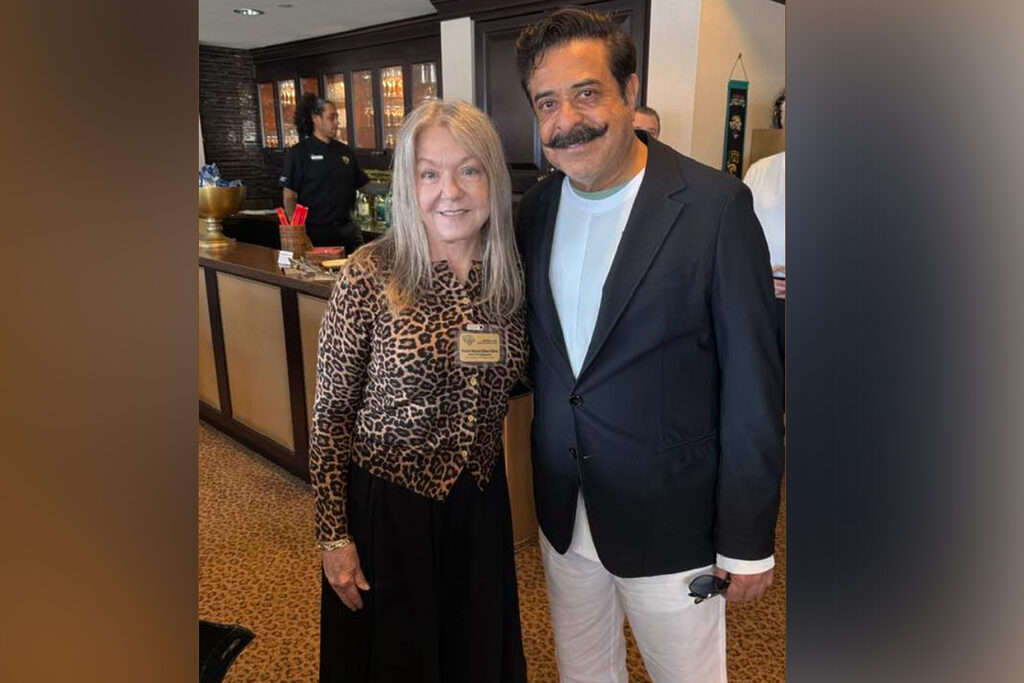 St. Augustine Mayor Nancy Sikes-Kline, left, Jaguars owner Shad Khan, right. (Facebook)
“What we need to do is make it as easy as we possibly can for people from St. Johns County, from Nassau County, from throughout Duval County, to be able to get to the games and get there in a convenient way,” he said.
That includes advocating for better public transportation and investing in infrastructure supporting ride-sharing services.
Lamping also noted the irony of the sharply different growth debates taking place on opposite sides of the county line.
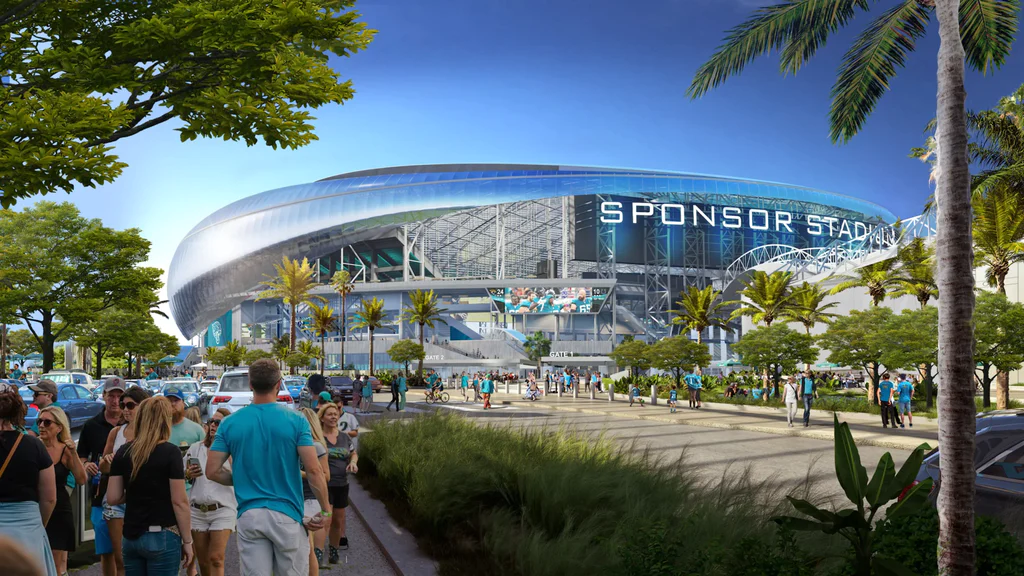 A rendering of the new Jaguars stadium. (Jacksonville Jaguars)
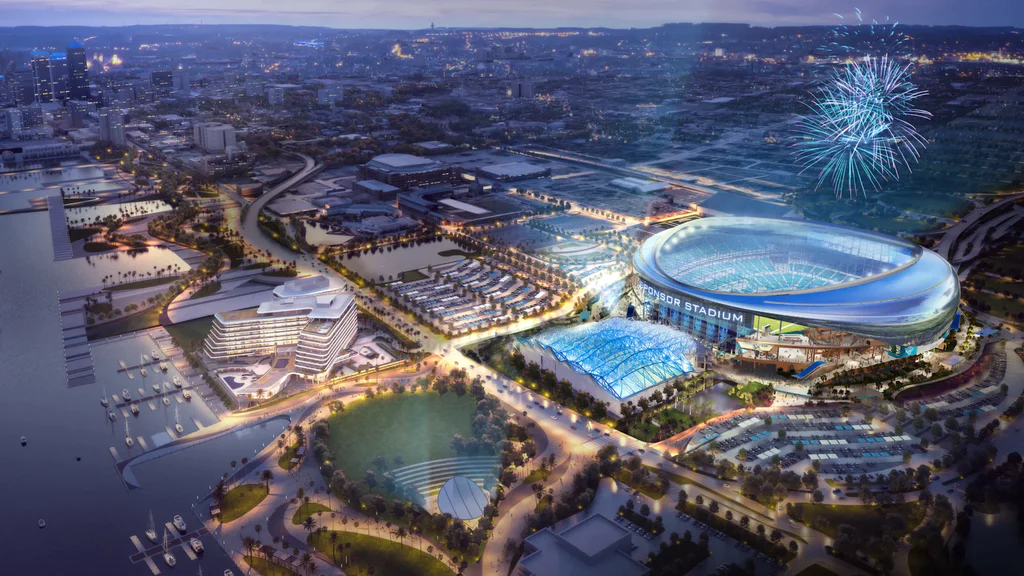 Completion is slated for late 2028. (Jacksonville Jaguars)
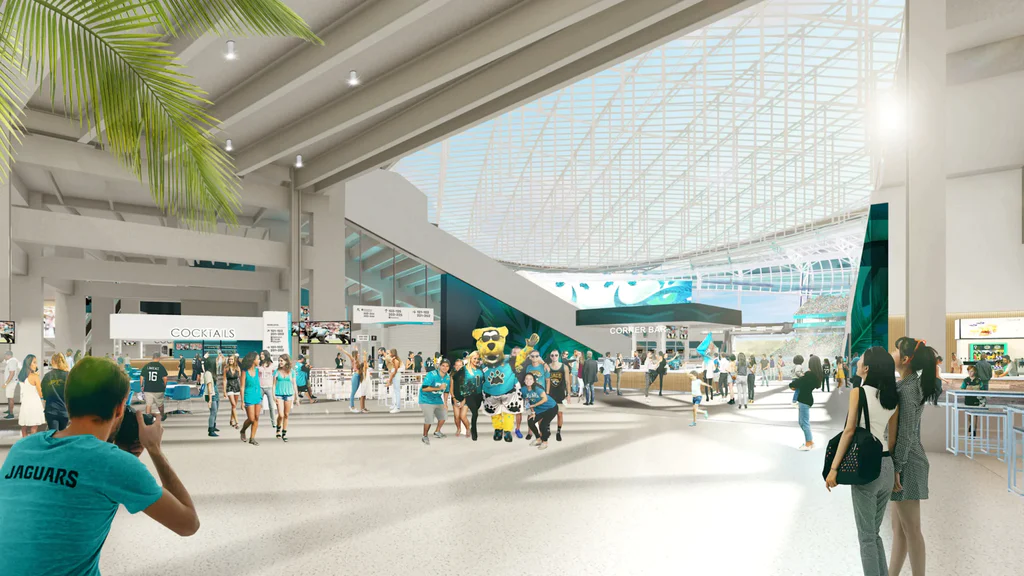 Lamping was bullish on the team’s future — and the Jacksonville metro area.
While many candidates in fast-growing St. Johns County campaign on slowing development, Jacksonville leaders are trying to accelerate it Downtown and in other areas.
“We’re having to do just the opposite,” he said.
The Jaguars may always shout “Duuuval.” But Lamping made clear that the franchise’s future increasingly depends on making that roar reverberate across the county line.