
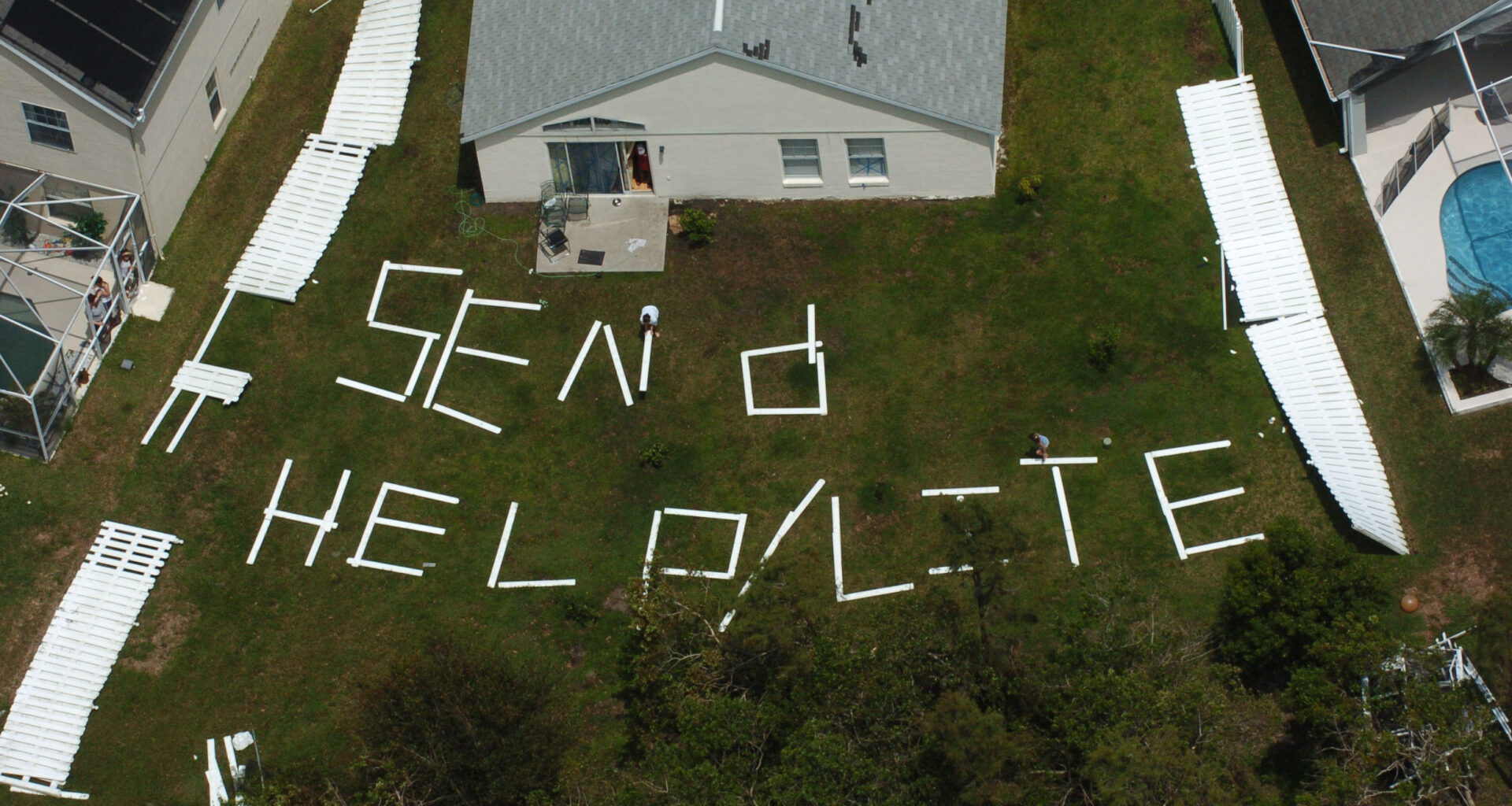
Twenty years ago Hurricane Charley came barreling up Interstate 4 beginning Florida’s season of tropical pain.
Charley first formed as a tropical depression in the Atlantic Ocean on Aug. 9, 2004 and so began the summer of our discontent. It organized just north of the South American coast west of Trinidad and Tobago making its way into the southern Caribbean Sea.
It became a tropical storm on Aug. 10 and hurricane on Aug. 11 making its way up toward Jamaica, the Cayman Islands and passing over Cuba. It then set its sights on the Sunshine State and strengthened to Category 4 status on Aug. 13.
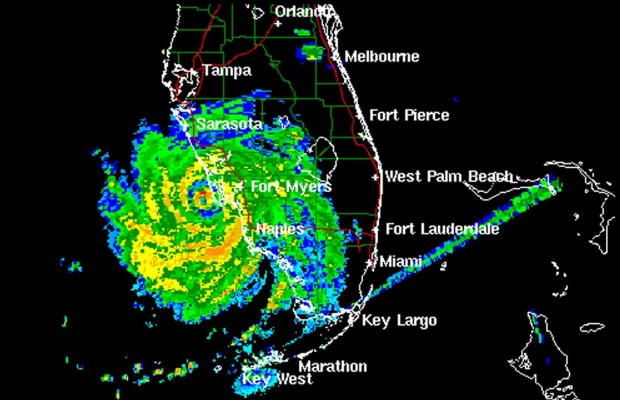 This radar image shows Hurricane Charley as it headed toward Florida landfall on the southwest Gulf Coast on Aug. 13, 2026. (NWS)
The state was slammed by four hurricanes that year — Charley, Frances, Ivan and Jeanne and Central Florida bore the brunt of three of those.
Charley wasn’t the largest, but it packed a wallop, having made landfall on Aug. 13 at Cayo Costa at 3:45 p.m. near Port Charlotte and Punta Gorda as a Category 4 hurricane with 150 mph winds.
And Charley caught the state off guard, having made a sudden shift to the east and smack into the core of the state after most forecasters had projected it to make landfall much farther to the north.
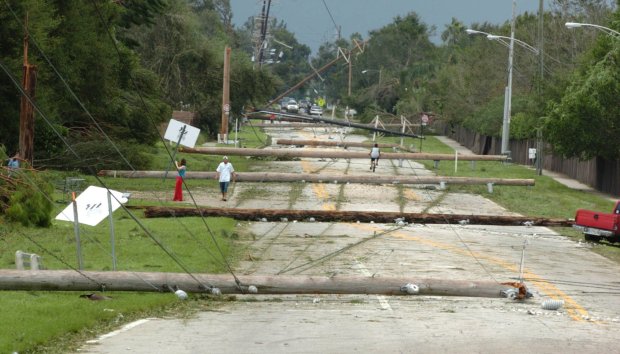 Utility poles blown over by Hurricane Charley lie across Lake Margaret Drive in southeast Orlando in this 2004 file photo. (Orlando Sentinel file)
When it passed over downtown Orlando after 9 p.m., winds were still raging at more than 90 mph. The storm was directly blamed for 10 deaths in the U.S. plus another 20 in the storm’s aftermath and an estimated $14 billion in damage.
What followed was a season of extended power outages, blue-tarped roofs and yet a strange sense of community, as neighbors went out of their way to look after those that had shared in their calamity.
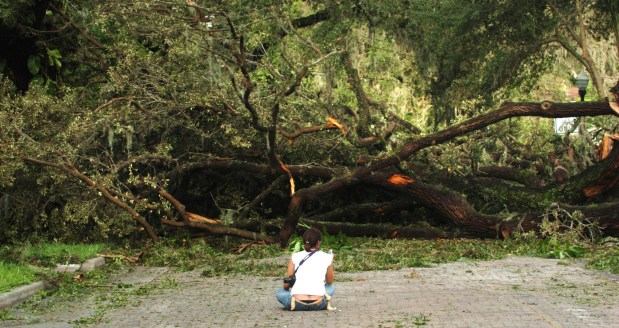 Lia Piantini sits on Livingston Street in Colonialtown and makes a phone call as a huge tree downed by Hurricane Charley blocks the street on Aug. 14, 2004. (Orlando Sentinel file)
Florida saw some tropical headaches in the years that followed including brushes with Dennis, Katrina and Wilma in 2005 and the flooding of Tropical Storm Fay in 2008. Central Florida, though, went through mostly a lull after 2004, but then endured several years in a row with hurricanes in the last decade.
That includes Hurricane Irma in 2017, Ian and Nicole in 2022, Idalia in 2023 and Debby, Helene and Milton in 2024.
Charley and the rest of the gang of 2004 storms acted as a wake-up call of sorts, though for Florida. More people here were affected by more storms that year than any other in history, from the Keys to the Panhandle.
They brought death, destruction and jacked up the populace’s personal red flags whenever a new system formed in the Atlantic with people asking themselves, “Could this one hit too?”
2004 acted as a reminder that any storm could make its way to Florida and begin a whole new summer of discontent.