
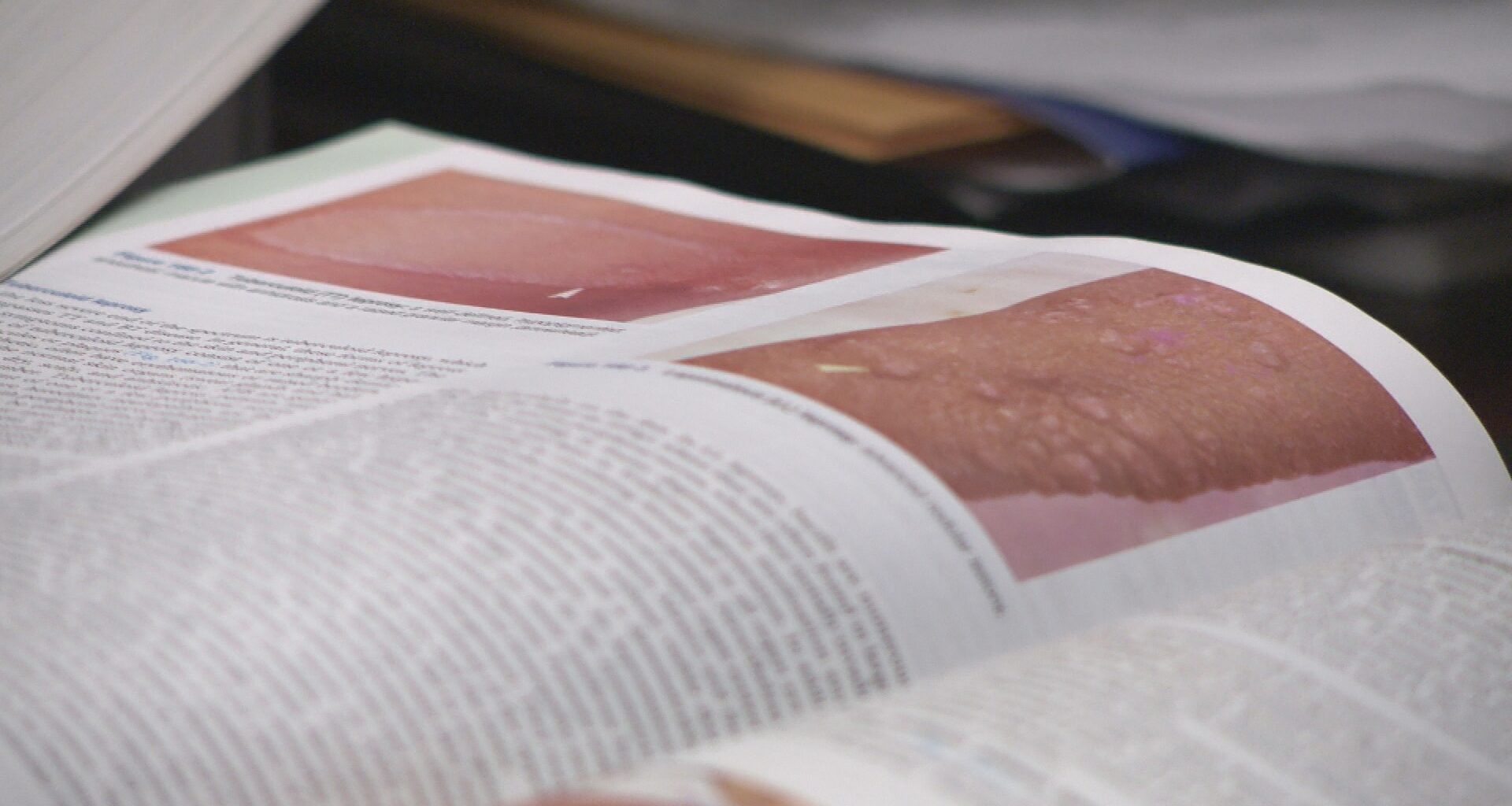
Leprosy cases have emerged in Florida, with one each in Duval and St. Johns counties. Health officials say its important to recognize the signs.
JACKSONVILLE, Fla. — As of August 1, the Florida Department of Health reports 19 leprosy cases statewide, including one in Duval County and one in St. Johns County.
Cases of the rare illness, also known as Hansen’s Disease, was reported in Duval County in June, and the other in St. Johns County in March.
As of August 1, the Florida Department of Health reports 19 cases of leprosy across Florida this year.

This story continues below.
Dr. Billy Elliot with HCA Florida Memorial Hospital says people should not panic, but they should know the warning signs.
“If you have concerns about a rash that is numb, you can’t feel it, or if you’re having numbness in the arms and feet, you should present to your doctor in the emergency room,” said Dr. Elliot.
Leprosy is a bacterial infection that can affect the skin and nerves.
“Transmissions are pretty unknown, but we suspect it’s by touch or more commonly through respiratory contact,” said Dr. Elliot.
Dr. Elliot says leprosy is more common in warmer parts of the world, and typically develops more than a few days after exposure. Depending on a person’s immune system and other factors, symptoms can develop over months or even years.
“As far as phases go, most likely would occur over the course of months depending on their immune system or the course of years,” he said. “It would be the slow erosion of their cartilage, so slow erosion of their nose and their ears”
95% of people have a natural immunity to leprosy, according to the Florida Department of Health.
One of the warning signs is a rash or skin lesion with little or no sensation. Numbness or tingling in the hands, feet, arms or legs can also be a warning sign.
People who notice these symptoms should contact their primary care doctor or seek medical attention.
Dr. Elliot says one of the biggest misconceptions surrounding leprosy involves one species of carriers: the armadillo.
“A lot of individuals tend to think that only armadillos in Texas carry leprosy, but it’s the nine-banded armadillo and nine-banded armadillos don’t care about state lines,” Dr. Elliot said.
According to the University of Florida, nine-banded armadillos can be found throughout Florida. Tracking maps from the University of Georgia also show the species in South Georgia. However, there is no indication that the two First Coast cases were caused by contact with an armadillo, which is an uncommon source of transmission.
Dr. Elliot says leprosy can progress slowly, but it is curable.
“Today you would need antibiotics. I believe that the minimum is one year, and they are substantial antibiotic therapies, but they are effective,” said Dr. Elliot.
Health officials and medical professionals say people should not panic over the reported cases. Instead, people should be aware of the symptoms and seek medical care if they develop an unusual rash accompanied by loss of sensation or unexplained numbness.