
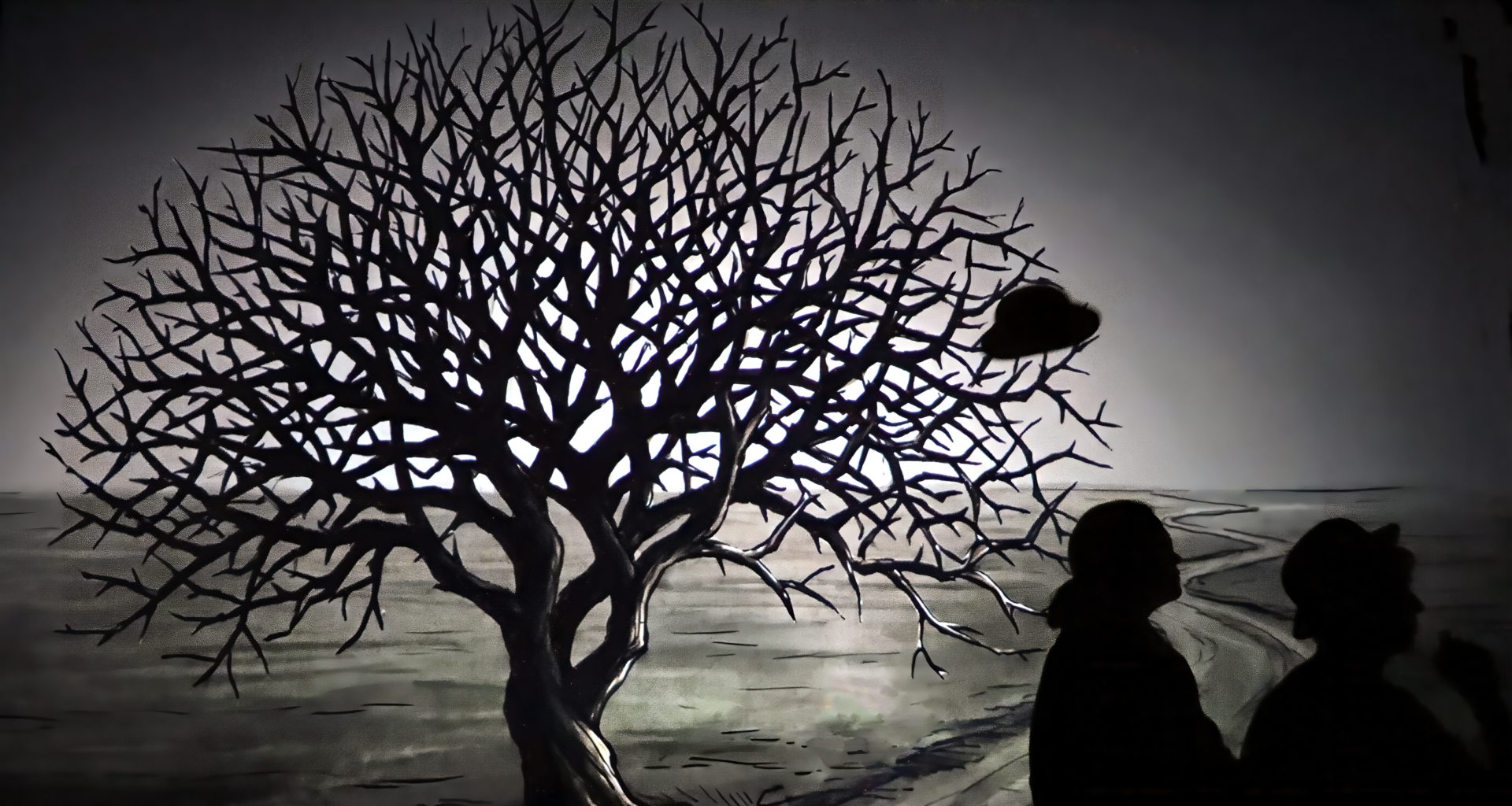

Estragon (Charlie King) and Vladimir (Daniel Sabiston) in Waiting for Godot at The Laboratory Theater of Florida. -COURTESY PHOTO
Imagine two men, Vladimir and Estragon, waiting not once, but twice, beneath a lonely tree for someone named Godot, who never arrives. In Samuel Beckett’s “Waiting for Godot”, the themes of time, hope, friendship and the human need for meaning are explored during The Laboratory Theater’s production opening on August 21, 2026.
The two main characters, Vladimir and Estragon (also referred to as Didi and Gogo, respectively), stand on a desolate country road, passing the time with philosophical arguments, comedic wordplay and mundane distractions as they wait for the enigmatic Mr. Godot, as described in the theater’s press release.
Directed by Madelaine Weymouth, “Waiting for Godot” features Daniel Sabiston (Vladimir), Charlie King (Estragon), Art Keen (Pozzo), and Chris Noonan (Lucky).
Reflecting on the characters, Weymouth shares her personal viewpoint of their roles.
“Vladimir and Estragon have been together their whole lives. The deep friendship they have makes Estragon the most important person in Vladimir’s life and vice versa. That comes with a deep bond, as well as knowing exactly what makes the other tick. It’s played for laughs for sure, but it’s also a very human relationship,” she said. “Pozzo and Lucky hold up a funhouse mirror to their relationship. Are these two simply travelers that Estragon and Vladimir happen to come across, or are they a warning of their future?”
Audiences connect with characters for varying reasons. “People may like the character of Estragon because they can see a decent person who is forced by circumstance to have the entirety of human experience over the course of a short eternity, and I think that it does not take more than a lifetime on average for almost everyone to experience the same thing at least once,” King, who plays Estragon, stated.
Sabiston portrays Vladimir and believes hope is what makes this character so compelling.
“Vladimir’s hope is one of the few constants through the play, an anchor to hold on to when it’s hard to tell what has or hasn’t changed as the acts go on. No matter what happens, no matter how bleak things get, Vladimir clings to the hope that Godot is going to come tonight, and if not tonight, then tomorrow night,” he describes. “While it’s a comfort for him and Estragon, it’s also what’s keeping them tied to their routine; if Vladimir would just give up his hope for a moment, he and Estragon would be free to leave.”
King describes how, in his role of Estragon, who provides much of the humor, he balances comedy with the character’s vulnerability.
“While rehearsing this show I’ve noticed that the best opportunities to show Estragon’s character really are sprinkled into the text. They tend to come after some scenes where he may act a little differently than what the audience may normally expect, but they also show up at times when you would least expect Estragon’s actions to be a vehicle to deliver his character,” King reflects. “However, outside the text, I find it best to let Estragon’s more sensitive or vulnerable moments shine through my physical acting choices, like how I deliver a line, or how I emote to what’s happening onstage.”
Estragon and Vladimir are definitely connected, and to deny this would be absurd, King says. “I think Estragon and Vladimir are a mix between friends who are so close that you can’t tell if they are family, and coworkers who get along with each other very well, despite not caring for the jobs that they have to clock into every day.”
Didi and Gogo’s vigil is interrupted only by the arrival of the domineering Pozzo and his burdened servant Lucky, whose presence highlights the strange dynamics of power and dependency, the press release details.
Arthur Keen, who portrays Pozzo, intentionally ensured his speech patterns were decidedly different from either Gogo or Didi to assist in creating the perception of power and control.
“I created an affected quality to my speech, influenced by the ‘Northeastern Elite Accent’ common among patrician families like the Roosevelts and Vanderbilts in the late 19th and early 20th centuries,” Keen described. “I also tried to conduct Pozzo with an air of superiority.”

Estragon (Charlie King) and Vladimir (Daniel Sabiston) pondering under the tree in Waiting for Godot at The Laboratory Theater of Florida. -COURTESY PHOTO
Pozzo has control over his servant Lucky, but then something unexplained occurs in the second act, further demonstrating the unpredictability of life and the absurdity of existence.
Keen believes his character’s blindness and constant cries for help underscore the shift in his demeanor. “He is literally and figuratively lost. However, once he hits his stride and delivers the line, ‘Don’t question me! The blind have no notion of time. The things of time are hidden from them too,’ he resumes his forcefulness. This culminates in his final reproach of the two perceived interlopers,” he says.
Noonan, who portrays Lucky, who says very little until he delivers a long monologue, describes how his character fits into the overall dynamic, and who he believes fits into the play’s genre of “absurdism”.
“Lucky is an interesting character because he’s not a man of many words, until he becomes a man of too many words,” he said. “One of the main themes we’ve talked about with this show is ‘time’ and how it affects our characters. Lucky in Act 1 and Lucky in Act 2 have become almost different characters because of the passing of time. It’s kind of up in the air how long time has really passed between the two acts.”
Beckett’s celebrated and often debated play helped define the “Theatre of the Absurd,” a style of drama that explores themes of meaning, uncertainty and the human condition.
For Weymouth, the continued appeal of Beckett’s classic, more than 70 years later, she believes, is that we live in a world that is constantly trying to get our attention.
“We fall into these habits that sometimes take us away from what we perceive our ‘true’ goals and wishes to be,” Weymouth continues. “Vladimir and Estragon fall into patterns of behavior that can be seen as futile but that they see as vitally important to them. I think that’s true of many, if not all, of us.”
“Waiting for Godot” is one of those plays that has several themes woven into it, reflecting whatever seems to be on your mind at the moment, she continues.
“I think all of us have felt stuck at one point or another. It feels like everyone else is flying by you while you deal with the muck that’s in front of you over and over again,” she said. “Also, there’s the message of how absurd life is to begin with, and what we find to occupy our time with. Those things can feel very silly to us if we dwell on it too much.”
There is one dominant theme Sabiston believes resonates most strongly – waiting.
“Both of the main characters are waiting, and that’s literally all they do. They wait for Godot to arrive or for night to fall. They wait during the sections with Pozzo and Lucky, and they wait after. They wait to be told they can do anything else, and then they wait a little longer to be safe,” he explains. “To me, the show is the very real fear of being stuck waiting for something, to the point that it’s all you do. Waiting for a better job but never attempting to find one. Waiting for love to find you rather than putting yourself into the world. It’s the nightmare of being trapped in an endless, day-to-day loop even though you (can) break it at any moment.”
Punishment is a theme King believes is underlying in the play. “A theme in this show I’ve been thinking about is punishment. Every character is dealing with the effects of causes throughout the entirety of the play. Sometimes it’s clear and logical why the punishment is dealt, sometimes it seems unnecessary that anything good or bad should have happened at all given the actions that came before,” King continued. But no matter what makes sense, a punishment is always dealt. Given the context that this play was written in, I have a strong feeling that Samuel Beckett and his peers in absurdist art and literature were painfully aware of the ways that punishment can be completely unknowable.”
This production is a testament to Beckett’s mind and writing, Weymouth believes, showing that so many different ideas can be developed.
“Godot seems to have this reputation as a staunchly atheist show, but I’m not sure that the cast and I agree with that,” she continued. “I think it talks about how ridiculous having faith is, and how you can’t reason yourself into faith. Just like how you can’t ‘faith’ yourself into good things happening to you.”
Since diving into Vladimir’s character and the play as a whole, Sabiston explains he has been able to find ways the story parallels aspects of his real life or really, anyone’s lives.
“Everyone has something they’re willing to wait for, but for some reason or another don’t take steps towards,” he believes. “The show’s a desperate plea for anyone stuck in that cycle to take action – any action at all – to finally break out so you can move forward with your life instead of watching it pass by.”
People who have never seen Godot shouldn’t let its reputation precede it, Weymouth advises.
“It’s funny! There’s physical humor, wait-a-minute gags, and the whole show is kind of insane, which really tickles me,” she continues. “I hope they’ll be pleasantly surprised by how accessible it is.”
Noonan hopes the audience enjoys the show’s absurd nature. “While the show has some serious themes, at the end of the day it’s still a comedy,” he said. “I like to think of it in the same vein as Monty Python or the Three Stooges. It truly is just absurd.”
Running Aug. 21—Sept. 6, 2026, tickets can be purchased by calling 239-291-2905, visiting Laboratorytheaterflorida.com, or stopping by the box office at 1634 Woodford Ave. in Fort Myers.
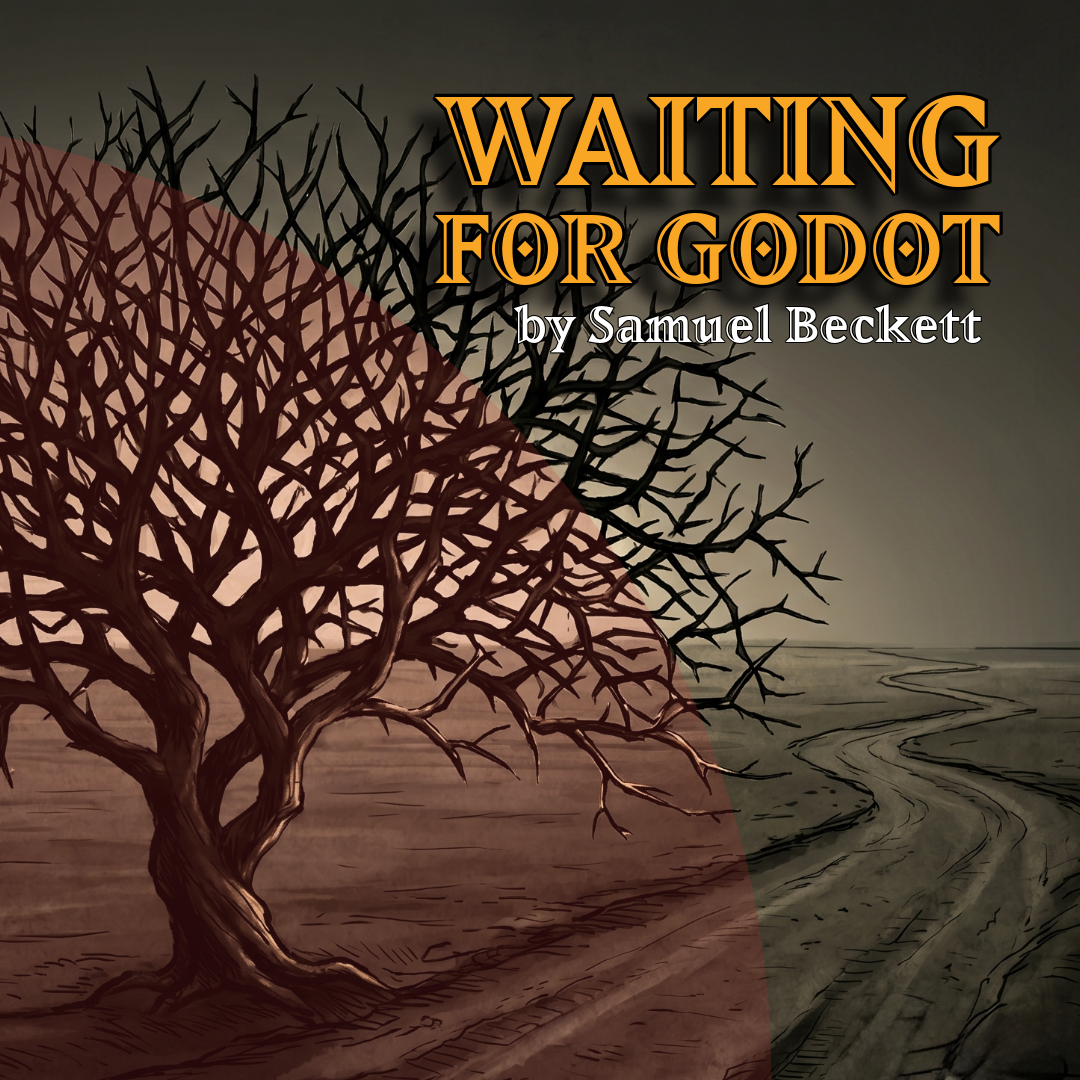
Waiting for Godot. -COURTESY PHOTO
In the know
WHO: The Laboratory Theater
WHAT: Waiting for Godot
WHEN: Aug. 21—Sept. 6;
Aug. 21, 22, 27, 28 at 7:30 p.m.
Aug. 23, 29, 30 at 2 p.m.
Sept. 3, 4, 5 at 7:30 p.m.
Sept. 6 at 2 p.m.
WHERE: 1634 Woodford Ave, Fort Myers
MORE INFO: laboratorytheaterflorida.com

-COURTESY PHOTO