
November — the final month of the Atlantic hurricane season — doesn’t have the cachet of August or September.
But on Nov. 7, 2022, three years ago today, the National Hurricane Center wrote its first forecast advisory on Subtropical Storm Nicole well east of the Bahamas.
Instead of exiting out into the open Atlantic, as many storms do in November, Nicole was blocked by high pressure to its north and steered westward.
Two days later, Nicole strengthened to a hurricane over the northwest Bahamas, then made landfall near Vero Beach, Florida, early on the morning of Nov. 10.
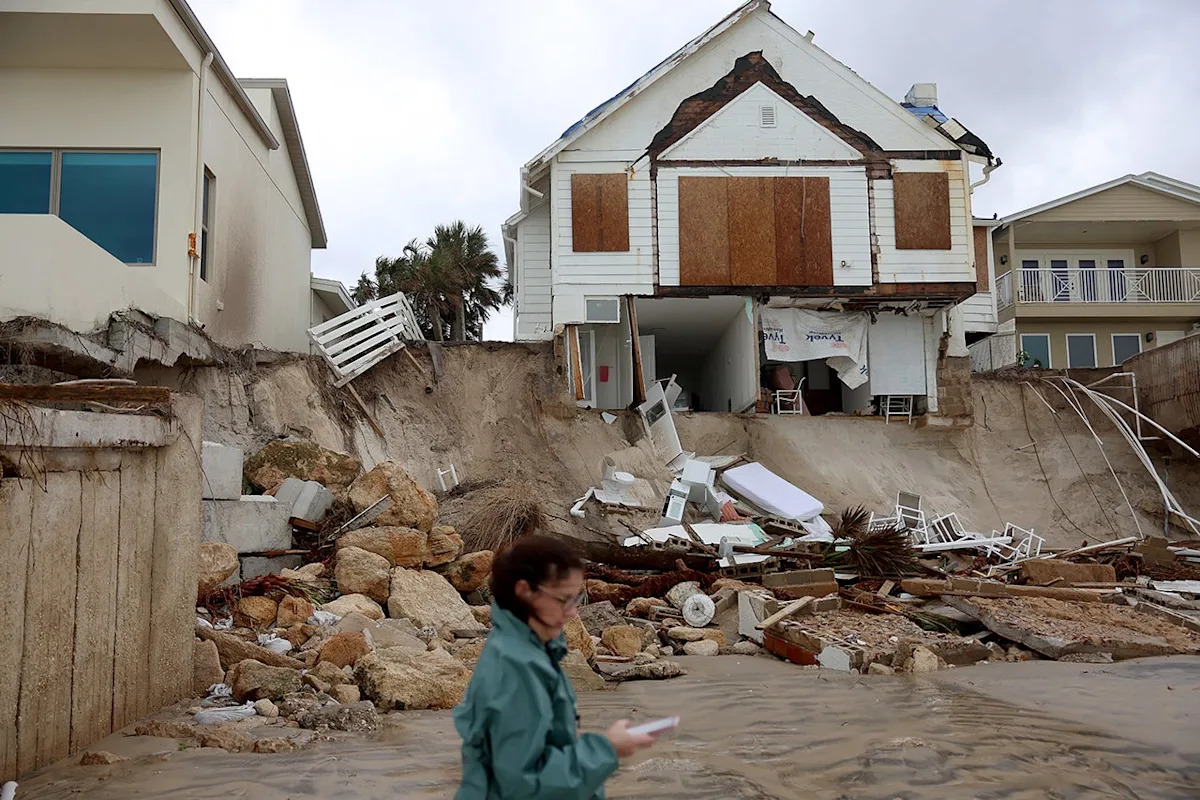
Striking Florida just six weeks after Hurricane Ian, severe beach erosion from Nicole and strong northeast winds off the Atlantic Ocean produced massive beach erosion on Florida’s Space Coast and caused numerous beachside condos and some homes to dangle on several-foot-high cliffs looking over the Atlantic. Coastal roads, parking garages and some homes crumbled into the sea.
Inland, this second hurricane caused rivers already elevated by Ian to rise once again.
In the U.S., five deaths were attributed to Nicole, with total damage of $1.1 billion, according to NOAA and Climate Central.
Nicole was also the second latest in season hurricane to strike the mainland U.S. Only Hurricane Kate on Nov. 21, 1985, hit the U.S. later in November. It was also one of only four mainland U.S. November hurricane landfalls in recorded history.
(RECAPS: Hurricane Nicole | The 2022 Hurricane Season)
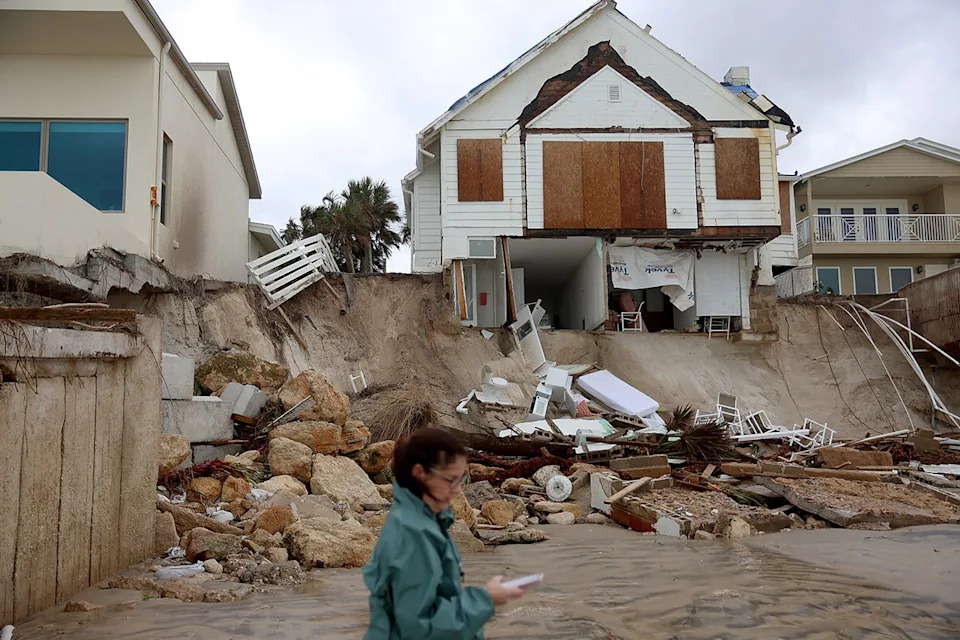
Homes are partially toppled onto the beach after Hurricane Nicole came ashore on Nov. 10, 2022, in Daytona Beach, Fla. Nicole came ashore as a Category 1 hurricane before weakening to a tropical storm as it moved across the state. (Joe Raedle/Getty Images)
Jonathan Erdman is a senior meteorologist at weather.com and has been covering national and international weather since 1996. Extreme and bizarre weather are his favorite topics. Reach out to him on Bluesky, X (formerly Twitter) and Facebook.