
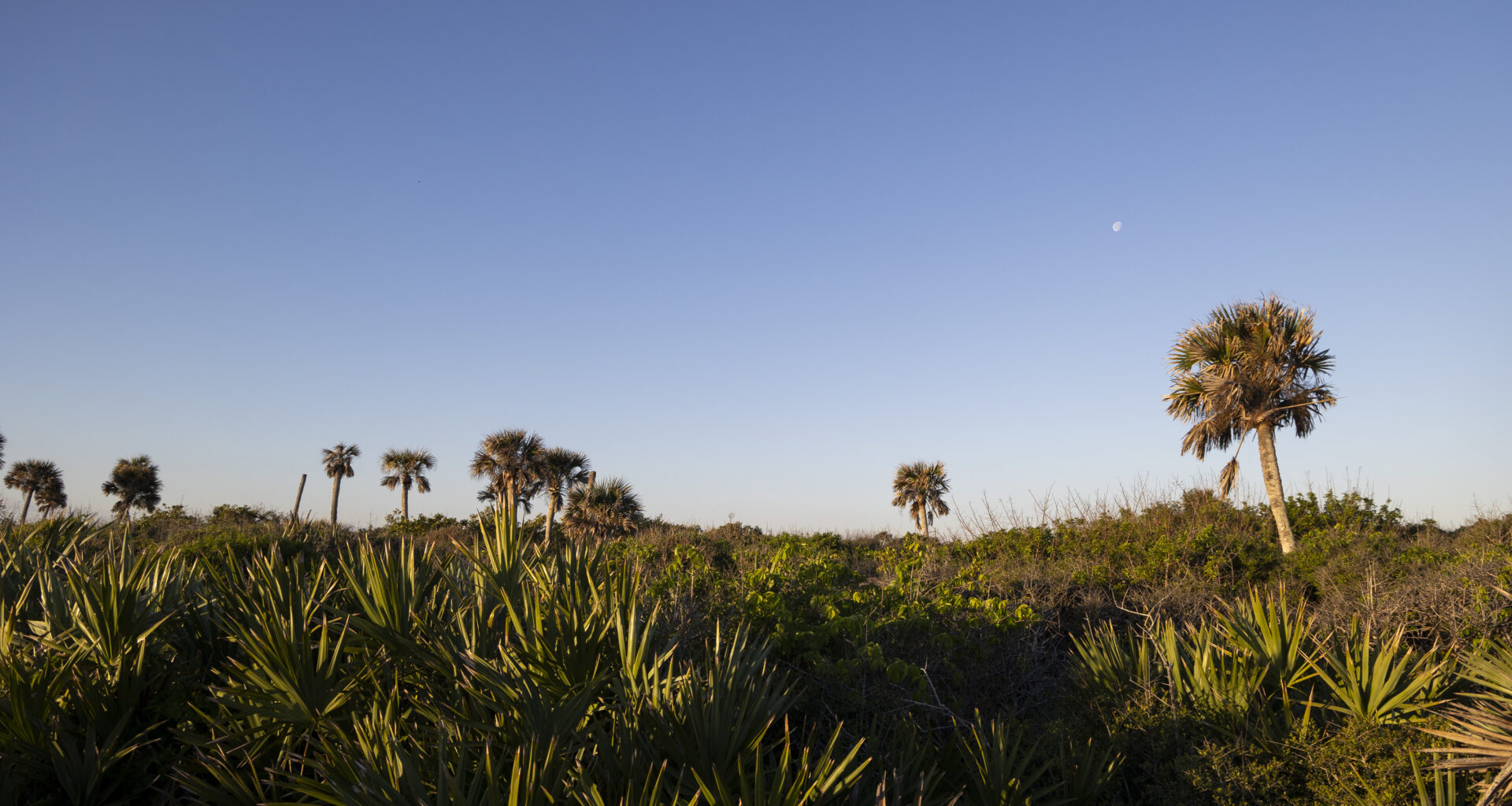
I moved to Florida in 2013 to fish in Mosquito Lagoon, once known as The Redfish Capital of the World. The first few years, the fishing was pretty good but that all changed in February 2016 when a devastating brown algal bloom caused severe turbidity that caused the loss of over 90% of the seagrass in the Indian River Lagoon, including Mosquito Lagoon at the northern end.
Seeing starving manatees was heartbreaking and it spurred me to write a book about Mosquito Lagoon titled “Mosquito Lagoon: Preserving Our Ecological Treasure.” In the book, I explained why Mosquito Lagoon is so important and special, and the steps needed to restore the lagoon to health.
What I didn’t consider when I wrote the book was that the greatest threat to the lagoon might be the space industry on the southern end of Mosquito Lagoon. Current policy shifts and proposals are aiming to streamline operations and reduce regulatory hurdles for commercial space activities at the Kennedy Space Center and Cape Canaveral. The Federal Aviation Administration proposed rules to bypass key environmental and historic preservation reviews, including the National Environmental Policy Act and the Clean Energy Act for commercial launches. Recent executive actions seek to accelerate spaceport traffic and fast-track private development. Here are just a few things that have and will harm the lagoon:
Blue Origin applied to renew a five-year state permit with the Florida Department of Environmental Protection to discharge up to 467,000 gallons of industrial wastewater daily into an onsite stormwater pond that drains toward the Indian River Lagoon.
A Blue Origin New Glenn rocket suffered a massive explosion during a static hot-fire test at Cape Canaveral in May.
There will be over 100 rocket launches from the Kennedy Space Center in 2026 with increased frequency in the future. These launches not only harm the Indian River Lagoon but impact boat travel and the public’s use of Canaveral National Seashore’s beaches.
 Although my main focus is on how these rocket launches will impact Mosquito Lagoon, my bigger fear is that we don’t fully understand the impact of frequent rocket launches and spacecraft re-entries on the stratosphere and upper atmosphere since they inject black carbon soot, chlorine, and metal particles that linger for years and will accelerate climate-warming and the depletion of the ozone layer.
We are already seeing just the early-stages of climate change disasters including months of extreme heat in Western Europe causing intense wildfires in France and Spain. Recent Canadian Wildfire smoke spread across a third of the United States but the bigger impact is that these fires have released roughly three times the amount of carbon dioxide as Canada’s total annual fossil fuel greenhouse emissions.
According to the University of South Florida College of Marine Science, the estimated sea level rise at Cape Canaveral in the year 2040 is between 1.93 feet and 2.00 feet. They project in 2070, the sea level rise at Cape Canaveral is between 2.59 feet and 3.02 feet. At these levels, Mosquito Lagoon will no longer be an estuary but be our new ocean beach. As a senior citizen, I won’t be around to witness the impact of these rocket launches, but my grandkids will.
Bob Chew of Edgewater is a retired renewable energy entrepreneur who spent over 30 years in the solar industry.