
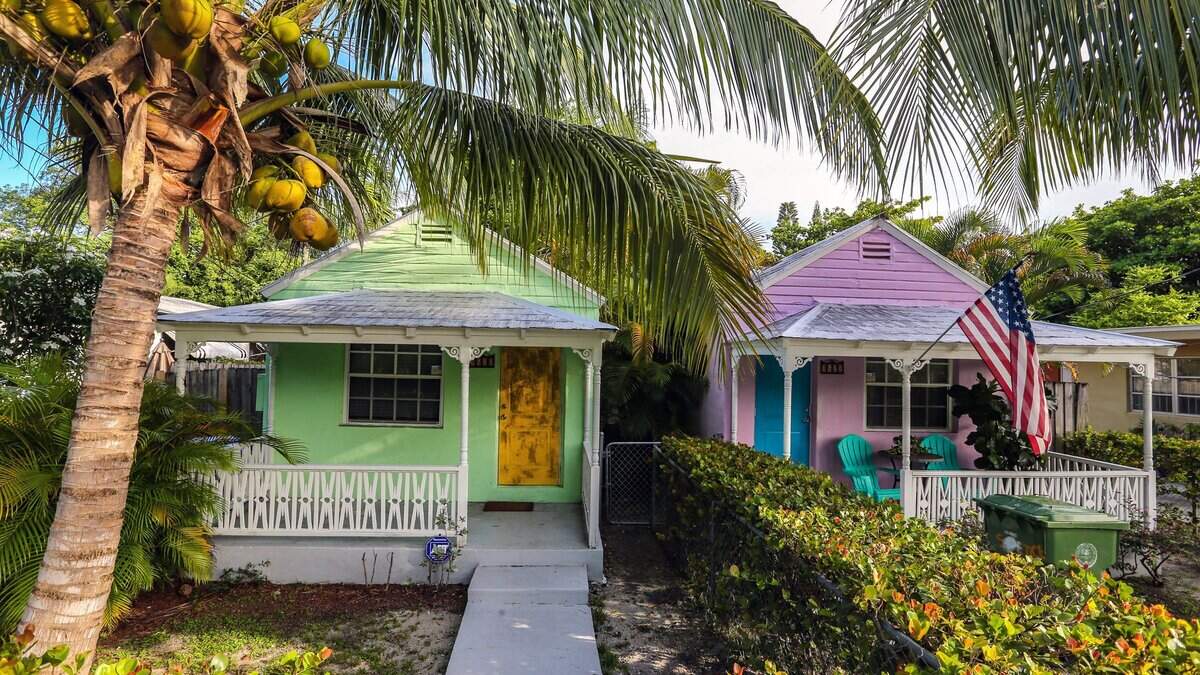
A pair of century-old, wood-frame cottages still stood in Miami’s historically Black West Coconut Grove in 2022. The mostly low-income community is disappearing amid accelerating gentrification.
Al Diaz
adiaz@miamiherald.com
They are nicknamed “sugar cubes” — and that’s not a term of endearment. In neighborhoods like Coconut Grove, these sterile, boxy modern houses are cause for contempt as they loom over their lower-scale neighbors, a visual reminder of how progress is changing the character of Miami’s oldest community.
Miami’s zoning laws have incentivized the construction of these bulky homes, which often look nearly identical, but now the city is pushing for an alternative, an attempt to return to the city’s roots, when Bahamian immigrants built shotgun-style homes more than a century ago in the West Grove. The Miami City Commission in July unanimously passed a new ordinance that allows the construction of what’s also known as cottage-style housing in some residential areas throughout the city.
Cottages are the modern versions of shotgun houses. Long and narrow, they can be built on smaller properties than many other styles of single-family houses. Unlike duplexes and town homes, which share a wall, cottages are detached, making them more aesthetically pleasing.
A cottage home’s living area will run, on average, between 1,300 and 1,800 square feet under the new ordinance — though they could reach 2,500 square feet, David Snow, Miami’s Planning Department director, told the Herald Editorial Board.
With 40% of Miami zoned for single-family houses, Snow said the measure allows “additional housing capacity within those neighborhoods” without increasing overall density. The city’s intention is to provide “housing options… something that’s smaller, that’s a little bit more efficient, that could work for a family that’s, you know, just starting off.”
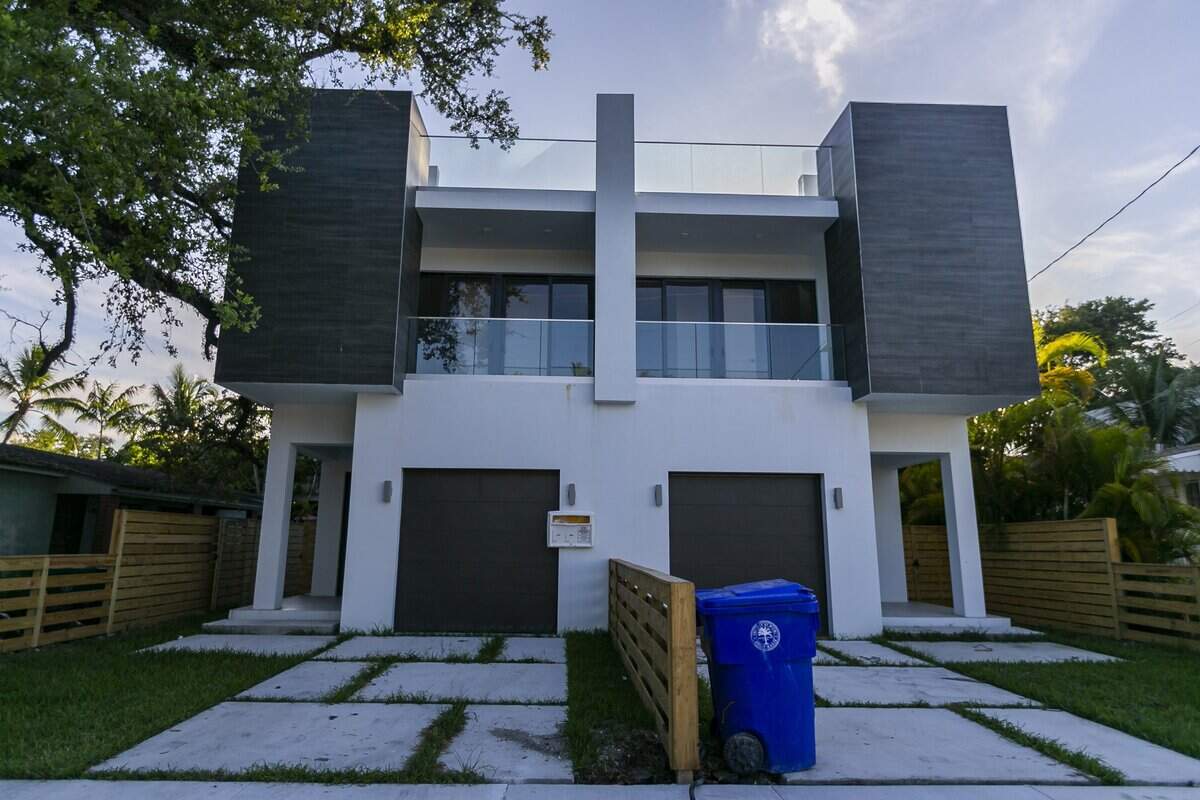 An outside view of a property located near the intersection of Elizabeth Street and Shipping Avenue in Coconut Grove in 2019. These so-called “sugar cube” homes are controversial in the Grove. MATIAS J. OCNER mocner@miamiherald.com
This ordinance is, no doubt, a positive move, one that we hope will encourage developers to stop building so many homes that look like Legos pieces. But it won’t have a significant impact on Miami’s housing shortage crisis because the number of additional homes that will be built is probably quite small, said Marcelo Fernandes, a developer and owner of Grove Properties. Fernandes, a former Coconut Grove Village Council chair, supported the ordinance but wants to see it expanded within limits.
The new rules allow cottage housing to be built on lots located in T3-O zones, which allow duplexes, if they are within a “Transit Oriented Development” area or a transit corridor and can be connected to a sewer system. Or the cottages could be built on other residential lots — called T3 lots — connected to sewer that allow only single-family homes if they are considered “non-conforming” because they are small (5,000 square feet or less) and usually harder to develop.
Cottage lots have to meet size standards — for example, they should be 25–35 feet wide and up to 50% of the land can be built out. A minimum of two trees must be provided, which is meant to appease residents concerned about the loss of the Grove’s beloved canopy. The ordinance also incentivizes “home designs with varied architectural features… that create a more visually appealing exterior instead of a flat, monotonous wall,” according to the measure’s text. For neighbors who don’t like to stare at a giant wall next door, that’s an improvement.
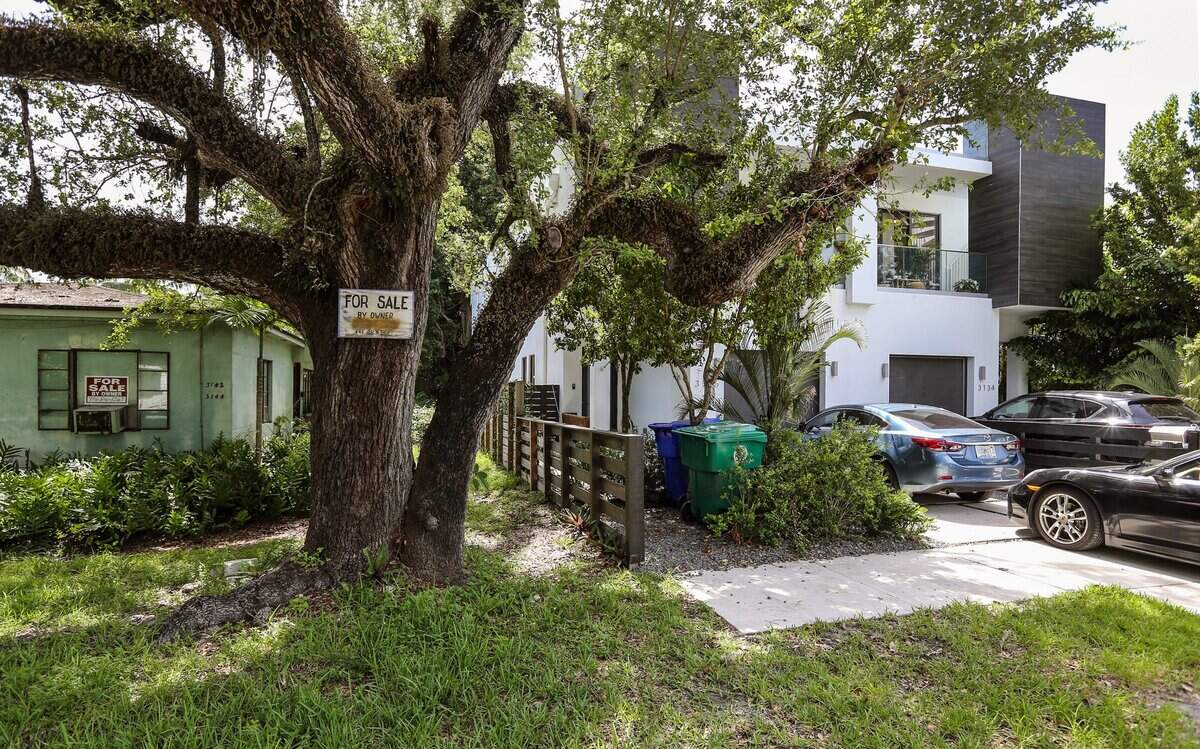 A new “sugar cube” duplex home, right, loomed over a 1947 rental duplex for sale on Elizabeth Street in Miami’s historically Black West Coconut Grove in 2022. The mostly low-income Black community is being rapidly displaced as new multi-millionaire homes, most purchased by white owners, proliferate in the neighborhood. Al Diaz adiaz@miamiherald.com
The city estimates that there are 18,500 lots across Miami that qualify for cottage construction. But Fernandes said he believes the city’s numbers greatly overestimate the number of properties that could actually be developed. Many of those parcels already have buildings on them that aren’t likely to be replaced, he said. Fernandes said that of the roughly 1,800 properties identified in Coconut Grove, only 30 have the actual potential for cottage development.
Fernandes said that because the ordinance mostly allows cottages on lots where developers could already build duplexes, it likely won’t increase Miami’s housing supply significantly to bring overall home prices down. For that to happen, he said the city would have to expand the types of zoning where these homes are allowed.
Fernandes is trying to get city approval for a demonstration project to build six cottages on three lots he owns in the historically-Black West Grove that are currently zoned only for single-family use. If his idea is approved and is successful, perhaps the city will consider expanding its ordinance. Homeowners, though, would push back against any expansion because they don’t trust the city, said Grove preservationist and developer Anthony “Andy” Parrish, who said the ordinance is a “step in the right direction.”
Miami has made progress on diversifying the types of homes that can be built to better fit some of its traditional neighborhoods. “Sugar-cube” homes, like them or not, are part of Miami’s changing residential landscape, but they shouldn’t be the only option moving forward.
BEHIND THE STORY MORE What’s an editorial?
Editorials are opinion pieces that reflect the views of the Miami Herald Editorial Board, a group of opinion journalists that operates separately from the Miami Herald newsroom. Miami Herald Editorial Board members are: opinion editor Amy Driscoll and editorial writers Isadora Rangel and Mary Anna Mancuso. Read more by clicking the arrow in the upper right.
What’s the difference between an op-ed and a column?
Op-Eds, short for “opposite the editorial page,” are opinion pieces written by contributors who are not affiliated with our Editorial Board.
Columns are recurring opinion pieces that represent the views of staff columnists that regularly appear on the op-ed page.
How does the Miami Herald Editorial Board decide what to write about?
The Editorial Board, made up of experienced opinion journalists, primarily addresses local and state issues that affect South Florida residents. Each board member has an area of focus, such as education, COVID or local government policy. Board members meet daily and bring up an array of topics for discussion. Once a topic is fully discussed, board members will further report the issue, interviewing stakeholders and others involved and affected, so that the board can present the most informed opinion possible. We strive to provide our community with thought leadership that advocates for policies and priorities that strengthen our communities. Our editorials promote social justice, fairness in economic, educational and social opportunities and an end to systemic racism and inequality. The Editorial Board is separate from the reporters and editors of the Miami Herald newsroom.
How can I contribute to the Miami Herald Opinion section?
The Editorial Board accepts op-ed submissions of 650-700 words from community members who want to argue a specific viewpoint or idea that is relevant to our area. You can email an op-ed submission to oped@miamiherald.com. We also accept 150-word letters to the editor from readers who want to offer their points of view on current issues. For more information on how to submit a letter, go here.