
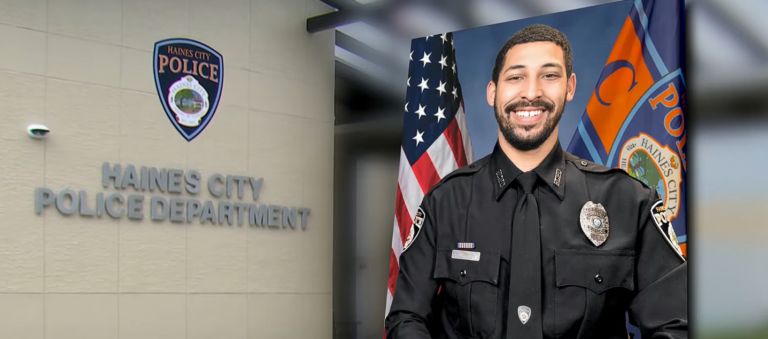
The nationwide debate over the power and oversight of automated license plate readers (ALPRs) has reached a boiling point in Florida after a police officer was arrested for weaponizing the system to stalk his estranged wife.
The disturbing case highlights a major vulnerability in modern police surveillance networks: the system’s safeguards can easily be bypassed by a rogue officer willing to lie.
The incident occurred in Haines City, a municipality located in Polk County, Florida. The city is outfitted with Flock Safety cameras, a popular surveillance network designed to read the license plates of passing vehicles and feed the data into a centralized, searchable database.
While the cameras are intended to help recover stolen vehicles and track violent suspects, the Haines City Police Department says one of its own used the technology for malicious personal reasons.
According to a broadcast by WFLA News Channel 8, the department “says officer Christopher Goodson used these Flock cameras across the city he was sworn to protect to keep virtual eyes on his ex-wife”.
Over the course of more than two years, Goodson reportedly tracked his ex-wife’s vehicle movements an astonishing 717 times.
Bypassing the Safeguards with Fake Crimes
Flock Safety requires law enforcement officers to enter a “search justification” before pulling location data on a specific license plate. The requirement is meant to serve as an audit trail to prevent misuse.
However, investigators say Goodson simply fabricated official reasons to justify his hundreds of searches. According to the news report, Goodson bypassed the system by “telling Flock he was investigating road rage, narcotics assault and other felonies even though the crimes were never committed”.

A solar panel powers a security camera.
Florida law is notoriously strict regarding the misuse of official law enforcement databases, such as the state’s Driver and Vehicle Information Database (DAVID) and other affiliated networks. Unauthorized access of a computer system or network by a law enforcement officer is generally prosecuted as a severe felony in the state.
“Officer Goodson is no longer an officer; he forfeited his badge when he was arrested and charged,” the WFLA reporter confirmed, noting that the former cop is now facing two felony counts
A Growing Fear Among Privacy Advocates
For privacy advocates, Goodson’s arrest is a worst-case scenario come to life. The fact that an officer could conduct over 700 fake searches over two years before being caught raises serious questions about the efficacy of self-reported oversight.
Anti-surveillance activists, like St. Petersburg resident Carl Gunn, have been warning about this exact type of abuse. Gunn, who protests the cameras, told reporters, “I hope you’re prosecuted, uh, for stalking”.
In response to the scandal, the Haines City Police Chief stated that the department is overhauling its oversight protocols. The department has “mandated additional steps to be taken to ensure staff are accessing this for legitimate law enforcement purposes,” including quarterly audits of all camera searches.
However, critics like Gunn remain deeply skeptical that internal policies are enough to curb the temptation of mass surveillance, warning that these types of stalking abuses are only “going to snowball”.