
LEESBURG, Fla. — Summer holidays bring lots of fun in the sun, but also something else: injuries.
Experts say that ER visits can spike during summer months, and this week, a Central Florida instructor demonstrated how a few simple steps could save lives when seconds count.
“How long does it take for you to start losing consciousness? About forty-five seconds. Three to five minutes for you to bleed out,” George Rodriguez explained to attendees during a recent Stop the Bleed class at The Gun Shop Inc. & Gun Range in Leesburg.
Students stopped by Thursday, not to learn about firearms, but something Rodriguez said was far more important.
“We wanna focus on that massive bleeding,” he said. “We have to stop that massive bleeding right away.”
The Army veteran said he has seen what massive bleeding can do firsthand — on the battlefield and on the home front.
“We’re going to roll into a car accident. We’re going to have our own accidents,” he said. “We’d be out in the garage, you know, cutting some wood and the saw kicks back and we cut ourselves. We could be out in the boat fishing and cutting some bait, and all of a sudden, next thing you know, a wave comes and we slice through our hand and we start — and we have uncontrollable bleeding.”
And during an emergency, Orlando Health Sebastian River Hospital’s Dr. Robert Ford said every second counts.
Which is why Ford, the hospital’s Emergency Department medical director, stressed that knowing how to stop a person’s bleeding is critical.
“You need people around you who need to be ready,” Ford said. “You know, when you’re hurt or injured, you want someone right next to you to be able to intervene and stop that bleed as soon as possible.”
Like Saturday, Aug. 8, when an alligator attacked a woman swimming in the Silver River in Marion County. Officials say she was saved a witness applied a tourniquet to her arm.
“These things are vitally important to control immediately,” Ford said. “I think that’s the big point with the Stop the Bleed campaign. You never know what’s going to happen today, and we need our neighbors to take care of people when it’s needed most.”
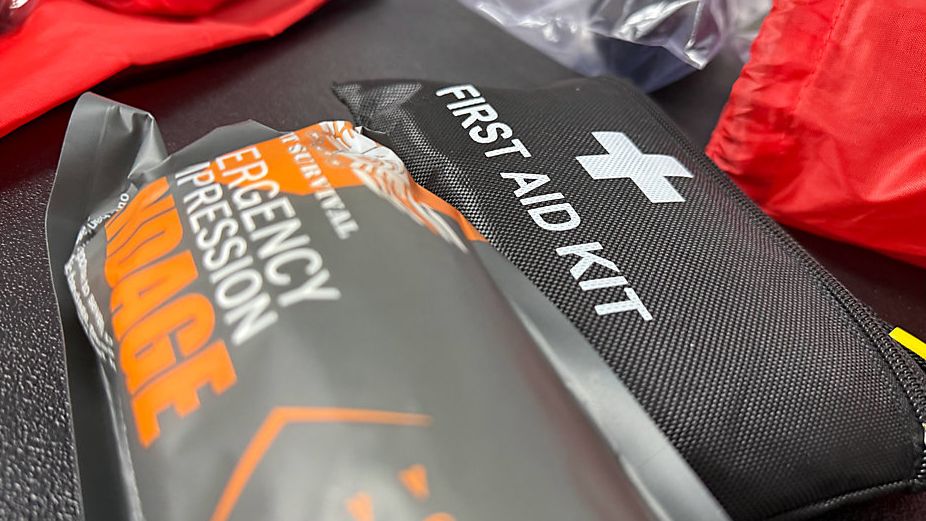
During the Stop the Bleed class, Rodriguez taught about compression bandages and tourniquets, and when to apply them and how.
“I learned a lot,” 17-year-old Angelvy Castellano said after taking the class, where she received hands-on training in applying a tourniquet. “I mean, there was a lot of things that I maybe in my mind I thought, ‘Oh yeah, I can do this.’ Well, we, just in reality, was very different than what you might think.”
Rodriguez agreed, saying it is important for everyone to learn how to stop a bleed.
“If you can stop that bleeding, it’s a significant increase in saving lives,” he said.
Before teaching civilians, Rodriguez taught the Stop the Bleed course to military personnel.