
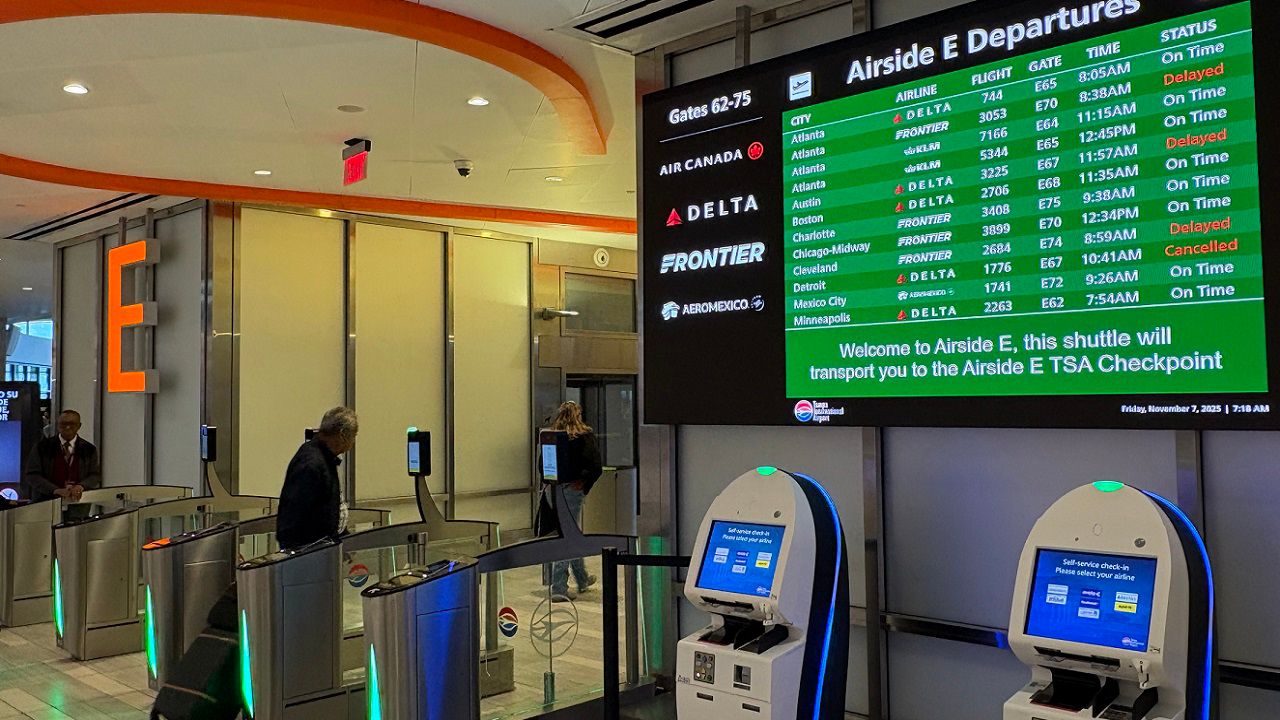
TAMPA, Fla. — A handful of flights were canceled on Friday morning at Tampa International Airport, as the Federal Aviation Administration forced airlines to cut a percentage of their flights at 40 of the nation’s busiest airports.
On Friday morning, less than 10 flights were listed as canceled on the main terminal departure board in Tampa. They included flights on a mix of different airlines to Atlanta, Indianapolis, Detroit, Miami, and Philadelphia.
As travelers arrived at the airport Friday, many were hoping for the best as they prepared to enter the TSA security checkpoint.
“I hope we get to where we’re going – we’re not going far, we’re going to Atlanta – but we are delayed,” said passenger Marko Radosavljevic. “I guess that’s what happens, and we have to be a little patient.”
Rachelle Arnold, who works for a service that provides airport rides to University of Tampa students, said she is more worried about what could happen this upcoming weekend should the government shutdown continue.
“Already without anything that’s going on like today, there’s delays in the afternoon sometimes on the weekends, and our kids don’t get back until 1 or 2 o’clock in the morning. So now I’m worried about how that’s going to impact things,” she said.
An increasing number of arrivals to Tampa are also canceled. They include airports in Boston, Detroit, and Atlanta.
Yes, @FlyTPA is one of the airports affected by the FAA flight reductions.
So far this morning, we’ve seen just a few departure cancellations. Cities include Atlanta, Indianapolis, Detroit, Miami, and Philadelphia. Arrivals also looking spotty @BN9 pic.twitter.com/nWoCxsN8bP
— Angie Angers (@angie_angers) November 7, 2025
The FAA is imposing the flight reductions to relieve pressure on air traffic controllers during the government shutdown.
The FAA said the reductions would start at 4% and ramp up to 10% by Nov. 14. They are to be in effect between 6 a.m. and 10 p.m. and impact all commercial airlines.
The agency said the cutbacks are necessary to relieve pressure on air traffic controllers who have been working without pay for more than a month. Many are pulling six-day work weeks with mandatory overtime, and increasing numbers of them have begun calling out as the financial strain and exhaustion mount.